The phone call lasts less than a minute.
Moments later, a WhatsApp message arrives with a meeting point and simple instructions: wear comfortable clothes, bring a few friends and be ready to move.
Within an hour, young men begin converging on a political rally from every direction. Some arrive on motorcycles, others in matatus. A few genuinely support the politician they have come to cheer. Many are there because they expect payment. Others do not know the assignment until they arrive.
If the crowd needs swelling, they clap, sing and chant slogans. If rivals appear, they heckle. If tensions rise, they become the first line of confrontation. By evening, cash quietly changes hands at petrol stations, roadside eateries or neighbourhood pubs before everyone melts back into Nairobi’s estates, waiting for the next call.
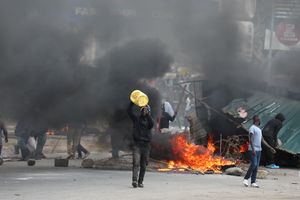
That is the anatomy of Kenya’s growing “goon economy”—not always hardened criminals, but often unemployed young men, and occasionally women, navigating an economy where political mobilisation has become a dependable source of income. In this expanding informal political marketplace, violence has become remarkably cheap, organised and profitable.
Research shows that a young man can be recruited for as little as Sh500 to attend a political rally. More dangerous assignments—disrupting demonstrations, intimidating rivals, guarding illegal businesses, invading disputed land or confronting opposing groups—can fetch between Sh2,000 and Sh5,000. Recruiters handling large operations often control hundreds of thousands of shillings, distributing money through trusted neighbourhood coordinators who shield financiers from direct involvement.
As Kenya edges closer to the 2027 General Election, security experts, researchers and civil society organisations warn that the country’s greatest electoral threat may no longer be hate speech alone, but the ease with which unemployed youth can be transformed into instruments of coercion and violence.
Suspected goon attack scenes during a Sunday service at the St Stephens Anglican Cathedral, Kisumu on July 12, 2026. The Linda Mwananchi graced the Kenya Anglican Men's Association Day at the church.
Photo credit: Alex Odhiambo | Nation
A 2025 report by Odipodev and Tribeless Youth, Goonland: Looking Beyond the Money and Violence in the Political Exploitation of Young Men, paints a disturbing picture of an informal labour market where violence is bought and sold. The report found that unemployed youth are routinely recruited for cash payments beginning at Sh500, with rates increasing according to the level of risk involved. Payments are largely made in cash to avoid paper trails, while politicians, land speculators and business interests operate through layers of handlers and local mobilisers.
That finding echoes a report by the National Crime Research Centre (NCRC), The Proliferation and Resilience of Criminal Gangs in Kenya, which links the growth of criminal gangs to political patronage, unemployment and impunity. According to the NCRC, gangs have increasingly become political assets, providing unofficial security, intimidating rivals and enforcing influence during elections.
The report documented 73 active gangs in Mombasa, 56 in Nairobi and 47 in Kilifi, warning that political interference often enables arrested gang members to regain their freedom and reorganise.
The National Cohesion and Integration Commission reached a similar conclusion in its 2026 report, The Evolution of Criminal Gangs in Kenya. It found that gangs are becoming more organised, politically connected and sustained by unemployment, weak law enforcement and limited accountability.
What distinguishes today’s goon economy from previous election cycles is not merely the number of recruits, but the sophistication of mobilisation.
Recruitment has become decentralised. Informal settlements now have trusted coordinators capable of assembling dozens, sometimes hundreds, of young people within minutes. Communication flows through mobile phones and WhatsApp groups. Local handlers receive instructions before assigning roles and distributing cash.
For many young people living in informal settlements, Sh500 can provide several meals. Sh2,000 may cover rent, groceries or school fees. In communities grappling with unemployment and shrinking opportunities, political mobilisation has become one of the few activities guaranteeing immediate cash.
Activist Willie Oeba argues that poverty has become the raw material from which political violence is manufactured.
“There is a deliberate effort to keep young people poor so they can be bought cheaply,” he said.
A screengrab of a video shows hooded men brandishing guns and hurling tear gas canisters at residents and journalists during the Ol Kalou by-elections on July 16, 2026.
Photo credit: Pool
His observation reflects a recurring theme across numerous studies: youth unemployment is no longer merely a social challenge—it has become a national security concern.
The danger is not simply the absence of jobs. It is that poverty makes political mobilisation extraordinarily inexpensive. The cost of assembling a crowd capable of disrupting a rally or intimidating opponents is often far lower than hiring licensed security personnel.
Violence, in other words, has become affordable.
Recent political events illustrate how quickly this commercialised violence can spiral. During the launch of the Democracy for Citizens Party (DCP) in 2025, Interior Cabinet Secretary Kipchumba Murkomen acknowledged that disagreements over payment contributed to the chaos witnessed during the event.
A similar pattern emerged following the death of youth mobiliser Cecil Ouma. Interviews with fellow mobilisers revealed they had sent him back to demand additional payment after feeling short-changed. He never returned alive.
His death exposed the dangerous economics underpinning Kenya’s political mobilisation industry. Once violence becomes employment, disputes over payment quickly become disputes over survival.
The consequences extend well beyond election campaigns. Research indicates that many youth networks evolve into neighbourhood enforcement groups after elections, controlling garbage collection, construction sites, illegal businesses, protection rackets and land disputes. Politics becomes only one revenue stream within a much larger criminal economy.
Government itself has acknowledged the scale of the challenge. The Jukwaa la Usalama report launched in December 2025 documented more than 130 gangs operating in Nairobi alone and hundreds more across the country involved in political violence, extortion, land invasions and organised crime.
Technology has further transformed recruitment. Unlike previous elections, mobilisation now occurs almost entirely through digital communication. A single organiser can activate hundreds of recruits within minutes using WhatsApp groups, while neighbourhood handlers coordinate payments away from public scrutiny.
A man brandishes a button as residents of Ol Kalou chase away vehicles carrying hooded gunmen who attempted to force their way into at AC Primary School polling station during the Ol Kalou by-election on July 16, 2026.
Photo credit: Boniface Mwangi | Nation Media Group
The price Kenya ultimately pays is immeasurably higher. Every hired stone thrower weakens public trust. Every paid disruptor narrows democratic space. Every politician who finances violence reinforces the dangerous belief that elections are won through intimidation rather than ideas.