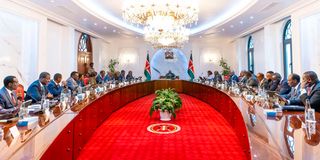
Caption for the landscape image: Cabinet orders DCI to probe Sh6.2bn State payroll heist Wednesday, July 01, 2026 Scroll down to read the article President William Ruto chairs a Cabinet meeting at State House, Nairobi, on June 30. 2026. Photo credit: PCS By Ndubi Moturi Article Related The Cabinet has directed the Directorate of Criminal Investigations (DCI) to uncover payroll fraud that has occurred over the years. This follows a government payroll audit which revealed widespread irregularities across state departments. PREMIUM Inside Samburu's payroll mess: 83 staff, no roles but drew millions in salaries No advertisements, interviews or shortlisting before hiring, but millions are paid out, auditor says. PREMIUM Court battle exposes fake pension accounts inside TSC Treasury exposed the deep-seated payroll fraud in October 2018. PREMIUM Salaries scandal: How 40 counties spent Sh1.52bn in three months Nairobi, Nyeri, Siaya, Elgeyo Marakwet and Nakuru counties are the biggest culprits. PREMIUM CS Ruku lifts lid on public service payroll fraud State losing billions as cartels collude with rogue HR managers to siphon money. . Recommended for you PREMIUM Shakahola: The Bible verses at the heart of a massacre PREMIUM Shakahola: The red flags that preceded mass deaths PREMIUM Woman wins Sh500,000 after husband moves lover into matrimonial home PREMIUM Drone strikes stall two fuel tankers bound for Kenya Login to join the discussion Please enable JavaScript to view the comments powered by Disqus. In the headlines Elections News Counties Business Opinion Sports Life & Style Health Podcasts Photos Newsletters Puzzles PREMIUM How Kenya’s running legends are building fortunes beyond the track Champions who have channeled their sporting fortunes into shopping centres, hotels, schools. PREMIUM Woman wins Sh500,000 after husband moves lover into matrimonial home Judge orders the lover to vacate the Kisumu home within 14 days. Prof Ndetei summoned for cross-examination in Dr Mutiso murder case bail dispute Murder suspects claimed the affidavit filed in court by Prof Ndetei was a forgery.
PREMIUM Inside Samburu's payroll mess: 83 staff, no roles but drew millions in salaries No advertisements, interviews or shortlisting before hiring, but millions are paid out, auditor says.
PREMIUM Court battle exposes fake pension accounts inside TSC Treasury exposed the deep-seated payroll fraud in October 2018.
PREMIUM Salaries scandal: How 40 counties spent Sh1.52bn in three months Nairobi, Nyeri, Siaya, Elgeyo Marakwet and Nakuru counties are the biggest culprits.
PREMIUM CS Ruku lifts lid on public service payroll fraud State losing billions as cartels collude with rogue HR managers to siphon money.
PREMIUM How Kenya’s running legends are building fortunes beyond the track Champions who have channeled their sporting fortunes into shopping centres, hotels, schools.
PREMIUM Woman wins Sh500,000 after husband moves lover into matrimonial home Judge orders the lover to vacate the Kisumu home within 14 days.
Prof Ndetei summoned for cross-examination in Dr Mutiso murder case bail dispute Murder suspects claimed the affidavit filed in court by Prof Ndetei was a forgery.