African governments, donors, investors and development partners have been urged to strengthen their commitment to local partnerships that can accelerate agricultural transformation across the continent.
Despite agriculture employing nearly two-thirds of Africa’s workforce, Heifer International regrets that the sector receives less than four percent of commercial lending.
“The future of African agriculture will be built on strong partnerships and funding that helps innovations move from ideas to scale,” said Surita Sandosham, the president and CEO of Heifer International, during the Africa Food Systems Forum in Dakar, Senegal.
The farmer-led organisation emphasises that when governments, smallholder farmers, youth innovators, cooperatives, the private sector, and development actors work together, Africa can build stronger food systems and lasting rural prosperity.
The conference, held between August 31 and September 5, also saw Kenyan horticultural scientist, Prof Mary Abukutsa-Onyango, named the 2025 Africa Food Prize (AFP) Laureate for her pioneering work on African indigenous vegetables (AIVs) and her decades-long advocacy for sustainable food systems.
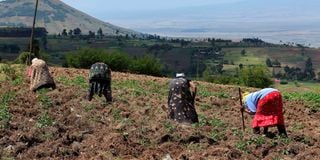
Heifer International expressed concern that smallholder farmers—who produce up to 70 percent of Africa’s food—struggle financially despite their critical role.
Small-scale farmers often face limited access to credit, weak infrastructure, and high borrowing costs.
According to Heifer, closing this gap requires not only new resources but also smarter partnerships that put farmers at the centre.
The organisation stressed that grants and philanthropic support remain vital for Africa’s agricultural development.
When aligned with local realities, such funds can catalyse innovation, attract additional investment, and provide flexible financing that allows young enterprises to test ideas, prove models, and access markets.
To demonstrate the power of partnerships, Ms Sandosham highlighted the annual Heifer’s Agriculture, Youth, and Technology (AYuTe) Africa Challenge, which supports young agri-tech innovators in Ethiopia, Kenya, Nigeria, Rwanda, Senegal, Tanzania, Uganda, and Malawi.
The initiative provides catalytic grants, mentorship, and incubation training to help young entrepreneurs scale their businesses and support smallholder farmers.
“Philanthropic support is essential, and by working alongside governments, cooperatives, and the private sector, we can ensure that these funds go further in strengthening local food systems,” Ms Sandosham said.
At the Dakar forum, Heifer showcased its work in various countries.
It also highlighted AYuTe NextGen (Agriculture, Youth, and Technology Next Generation), which places young people and technology at the heart of Africa’s agricultural future by identifying, supporting, and scaling agri-tech innovations that tackle smallholder farmers’ challenges.
In Nigeria, for instance, Heifer’s partnership with Hello Tractor has enabled more than 20,000 farmers to access affordable mechanisation services, allowing them to plant and harvest on time.
In Kenya, a number of young farmers have been supported to own tractors, while in Uganda, youth-led start-ups supported by AYuTe NextGen have expanded mobile-based livestock health and crop advisory services, attracting private investment.
In Kenya and Rwanda, partnerships with dairy cooperatives have reduced milk spoilage by up to 30 percent, improving farmer incomes and making the sector more attractive to buyers and processors, Ms Sandosham noted.
Adesuwa Ifedi, Heifer’s senior vice-president for Africa Programmes, said these results show what is possible when local actors lead.
She reiterated that farmers should be treated as business partners, youth innovators should be supported to prove their models, and finance should be structured to share risks fairly.
“Above all, partnerships rooted in local realities create the trust and resilience needed for long-term growth,” she said.
The approach also addresses barriers faced by women and young people, who represent a significant share of Africa’s farmers and food entrepreneurs.
With Africa’s median age at 19 and women comprising nearly half of the agricultural workforce, both groups often struggle to access land, finance, and markets, thus hindering efforts to tackle hunger and food insecurity on the continent.