At 10 am, the nurses’ notes indicated that Christopher Mwenda Ntogaiti had received doses of adrenaline, atropine and hydrocortisone. The drugs were part of the treatment recorded at the hospital that morning.
Ordinarily, these drugs serve different medical purposes: adrenaline is used in emergencies such as cardiac arrest and severe allergic reactions, atropine can help treat a dangerously slow heart rate, while hydrocortisone is used to manage severe inflammation and certain allergic reactions. Their use together may reflect an attempt to manage a deteriorating patient.
By another entry in Mwenda’s file, he was given these very drugs at 11:30 am or thereabouts.
In yet another record, in the admission head cardex, a document used to record a patient’s condition, treatment and progress, a nurse indicated that Mwenda had been given amlodipine at 10 am. Yet in the drug administration chart, the same nurse recorded administering the drug at 9 am.
But for Mwenda’s family, it is these entries in the same medical records that raise troubling questions.
The inconsistencies have now become key points of contention for the family, who are questioning the hospital’s account of the treatment their kin received and alleging medical negligence in the care that preceded his death.
Mwenda, a lawyer, walked into Meridian Equator Hospital in Nairobi’s South C just days before his 32nd birthday. He died on December 18, 2025, just eight days before turning 32.
On that fateful morning, around 8.30 am or thereabouts, he informed his family members that he was going in for the routine procedure.
At the hospital, he was scheduled for endoscopy, a medical procedure used to examine the digestive system. A day earlier, he was at the facility where he complained of vomiting, diarrhoea, heartburn and pain in the abdomen and was booked for endoscopy for the next day at the facility.
He told the doctor that two weeks earlier, he developed those symptoms after travelling to a hotel where he consumed assorted meals. He also complained of dizziness, nausea and a lot of sweating.
According to the perioperative record chart, a document essential for documenting all aspects of a patient's surgical procedure, prepared at 1043h, it was all systems go for the procedure, the nurse having checked all boxes.
And with that, the procedure started. But as baffling as it is, Mwenda would be dead less than two hours later.
The surgeon recommended the procedure after having assessed the medical history of Mwenda and went ahead with the procedure.
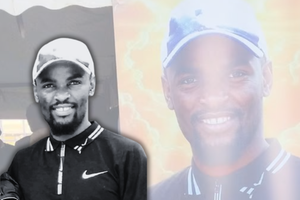
Christopher Mwenda Ntogaiti died on December 18, 2025 at Meridian Equator Hospital in Nairobi's South C where he went for an endoscopy.
Photo credit: Courtesy
The doctor, the records show, reviewed the “32-year-old patient with history of persistent epigastric pain,” further indicating that the plan was to prepare for endoscopy after Mwenda’s consent at 11:20 am.
About 10 minutes later, the operation record shows, endoscopy was abandoned and the process of resuscitation initiated. Mwenda was then given hydrocortisone, adrenaline, atropine, and shortly after, a decision was made to intubate and transfer him to the ventilator machine, as well as chest compressions.
An anaesthetist arrived when the CPR was ongoing and managed to intubate the patient. However, he said, despite full resuscitation efforts, the patient could not be revived.
Mwenda, the medical reports indicate, showed no cardiac activity nor respiratory activity after one hour. His eyes were fixed and dilated. The doctor declared him dead at 12:30 pm.
Even if everything is to make sense, the chronology of how Mwenda was handled, the Law Society of Kenya (LSK) lawyer Philip Mwangale, in support of the family, said, does not add up.
The toxicology found low blood concentrations of amlodipine and propofol in Mr Mwenda's post-mortem blood sample “which are consistent with non-recent use/administration of these drugs prior to death,” a private toxicology report said. But explaining that given the post-mortem blood sample was unpreserved, “it is possible that the concentrations of amlodipine and propofol had degraded after death and therefore may not be representative of that at the time of death.”
According to the hospital, the provisional cause of Mwenda’s death “was a suspected drug reaction”, it said in a letter responding to the Kenya Medical Practitioners and Dentists Council (KMPDC). The KMPDC is the body regulating medical practice and licensing medical facilities.
The autopsy conducted on December 20, 2025, by a government pathologist, assisted by two independent experts representing the family and the hospital, found that Mwenda died of hypoxia — a condition in which the body’s tissues do not receive enough oxygen to function properly — resulting from “respiratory depression due to anaesthetic drug reaction”.
The hospital, in their defence, disputed the allegation that its handling of Mwenda’s case amounted to professional negligence.
“We refute the allegation that the conduct of our practitioner and the Hospital in attending to the patient and conducting the procedure amounts to professional negligence. Our doctors and staff acted within the acceptable professional standards including timely intervention during clinical deterioration,” Meridian Equator Hospital said in the letter to KMPDC.
But there are also other inconsistencies. A freelance clinical officer anaesthetist, according to the documents seen by the Nation, invoiced Sh5,000 for intubation. Interestingly, he, in his admission to the investigators, did not render the service. In fact, he was not in Nairobi on that day.
Mwenda, records show, was admitted for the procedure at the facility at 11:16 am upon paying Sh45,000 in cash for the procedure. But he did not know that death was hours away. The grim reaper had inched closer than he had imagined.
Several sunsets and sunrises later, and more than nine months into the investigation, the pursuit of justice for Mwenda remains a painful wait for a family still grappling with his loss and seeking answers about what happened in his final hours.
“It has now been nine months since our colleague Christopher died at the hands of a rogue doctor and an institution hell bent on covering up the truth surrounding his untimely, tragic and preventable death,” the LSK lawyer Philip Mwangale wrote in a letter to the Office of the Director of Public Prosecutions.
“It is also five months since we wrote to you inquiring as to the status of the inquiry and whether the DPP had received the police file with a view to making a decision to charge,” Mr Mwangale said, adding that the “family has exercised extreme grace even in the face of heavy grief”.
The DPP, as at the time of publishing, was yet to confirm the status of the matter.
Mwenda was a fitness enthusiast. He was also affable. His friends mourned him as a cheerful spirit, an advocate and “so many things to so many people... and truly our best friend.”
He was buried in Meru on December 27 last year, a day after what would have been his first as a 32-year-old.