Apart from the legal procedures for filling a seat when a Member of Parliament dies, have you ever wondered about the administrative processes that take place in Parliament in such circumstances?
What happens to the office of the deceased MP? Who collects their belongings from the office, and what support does Parliament extend to the bereaved family, if any?
Immediately after an MP's death, their office in Nairobi is locked, while the constituency office remains operational.
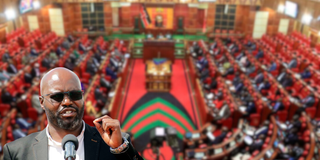
According to National Assembly Standing Order 259D, when an MP dies in office, the Speaker shall report the death to the assembled House for members to note and pay tribute.
Depending on interest from members, the Speaker may dedicate one hour or more to tributes at his or her discretion.
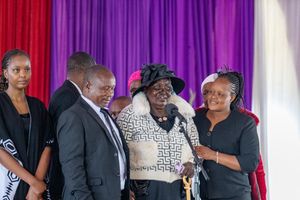
After the tributes, which are recorded in the Hansard, the material is compiled and presented to the family by the Clerk of the National Assembly.
“The Clerk shall convey a certified copy of the relevant Hansard to the family of a person to whom the House gives tribute,” reads Standing Orders 259D (4).
According to House procedures and tradition, the handing over of the Hansard copy containing the tributes of the late MP to the family is a symbolic end of an era for the deceased member.
Upon conclusion of tributes in the House, an ad hoc committee comprising members drawn from both Houses is constituted.
In the case of Mr Ng’eno, the committee was chaired by Tinderet MP Julius Melly. Other members included Rindikiri Mugambi (Vice Chairperson), Bungoma Senator David Wafula Wakoli, Hillary Sigei (Bomet), Julius Sunkuli (Kilgoris), Oscar Sudi (Kapsaret), Brighton Yegon (Konoin), Mark Nyamita (Uriri), and Gathoni Wamuchomba (Githunguri).
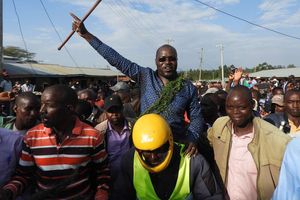
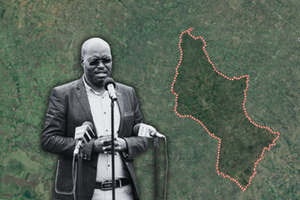
Emurua Dikirr Member of Parliament Johana Ng’eno during an event in Embu County on November 12, 2023.
Photo credit: Joseph Kanyi | Nation Media Group
The committee works closely with the family of the deceased in making funeral arrangements and providing any other related support.
After the burial, the chairperson of the ad hoc committee that was formed to coordinate burial arrangements, assisted by officers of Parliament, subsequently helps the family access the office and collect the documents of their kin.
The Nation has learnt that the Ng’eno family has already picked the late MP’s documents from the office.
In terms of financial settlement, all MPs are covered by group life insurance, and when a member dies in office, the nominated beneficiaries are paid the applicable insurance benefits in accordance with the group life insurance policy.
However, where a member had any existing liabilities, such as a mortgage facility, the mortgage insurance also settles in full the balance accruing at the time of the MP’s death.
In the 12th Parliament, 14 MPs died, consisting of 10 from the National Assembly and four senators.
In this 13th Parliament, the House has so far lost seven MPs, consisting of six from the National Assembly and one senator.
They include Kulow Maalim Hassan (Banisa), who passed away in March 2023 following a road accident in Nairobi; Mohamed Tubi Bidu (Isiolo South MP), who passed away in November last year at Nairobi Hospital after an illness; and nominated MP Denar Joseph Hamisi, who passed away in December 2025.
Others are Senator William Cheptumo (Baringo), who died after a short illness; Malulu Injendi (Malava); Charles Ong’ondo Were (Kasipul), who was gunned down in Nairobi by unknown assailants in May last year; and Johana Ng’eno (Emurua Dikirr), who died in February this year in a helicopter crash on February 28, 2026.
Article 103 of the Constitution provides for the circumstances under which the office of a Member of Parliament may fall vacant, including resignation, absence from Parliament's sittings, and death.
According to Article 101 of the Constitution, whenever a vacancy occurs in the office of an elected MP, the respective Speaker is required, within 21 days of the occurrence of the vacancy, to give notice in writing to the Independent Electoral and Boundaries Commission (IEBC).
However, Article 101(5) of the Constitution further provides that no by-election can be held within three months before a general election.
This means that if an MP dies within three months of a general election, the seat will remain vacant until the general election is held. This was the case in the 12th Parliament when the Rabai MP William Kamoti died on May 29, 2022, while the General Election was scheduled for August 9, 2022.
However, in the case of a nominated MP, the procedure is slightly different. The Constitution requires the respective Speaker to, within 21 days of the occurrence of a vacancy, give notice in writing to the IEBC and the political party on whose party list the member was nominated.
Thereafter, the vacancy is filled within 21 days of the notification by the relevant Speaker, where the IEBC reallocates the seat to another member from the party list submitted before the general election.
Following the filling of a vacancy, either through a by-election or by the IEBC, the new member is subsequently sworn into office in Parliament.
Just like at the commencement of a new term of Parliament, the new member, whether elected or nominated, is taken through induction and given an office. It is not automatic that the new member will get the office previously occupied by their predecessor.
Offices in Parliament are allocated to MPs in order of seniority, starting with those in leadership, such as the Majority Leader, Minority Leader, Deputy Majority Leader, and the whips for both the majority and minority sides, down to nominated MPs.
Those serving their third term and above are deemed to be ranking members and are given priority in the allocation of offices.
The new member is required to appoint office staff in accordance with the relevant policy of the Parliamentary Service Commission. In the case of an elected member, there is also provision for a constituency office and office staff.