A parliamentary committee has warned that regulating fares imposed by public transport vehicles could pose administrative and compliance challenges, and has therefore urged the House to reject the Bill in its entirety.
In a report to the House, the National Assembly Committee on Transport and Infrastructure argues that passing the National Transport and Safety Authority (Amendment) Bill would create more problems than solutions.
“Having considered the Bill and stakeholder views the Committee observed that Kenya operates as a capitalist country and that the legislation might bring more problems than solutions. In view of the foregoing, the Committee recommends that the House reject the National Transport and Safety Authority (Amendment) Bill (National Assembly) Bill in its entirety,” reads the committee report.
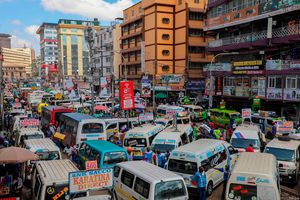
Public Service Vehicles (PSVs) parked along Kenneth Matiba Road on Wednesday, May 20, 2026, after normal transport operations resumed in Nairobi following the matatu strike that had disrupted movement and business activities across the capital and other major towns.
Photo credit: Dennis Onsongo| Nation Media Group
The committee also pointed out that implementing price controls in the public service transport sector will conflict with international and regional agreements that Kenya is party to
In its report, the committee observed that the predominant market players in public transport are private investors organized as Saccos, companies or individuals. Imposing controlled prices would require extensive structured engagement to account for extenuating factors associated with the transport sector, including its unpredictability and the varying cost of spare parts, which are normally imported.
The NTSA (Amendment) Bill, 2023 seeks to amend the NTSA Act No.33 of 2012 to provide for policy guidelines to regulate fares payable by passengers in Public Service Vehicles (PSVs) in the country.
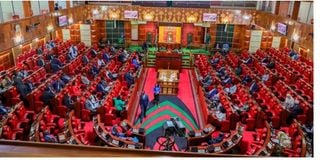
The Bill is currently in its second reading and MPs started debating it on Tuesday with a majority supporting it.
Sponsored by Kimilili MP Didmus Barasa, the Bill seeks to end the absolute power public transport owners have enjoyed over the years in deciding customer charges.
If enacted, Kenya will join countries like Ghana, Ivory Coast, Rwanda, Tanzania, Cameroon, Fiji, and Germany where the government regulates and sets the minimum fare charged on public transport.
Former Cabinet Secretary for Roads and Transport Kipchumba Murkomen, who appeared before the Committee on 9th November 9, 2023, had also opposed the Bill, saying price controls widespread in the economy before the structural adjustment loans were largely eliminated throughout the late 1980s to 1990s
“Trade liberalization was part of a broader push in Kenya to decrease the government’s role in the economy and give market forces greater influence,” Mr Murkomen told the committee.
Interior Cabinet Secretary Onesimus Kipchumba Murkomen when he appeared before the National Assembly's Departmental Committee on Administration and Internal Security at Parliament Buildings on April 21, 2026.
Photo credit: Dennis Onsongo | Nation Media Group
The Federation of Public Transport Sector has also opposed the Bill, saying in order to regulate fares, the government requires policy, legislative, regulatory and institutional frameworks to be able to provide a controlled fare regime that is based on correct cost parameters.
The federation says it is the government's duty to ensure these frameworks are in place before allowing the government to control fares in a free market economy.
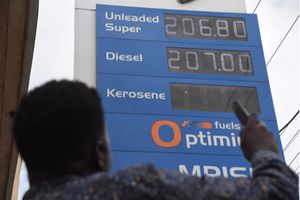
“It should be noted that major costs in public transport operations—fuel, which is regulated by EPRA and insurance, which is regulated by the Insurance Regulatory Authority (IRA)—have no complaints from the Competition Authority of Kenya,” the federation told the committee.
According to the federation, most operating costs for public transport are already inscribed in law. For instance, the vehicle must comply with all labour laws, operate under a Sacco or company, Pay County parking fees, and have crews who are uniformed with a police compliance certificate and NTSA badge
In addition, the federation said public transport vehicles are also subjected to annual inspection, must have a road safety license and must have a fire extinguisher
“All the above legal requirements increase the cost of doing business, hence making public transport operation a loss- making enterprise. It should be noted that most public transport operators collapse a few years of operation,”
The federation told MPs that they should be allowed to operate on an open market just like the private sector such as airlines, which adjust fares depending on the season, such as school holidays, time of day, and holidays like Easter and Christmas.
While moving the motion on Wednesday, Mr Barasa said he was undeterred by the committee's verdict, stating the House will have the final say on his Bill.
“I have seen the committee report rejecting the Bill, but this House should be allowed to make its own decision,” Mr Barasa said.
In 2018 Parliament rejected a similar push by the transport ministry to amend the Traffic Act to give the Cabinet Secretary in charge powers to regulate fares in the Public Service Vehicle industry.