The High Court has ordered the government to pay Kwale International Sugar Company Limited (Kiscol) $185.6 million (Sh24 billion) in damages for breaching a 2007 land sublease agreement.
The ruling is one of the most consequential commercial judgments in Kenya in recent years, reigniting debate over the State’s failure to protect large-scale investments.
The judgment found that the National Treasury and the Attorney General failed to uphold their contractual obligation to provide the sugar firm with "quiet and peaceful possession" of the leased land—a failure that crippled the company’s ambitious $300 million (Sh38.8 billion) sugar production project.
The dispute dates back to August 2007, when Kiscol —a joint venture between Mauritius-based Omnicane and Kenya’s Pabari Group—secured a sublease for a 15,000-acre integrated sugar estate in Kwale County.
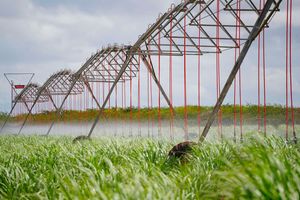
The project was designed as an irrigated sugar estate, complete with a 3,300-tonne-per-day mill, an 18-megawatt power plant and an ethanol distillery, positioning Kenya as a regional leader in sugar production.
However, persistent land invasions by squatters and government inaction left nearly 5,816 acres inaccessible, forcing the company to operate at half capacity.
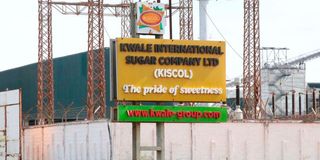
The Kwale International Sugar Company Limited in Kwale County.
Photo credit: Wachira Mwangi | Nation Media Group
This derailed operations and triggered severe financial losses. Despite multiple court orders affirming the company’s rights, the State failed to enforce them, prolonging the financial turmoil and stalling operations.
In 2022, the firm sued for damages citing ongoing land disputes, unresolved squatter occupations and State inaction that were crippling the project.
The company noted that significant investments in infrastructure could not operate optimally because the land—central to its business model—remained partially inaccessible.
The government opposed the suit, arguing that Kiscol’s claim was time-barred. However, the court applied the "continued injury" doctrine, ruling that the breach was ongoing, making the claim valid.
"The suit was not time-barred based on the doctrine of continued injury," the court ruled, allowing the company’s full financial claim to proceed.
The judgment further stated: "The plaintiff suffered both financial and operational losses as the land was crucial to the success of its business." The court dismissed the State’s counterclaim as "entirely unmerited," reinforcing the principle that contractual agreements must be honored—even by the State.
The court awarded Kiscol damages covering additional project costs ($74.9 million), interest on delayed financing ($10 million), shareholder loans and penalties ($36.7 million plus $17.2 million interest), as well as restructuring costs ($16.5 million in penalties and $22.3 million in refinancing expenses).
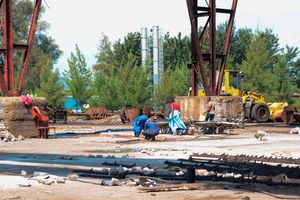
The Kwale International Sugar Company Limited plant in Ramisi, Kwale County.
While the payout may strain public coffers, the court argued that the government had violated both contractual and statutory obligations, leading to "financial and operational losses" that rendered Kiscol’s business model unviable.
Legal experts say the ruling reinforces the sanctity of contracts in Kenya, sending a strong message that the government cannot disregard its obligations without consequences.
For Kiscol’s shareholders, the verdict ends a prolonged battle marked by litigation, financial strain, loan restructurings and operational paralysis. The company now has a chance to revive its stalled operations, potentially revitalising Kwale’s economy through sugar production, power generation, and ethanol processing.
However, the court granted the government a 30-day stay of execution of the judgment, during which it may file an appeal.