The High Court has allowed a non-governmental organisation (NGO) that sued over the alleged sale of hazardous and cancer-causing pest control chemicals in Kenya to advertise the case and invite other interested parties to join the dispute, potentially turning it into a class-action suit.
Justice Grace Kemei granted orders for the advertisement of the petition in a newspaper of national circulation to invite victims, survivors and other interested parties adversely affected—directly or indirectly—by the use of the contested pesticides.
The judge ruled that the application filed by the Africa Center for Corrective and Preventive Action (ACCPA) and lawyer Kelvin Kubai seeking to advertise the petition and invite victims was merited.
“They (petitioners) have raised a single prayer that they be allowed to advertise the petition to enable other interested parties to join. My evaluation of the application and submissions is that the application has merit and is allowed,” said Justice Kemei, sitting at the Environment and Land Court in Nairobi.
However, she suspended the placement of the advertisement for 15 days to allow the respondents, including pesticide manufacturers, to challenge the decision at the Court of Appeal.
“Thousands of Kenyan farmers and consumers who have been directly or indirectly affected by these highly hazardous pesticides now have a recourse similar to that accorded to American citizens. In America, people have come forward claiming they were affected by pesticides such as Roundup. Kenyans can now also join this petition, which seeks remedies and orders over the effects of these chemicals on their health and the environment,” said Mr Kubai.
The petitioners claim that Kenyans are consuming food grown with pesticides that have been banned in developed countries such as the US and in Europe.
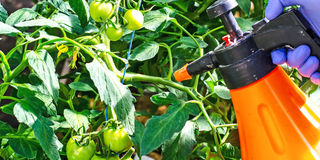
A farm worker sprays a potato farm with pesticides and herbicides in Elburgon, Nakuru County in this photo taken on November 17, 2022.
Photo credit: File | Nation Media Group
The government and global agrochemical giants Monsanto, Bayer, and Syngenta, however, oppose the suit, arguing that the 11 chemicals in question including glyphosate—are neither poisonous nor harmful to health or the environment.
Key government institutions named as respondents include the Agrochemicals Association of Kenya, the Ministry of Agriculture, the Agriculture and Food Authority, the Ministry of Health, the Kenya Consumer Protection Advisory Committee, and the Attorney General. Others are pesticide manufacturers Monsanto Kenya Ltd, Syngenta East Africa, Bayer East Africa, BASF East Africa, and Twiga Chemical Industries Ltd.
The petitioners allege that the danger of highly hazardous pesticides (HHPs) is greater in Kenya because of limited or no government action to mitigate exposure.
They are seeking, among other orders, compensation for affected persons and a declaration that the government and agrochemical manufacturers have violated Article 42 of the Constitution, which guarantees the right to a clean and healthy environment.
They want the Attorney General directed to ban the distribution and use of pesticides such as glyphosate, paraquat, imidacloprid, clothianidin, fipronil, chlorpyrifos, thiacloprid, thiamethoxam, fenitrothion, malathion, and dinotefuran.
According to the petitioners, the Agrochemicals Association of Kenya and manufacturers design, market, and distribute products with these chemicals without warning farmers of the risks or providing protective gear. They argue that Kenyan farmers and consumers are left exposed, despite the same products being banned in European markets.
Medical journals have linked paraquat to lung, kidney and liver damage, Parkinson’s disease, and reproductive harm. Chlorpyrifos has been associated with hormonal disruption and adverse effects on multiple human organs.
The products are widely used in Kenya to control weeds and pests in crops such as maize, tea, coffee, bananas, citrus fruits, sugarcane, beans, rice, wheat, and cotton.
Globally, manufacturers have faced lawsuits over the same chemicals.
In the US, Bayer Monsanto has already paid billions of dollars in settlements and jury awards but still faces about 67,000 lawsuits over claims that its glyphosate-based herbicide Roundup causes cancer. Syngenta is facing more than 6,700 lawsuits for allegedly failing to warn users of paraquat’s link to Parkinson’s disease; the company recently entered into an agreement to settle a large portion of the claims.
Gordon Lusi sprays pesticides on his soya beans farm.
Photo credit: File | Nation Media Group
In response to the ruling, founder of ACCPA James Mwangi welcomed the decision saying it opens a vital avenue for Kenyans to seek justice.
“The danger of highly hazardous pesticides is exacerbated in Kenya because very limited or no measures are taken to minimize exposure. Large commercial farms using HHPs have no buffer zones to prevent pesticide drift or runoff into nearby homes, schools, and waterways,” said Mwangi.
He called on both the national and county governments to guarantee the responsible use of pesticides, to phase out dangerous agrochemicals and to promote safer alternatives.
“All agrochemical companies and commercial farms must be held accountable and face lawsuits and punitive damages for failing to warn consumers. The government must ban all manufacture, import, and use of highly hazardous pesticides and support sustainable agricultural practices,” he said.
Mr Mwangi added that ACCPA, with other civil society groups, will establish a People’s Tribunal on Agro-Toxins to monitor and investigate pesticide use in Kenya and provide remedial actions.