The Kenya Defence Forces (KDF) has suffered a legal setback after the High Court upheld a ruling that found the military guilty of discriminating against a recruit based on his HIV status and conducting unauthorized testing without proper counselling.
The court dismissed an appeal by the Attorney General, the Ministry of Defence, and KDF, affirming a July 2024 decision by the HIV and AIDS Tribunal that awarded the victim, Mr PKJ, Sh1 million in damages.
The case stemmed from Mr PKJ’s recruitment ordeal in December 2021, when he was allegedly subjected to mandatory HIV testing without his informed consent during KDF’s enlistment process.
Despite being declared medically fit and receiving an official calling letter for training at Eldoret Recruits’ Training School, Mr PKJ claimed he was abruptly dismissed just days after reporting for duty.
Status publicly announced
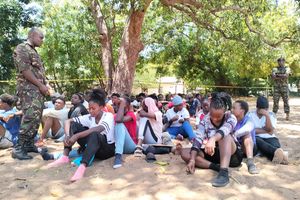
In his testimony, he recounted how officers publicly announced his HIV-positive status before his fellow recruits in a humiliating fashion, instructing him to "seek treatment" rather than continue military service.
He argued that the military violated his rights to privacy, dignity and fair administrative action while blatantly disregarding established HIV testing protocols under Kenyan law.
In their appeal, the State had contested the Tribunal’s jurisdiction, insisting that employment-related disputes should exclusively be handled by the Employment and Labour Relations Court.
However, the judge ruled that the case primarily concerned violations of the HIV and AIDS Prevention and Control Act—not employment terms—and was thus properly before the Tribunal.
The judge emphasized that the heart of the matter revolved around unlawful medical testing procedures and discriminatory dismissal based on health status, not employment conditions.
“The predominant issue was not employment, but rather how the KDF officers handled the respondent’s HIV status. Therefore, the Tribunal rightfully assumed and exercised jurisdiction," the judgment stated, citing legal precedents on jurisdictional boundaries between courts and specialized tribunals.
The court also dismissed claims that the Tribunal usurped the role of Parliament by ordering the KDF to review and update its regulations, procedures and practices for enlistment and recruitment.
It was the AG’s case that the tribunal erred by directing the KDF to provide evidence of updated policy within 90 days of the contested ruling.
“The respondent’s evidence was that he was ordered out of the training because of his HIV status. That evidence remains undisturbed,” said the judge.
Further, the court rejected claims that Mr PKJ lacked evidence, noting that KDF failed to produce recruitment records or witness testimonies disproving his allegations.
For his part, Mr PKJ presented crucial documents, including his calling letter and medical examination records, while KDF failed to produce its own recruitment lists or witness testimonies that could have disproved his allegations. This lack of evidence proved fatal to their appeal.
“The appellants did not tender any evidence, whether medical, technical or otherwise, to prove that, given the nature of service, persons who are HIV positive are not suitable to serve in the KDF. Had that happened, maybe the position would be different,” the judgment stated.
While the military argued that recruits sign consent forms for medical checks, the court found no proof that Mr PKJ authorized HIV testing or received mandatory pre- and post-test counselling as required by law.
The court held that differential treatment based on HIV status amounts to unjustified discrimination unless medically justified.
“The appellants’ action conferred the ‘privilege of employment’ upon persons without HIV from those with HIV,” the judge stated.
“Since the respondent was not given any reason[s] or explanation on why he could not continue with the training except for his HIV positive status, that amounts to unjustified differential treatment, which infringes Articles 27 and 47 of the Constitution and the Act,” added the judge, citing constitutional protections against unfair bias.
Beyond awarding damages, the ruling orders KDF to undertake sweeping reforms of its enlistment policies to align with national HIV guidelines (the HIV and AIDS Prevention and Control Act)—a directive with far-reaching implications for military recruitment practices.
With the appeal dismissed, KDF must now pay the damages and implement reforms, a decision that could influence future recruitment litigation and workplace HIV policies across Kenya’s public sector.