The Court of Appeal has upheld a Sh8 million compensation awarded to a former Kenya Defence Forces (KDF) soldier who was discharged from the force after failing to report to work on Saturday because of his religious beliefs.
The court, in a majority decision, said the refusal to allow Mr Polycarp Miyogo to manifest his religion and worship on Saturdays was unreasonable and disproportionate.
The court added that the military bosses did not demonstrate that permitting him to worship on a Saturday would have caused a breakdown of ‘good order or discipline’ within the defence forces.
“On the contrary, the respondent’s (Miyogo) request to worship on a Saturday was not considered in a professional, legal, or constitutional manner, and the refusal to permit him to worship on Saturdays in the circumstances of this appeal infringed the respondent’s right to religious belief and worship under Article 32 of the Constitution,” said the court.
Mr Miyogo joined KDF in August 2002 and was posted to Moi Air Base, Eastleigh, as a fireman class 1. He was a Seventh Day Adventist adherent and had missed work on several occasions on Saturdays, insisting that it was his worship day.
After failing to turn up for duties as assigned without permission for the third time, he was taken through disciplinary action, found guilty and imprisoned for 42 days and his salary was deducted. He was eventually discharged from KDF in December 2012, on the basis that his services were no longer required.
He successfully sued the Ministry of Defence and the Chief of Defence Forces and was awarded Sh5 million for malicious prosecution and another Sh3 million for violation of his rights and fundamental freedom to worship.
The Attorney General appealed against the decision but lost after the appellate court held that the punishment meted out to him was illegal.
This was because the Armed Forces Act (section 82(5)) expressly provided that a commanding officer could not award more than one punishment for an offence.
The court noted that Mr Miyogo was not only imprisoned for 42 days but also discharged for the same offence.
The government had claimed that allowing Mr Miyogo to worship as requested would have disadvantaged other members of the defence forces, who have an equal right to worship in accordance with their individual religious beliefs.
In particular, the KDF said Muslims work on Fridays and Christians of other denominations work on Sundays and SDAs were not superior to other religions and cannot be given preferential treatment.
It was submitted that Miyogo’s voluntary acceptance that military service could impose limitations on his right and freedom to take part in religious activities could not be held as a violation of his right to manifest his religious beliefs.
Secondly, that in a military setting, the right to practice one's religious beliefs does not excuse one from complying with directives, instructions, and lawful orders; however, service personnel may request religious accommodation, and the requests can be denied based on military necessity.
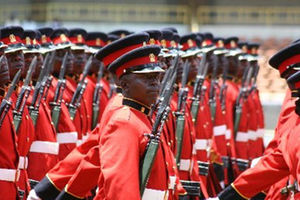
Court of Appeal upholds a Sh8 million compensation awarded to a former Kenya Defence Forces soldier for unfair dismissal.
Photo credit: Shutterstock
The appellate court, however, ruled that the discharge, having been both unconstitutional and illegal, Miyogo was also entitled to compensation for loss of employment, and he was awarded 12 months’ pay.
The court noted that since the right to worship is expressly recognised by the constitution, the refusal to allow him to worship on Saturday was patently unconstitutional.
According to the court, the employer appeared to proceed from the premise that Miyogo had waived his rights to worship by joining the KDF and should therefore not complain when denied the right so to speak, given the nature of military service.
“I disagree with this approach for the reason that the Kenya Defence Forces and all other state officers are primary duty-bearers in relation to the promotion, protection, and respect of all human rights, and are not only obliged to uphold these rights, but also to ensure that others do not violate them,” said the court.
The court maintained that the effect of the decision was not only a limitation of Miyogo’s right to worship but a denial of the same, and the Constitution and Defence Forces Act contemplate a limitation rather than a denial of the right.
The appellate court said no evidence was adduced of any war, insurrection, hostilities, or public emergency that was obtaining at the time, to justify the denial of the former soldier’s right to worship on grounds of operational exigencies, national security, or good order and discipline, and which would undeniably have taken precedence.