Prosecutors and detectives have defended the planned trial of six suspects, including a lawyer, accused of forging the will of former Attorney General James Boro Karugu, insisting the criminal process is lawful, evidence-based, and urgent.
In a replying affidavit filed at the High Court in Nairobi, the Director of Public Prosecutions (DPP) and the Directorate of Criminal Investigations (DCI) argue that forensic findings reveal falsification and coordinated manipulation of key documents, including a will and a trust deed that altered control of Karugu’s vast estate.
The agencies seek dismissal of a petition by the suspects to halt the trial. They maintain that police investigators lawfully uncovered evidence of a calculated scheme to forge the late AG’s testament and a related trust deed.
Karugu, who served as Attorney General from 1980 to 1981, died in November 2022 and was buried at his Kiamara farm. Weeks later, a will dated April 2, 2014, was presented to family members at a Kiambu hotel, alongside a trust deed establishing the JBK Foundation.
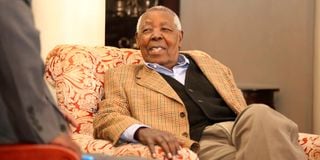
Former Attorney-General James Boro Karugu.
Photo credit: File | Nation Media Group
However, objectors led by his daughter Victoria Nyambura claim the documents were unknown during his lifetime and emerged only after his burial.
Her complaints prompted police investigations, culminating in forgery charges against six individuals: Karugu’s son Eric Mwaura, Jane Wangechi Kabiu, William Kimani Richu, lawyer Peter Mbuthia Gachuhi, Eliud Mwaura Gatambia, and Joshua Mwaura Kimani.
The probe began after a complaint was filed with police and escalated to the DCI’s Economic and Commercial Crimes Unit.
Investigators collected disputed originals, recorded statements, and conducted forensic tests. According to an affidavit filed in court by Chief Inspector Duncan Maina, acting for the DPP and DCI, the documents contained grammatical, arithmetic, and spelling errors inconsistent with Karugu’s meticulous standards.
Investigators also noted page-number anomalies and pagination breaks suggesting a “cut-and-paste” assembly.
The affidavit states that forensic analysis confirmed the initials on the will and trust deed were forged and that the signature page was “fraudulently attached” to the document.
Chief Inspector Maina highlighted further irregularities, including inconsistent pagination, unprofessional property schedules, and disputed signatures on critical pages. The execution page allegedly bore “deliberate obscurity” concealing its number, raising suspicions of tampering.
Former Attorney-General James Karugu recounts his life in office, during an interview at his Kiambu home on May 9, 2017 PHOTO | DIANA NGILA | NATION MEDIA GROUP
Describing Karugu as an impeccable lawyer, investigators questioned how a single document could exhibit erratic page numbering, suggesting assembly from multiple sources.
“The impugned Will and Trust Deed as presented, bear several drafting concerns that do not resonate with professional standards of a man of the stature of the deceased; an impeccable lawyer and secnd Attorney General of the Republic of Kenya. The initials appearing in all pages of the two questioned documents, as of the deceased, are a forgery,” the replying affidavit reads.
These findings led to a December 23, 2025, directive approving charges for forgery, uttering false documents, and conspiracy to defraud.
The suspects include three executors of the contested will, an advocate accused of witnessing it, and an individual allegedly orchestrating the handover. A sixth person remains under investigation.
“The Petitioners/Applicants (except the second Petitioner –Benjamin Githara Karugu) worked in cahoots with each other to plot and execute the falsifications,” the affidavit adds.
However, the suspects obtained conservatory orders from the High Court in January halting their prosecution, arguing that criminal proceedings would pre-empt a pending succession case in the Family Division.
The DPP and DCI reject this claim, asserting that their actions neither interfere with the succession cause nor violate constitutional rights. They emphasize that forgery is a criminal offense under the Penal Code and the Law of Succession Act, prosecutable alongside civil proceedings.
The agencies also deny allegations of bias, stating the case stemmed from Ms Nyambura’s complaint and independent forensic work.
Ms Nyambura told investigators she managed her father’s affairs, including businesses, after he developed dementia, asserting that a 2010 will drafted by Patel & Patel Advocates reflected his true wishes.
She dismissed the 2014 document as riddled with errors uncharacteristic of his precision. Investigators corroborated her claims, finding that witnesses gave conflicting accounts of the contested will’s execution, with some admitting they signed on different days and none witnessing the settlor or other trustees sign the document.
According to the affidavit, investigators interviewed multiple witnesses, sought originals, and commissioned forensic examinations.
It also says one of the petitioners initially resisted producing originals, later surrendered copies, and that the examiner found the questioned initials and signatures were not Karugu’s.
At stake is an estate worth hundreds of millions of shillings, including prime properties in Nairobi, Kiambu, Nakuru, Murang’a, and Kwale; a Nairobi CBD building; Treasury bonds valued at Sh404.7 million; nine vehicles; and substantial shareholdings in NSE-listed companies. Control of his firms under Mathara Holdings Ltd is also contested.
The DPP and DCI warn that delaying the criminal charges risks evidence degradation and erodes public trust.
“The discharge of lawful duties by the Respondents respects the Constitution,” the affidavit states, urging the court not to “usurp” prosecutorial independence. The constitutional petition will be heard later this month, while the succession case is set for March.