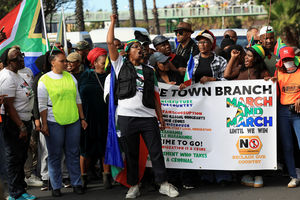
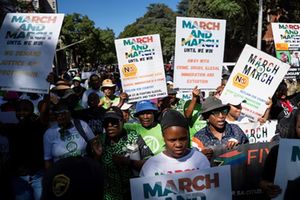
At least 50 Kenyans in South Africa have asked Nairobi to help them return home, citing fear, job losses and growing insecurity amid rising anti-immigrant protests and sporadic attacks on foreign nationals.
They decried the violence in the country, according to a memorandum by their lobby, Kenyan Diaspora in South Africa (KEDASA). The lobby said the High Commission had agreed to assist those who register to seek assistance.
The push for repatriation comes amid rising anti-immigrant sentiment and sporadic violence targeting African foreign nationals in parts of South Africa, with affected Kenyans citing fear for their safety, job losses, and worsening economic vulnerability as key drivers behind their calls for urgent government-assisted return home.
Previously, Kenyan authorities had said Kenyans were mostly safe but cautioned them to be vigilant. Mobs targeting foreigner-owned shops and residences have warned that foreigners should leave the country by June 30.
Foreign nationals sleep on the street after fleeing their homes amid anti-immigrant protests in Durban, South Africa, June 9, 2026.
Photo credit: Reuters
The stranded Kenyans want the government to establish an emergency support framework for vulnerable Kenyans seeking voluntary repatriation, facilitate the issuance of emergency travel documents where required, and to be helped to return to Kenya safely.
Kedasa said it has received requests from 50 Kenyans so far, seeking to be brought back home. It said the numbers could go up as the deadline imposed by the mobs nears.
The actual number of Kenyans living in South Africa is often fluid, but officials estimate that about 27,000 Kenyans are living, working or studying there.
This data does not include those on short stays, like conferences or tourism.
In 2024, some 58,000 Kenyans visited South Africa for tourism after Pretoria lifted short-stay visas on Kenyans.
Over the past few weeks, Kedasa said, it has received numerous distress calls and requests from Kenyans residing in various provinces, including the Eastern Cape, Western Cape, KwaZulu-Natal, Gauteng, Mpumalanga, Northwest, Northern Cape and other areas requesting repatriation.
While circumstances vary from one location to another, the anxiety among affected community members has intensified following recent public campaigns and demonstrations directed at undocumented foreign nationals.
Malawian citizens wait for buses to repatriate amid fears for their safety following threats in Durban, South Africa, June 10, 2026.
Photo credit: Reuters
Many of these individuals, Kedasa said, cite growing insecurity, anti-immigrant sentiment, fear of possible violence, loss of employment opportunities, and increasing vulnerability within their communities as reasons for wishing to return home.
“Particularly concerning are reports from some individuals residing in informal settlements and township communities who express fear for their personal safety and uncertainty regarding their future,” William Thegeya, the Secretary-General of Kedasa, said.
The association said it presented a memorandum with names of Kenyans who want to be helped to return to Kenya’s High Commission in Pretoria.
As a result of the rising tension, the High Commission had in May urged Kenyans in South Africa “to exercise caution and remain vigilant” in light of recent demonstrations and violence affecting foreign nationals in that country.
“Kenyan nationals are urged to avoid, as far as possible, areas where protests or demonstrations may be taking place, and to remain attentive to guidance issued by local authorities. They are further encouraged to always carry valid identification and relevant documentation,” the communiqué dated May 4, read.
On Monday, many of those affected, Mr Thegaya explained, face significant financial challenges and are unable to independently fund travel arrangements or meet the costs associated with obtaining travel documentation.
Some have also reported difficulties relating to expired, lost, or unavailable travel documents, further complicating their ability to return home.
Women fold their bedding on the street where they stay temporarily after fleeing their homes amid anti-immigrant protests in Durban, South Africa, June 9, 2026.
Photo credit: Reuters
Several countries, including Nigeria and Ghana, have repatriated their nationals following a wave of continued anti-immigration protests in South Africa in recent weeks, with campaigners demanding tighter controls on what they described as undocumented migrants and accusing foreigners of contributing to crime and unemployment.
But even visitors travelling to South Africa have expressed fear of being mistreated by authorities who assume all African travellers want to overstay.
Rashid Abdi, a Horn of Africa and Middle East researcher, lamented on X about the treatment of foreigners, saying he has, as a result, stopped going to South Africa for any international conferences.
“As soon as locals figure out you are a black person, possibly African from another country, the automatic assumption is that you are an illegal migrant. You see immediate hostile reaction,” Mr Abdi lamented on X.
“Honestly, I found SA one of the most miserable places on earth in terms of peoples' attitude to foreigners. The visceral hatred towards fellow Africans is unnerving.”