For hours on the night of October 22, 2026, Sancho Kibutu remained in a classified area within Jomo Kenyatta International Airport (JKIA), awaiting the final stages of a process that would see him leave Kenya and return to the United States to face sentencing for a fatal drunk-driving crash dating back to 2013.
That night, his 13-year flight from American authorities came to an end as prosecutors from the Office of the Director of Public Prosecutions (ODPP), officers from the Directorate of Criminal Investigations (DCI) and officials attached to the United States Embassy completed the formal handover of Mr Kibutu to Federal Bureau of Investigation (FBI) agents.
The extradition, facilitated by the Director of Public Prosecutions (DPP) through the Kenyan legal process, followed an extradition request by the US Department of Justice through its Embassy in Nairobi. The process took approximately four weeks.
At the airport, sources told the Nation that Kibutu underwent hours of processing as officials completed the necessary formalities ahead of his departure. He was given an opportunity to say goodbye to his emotional family at the airport before continuing with the process.
As he had done in court for weeks during his extradition hearing, the 45-year-old periodically appeared lost in thought as officers escorted him through the rigorous process. He at times attracted glances from members of the public as he waited to board his plane, perhaps wondering what might have been, amid suggestions that he was eventually tracked down because of his social media activity.
“The extradition underscores the DPP's commitment to facilitating international cooperation in criminal justice and ensuring that individuals wanted to answer for offences in other jurisdictions are brought before the relevant authorities in accordance with the law,” the ODPP said in a statement.
Despite the gravity of the circumstances, there were moments of light conversation, with Kibutu exchanging jokes with FBI agents as the procedures continued. He was subsequently taken through immigration formalities before boarding his flight to California.
The carefully coordinated operation marked the culmination of cooperation between Kenyan and American authorities, with the DPP playing a central role in facilitating the extradition in accordance with the law.
Kibutu, also known as Sancho Kibuto and Njoroge Kibutu, had been wanted in the United States after failing to appear for sentencing following his conviction on September 19, 2013. A bench warrant was issued on October 28, 2013.
He was convicted by the Superior Court of California, County of Madera, of gross vehicular manslaughter while intoxicated, contrary to Section 191.5(a) of the California Penal Code.
Court records indicate that Kibutu, then aged 32, crossed a double yellow line while driving along Golden State Boulevard and collided with another vehicle. The crash killed a 16-year-old passenger and injured the driver and two other occupants.
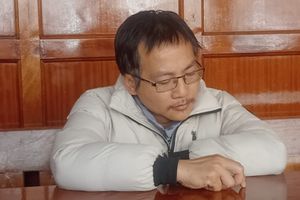
Sancho Kibutu at the Milimani Law Courts. He was convicted of manslaughter in the United States back in 2013.
Photo credit: Billy Ogada | Nation
He was scheduled to appear for sentencing on October 28, 2013, but left the US on October 11, travelling through Dubai before settling in Nairobi, where he remained out of reach of American authorities for 13 years.
A bench warrant was subsequently issued on October 28, 2013, after he failed to appear for sentencing.
The long arm of the law eventually caught up with him following a formal extradition request by the US Department of Justice. Kenyan authorities obtained an arrest warrant on September 3, 2026, before apprehending him in the Runda-Githogororo neighbourhood of Nairobi six days later.
Before his extradition, Kibutu was presented before a Nairobi court, where the prosecution sought his detention as it prepared formal extradition proceedings.
Senior prosecuting counsel Duncan Ondimu told the court that Kibutu had been evading justice since 2013 and posed a significant flight risk.
“The respondent is a convict who has been on the run, as I have mentioned, for 13 years,” Mr Ondimu told the court.
The prosecution sought two days to file the formal extradition application and asked the court to keep Kibutu in custody pending the proceedings.
“The DPP requests a period of two (2) days within which to file a formal extradition application against the respondent,” Mr Ondimu submitted.
He further urged the court to reject any request for bail, arguing that the prosecution had presented sufficient grounds to justify detention.
“I humbly plead that this Honourable Court finds that the Prosecution/Applicant has provided compelling reasons against the release of the Respondent on bail and/or bond pending the hearing and determination of this extradition proceedings.”
The defence opposed the application, arguing that Kibutu had received the court documents without adequate time to review them. His lawyers maintained that he was entitled to bail.
“The right to bail should be given priority as it is suspects’ prerogative right,” the defence argued.
The lawyers also told Magistrate Teresia Nyangena that their client was willing to attend court whenever required if released on bond.
They further argued that holding him in a maximum-security prison, such as Kamiti Maximum or Industrial Area, before the formal extradition proceedings had been filed would amount to an abuse of the judicial process.
In her ruling, Ms Nyangena granted the prosecution two days to file the formal proceedings and directed that the pleadings be served within the same period.
The magistrate declined to order his detention in prison at that stage, directing instead that he be held at Gigiri Police Station, as agreed by counsel. She noted that the substantive extradition proceedings had not yet been formally filed, making a full hearing premature.
The extradition process, facilitated by the DPP and other agencies through the Kenyan courts, took four weeks.
The ODPP said the extradition underscored Kenya’s commitment to international cooperation in criminal justice and ensuring that people wanted to answer for offences in other jurisdictions are brought before the relevant authorities in accordance with the law.
Had Kibutu appeared for sentencing in 2013 and been imprisoned then, he might have completed his sentence by now, depending on the term imposed by the court. Instead, his failure to appear led to years as a fugitive and ultimately his extradition.
His 20-hour journey to face justice in California is expected to end on Saturday evening (Kenyan time).
In another case, the DPP filed extradition proceedings in August against a Chinese national wanted in Uganda on fraud charges in a case in which a firm allegedly lost UGX 4.5 billion (approximately Sh151 million).
The government of Uganda alleges that 39-year-old Chen Guang, alias Alex, manipulated weighbridge bills and payment vouchers during his employment as a cashier at Diamond Steel Uganda Limited.
The extradition proceedings followed a formal request received by the DPP from Uganda on June 10, 2026.
Chen was arrested at Jomo Kenyatta International Airport (JKIA) and is wanted to answer up to 30 counts of forgery and theft linked to his former employer, Diamond Steel Uganda Limited.
Court documents filed at Milimani Law Courts show that Chen, a former cashier and administrator at the company, is wanted to stand trial over alleged financial irregularities involving payment vouchers and supplier transactions.
“It is thus in the interest of justice and in compliance with Kenya’s international obligations, that the warrant of arrest issued against the Respondent be endorsed, and an order for the Respondent’s surrender, return and conveyance to Uganda be issued in order to face trial in Uganda since he will suffer no prejudice at all,” the application stated.
Chen was arrested on August 11, 2026, by immigration officers upon arriving from Harare, Zimbabwe. The arrest warrant was issued by Mukono Chief Magistrates’ Court in Uganda.
Prosecution counsel Fatma Shaban urged the court to approve his extradition and rejected his application for bond, arguing that he was a flight risk.
Chen worked for Diamond Steel Uganda from February 2019 to August 2023, handling payments, supplier transactions, cash withdrawals and other financial operations.
An accounting review allegedly uncovered discrepancies in the company’s records. Suppliers and their agents subsequently disputed the handwriting and signatures on payment vouchers attributed to them, prompting a forensic examination.
“That as can be deduced from the Request and annexures thereto, that the Respondent is wanted to stand trial in Uganda for the subject offences stated herein above,” Ms Shaban submitted.
A handwriting expert’s report dated December 13, 2024, allegedly linked Chen to questioned documents, including payment vouchers and signatures purporting to belong to the company’s purchasing officer and suppliers.
The extradition request, dated April 18, 2026, was transmitted through Kenya’s Attorney-General and Department of Justice, seeking enforcement of the Ugandan arrest warrant and Chen’s surrender to face trial.