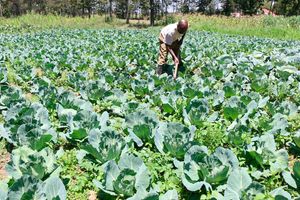
Kenya’s maize production is projected to drop by 39 per cent to 2.2 million tonnes in the year to June 2027, raising the risk of higher food prices as the country heads into a General Election year.
The projected decline from 3.4 million tonnes in the year to June 2026 will deepen the country’s reliance on imports to plug a domestic supply deficit, according to the United States Department of Agriculture (USDA).
The shortfall comes as households continue to contend with elevated living costs, with food and energy prices pushing Kenya’s annual inflation rate to 6.8 per cent in September from 6.6 per cent in August.
The US forecast is backed by a Central Bank of Kenya survey indicating households face fresh food price pressures in the coming months due to prolonged dry weather.
About 466 farmers, wholesalers and retailers interviewed in a September survey have singled out milk, maize flour, wheat flour and cooking oil among commodities facing renewed upward price pressure.
The International Monetary Fund’s October 2026 outlook also points to inflationary pressures across the region, projecting median inflation in sub-Saharan Africa to rise to 5 per cent in 2027 from 3.4 per cent in 2025.
Kenya’s actual inflation trajectory will depend on domestic food supply, fuel costs and other economic conditions.
The prospect of a smaller maize harvest could complicate the government’s efforts to contain the cost of the staple food, particularly if imports become more expensive or regional suppliers cannot meet Kenya’s requirements.
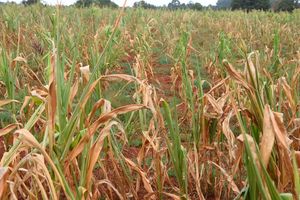
The USDA’s Foreign Agricultural Service says an unexpected dry spell between early June and late July 2026 damaged crops in western Kenya that would ordinarily have been harvested in November.
Rainfall in June and July across much of the country’s grain-producing regions was among the lowest recorded since 1980, with the agency attributing the losses to an El Niño-induced drought that affected critical stages of maize development.
“The large production drop is due to a very strong El Niño drought from June to August and it caused widespread crop failure in Kenya’s northern Rift Valley and western counties,” the USDA said in its October 15 report.
The largest rainfall deficits occurred in major maize-producing counties, including Trans Nzoia, which accounts for 14 per cent of national production, Uasin Gishu at 10 per cent, Bungoma at 7 per cent and Nakuru at 6 per cent.
The agency said the rainfall deficits resulted in the largest reduction in national maize production relative to the five-year average in 50 years.
Kenya has two main maize-growing seasons: the long rains between March and May, which produce the bulk of the harvest, and the short rains between October and December.
The USDA expects continued abnormal weather into 2027, with the anticipated El Niño rains presenting a further risk to agricultural production. Although the rains could replenish depleted water reservoirs, a rapid transition from dry conditions to intense rainfall could trigger flash floods, wash away crops and increase post-harvest losses.
The agency expects the impact to be particularly pronounced in short-rains growing areas of eastern and central Kenya.
The USDA estimates that Kenya will need to import a record 2.3 million tonnes of maize to secure its food and feed supplies in the 2026/27 marketing year.
However, the agency says the government has yet to clarify the sources of the additional supplies, while traditional regional trading partners may be unable to cover a deficit of this magnitude because of widespread agricultural challenges.
Kenya’s maize imports jumped by 51.4 per cent to 468,109 tonnes in 2025, reversing two consecutive years of decline, according to the Kenya National Bureau of Statistics. The increase followed the government’s decision to open a duty-free window for yellow maize, highlighting the country’s reliance on external supplies to stabilise food and animal-feed markets.
The projected production shortfall could put further pressure on the import bill and expose domestic prices to movements in regional maize prices, transport costs and the exchange rate.
The projected decline also comes against the backdrop of Kenya’s 2027 General Election, when the cost of living is likely to remain a key economic and political issue.
Historical USDA production estimates show that maize output has fluctuated during previous election years, although the figures do not establish a consistent relationship between elections and harvest performance.
Production stood at about 2.43 million tonnes in 2002, rose to 2.93 million tonnes in 2007 and reached approximately 3.59 million tonnes in 2013. Output subsequently declined to about 3.19 million tonnes in 2017 and 3.09 million tonnes in 2022.
The figures illustrate the vulnerability of maize production to weather and other agricultural conditions rather than an inherent election-year pattern. In 2022, for instance, drought across much of the country contributed to a contraction in agricultural output. Maize production fell to 3.09 million tonnes from 3.30 million tonnes in 2021, according to KNBS.
By contrast, favourable rainfall, increased acreage and government fertiliser subsidies helped lift maize production to 4.29 million tonnes in 2023, demonstrating the potential for output to recover when growing conditions improve.
The anticipated 2026/27 shortfall will therefore test the government’s ability to secure adequate supplies and limit price pressures in the months leading up to the election.
The extent of the impact on consumers will depend on the size and timing of imports, the performance of the next harvest and the government’s response to emerging supply gaps.