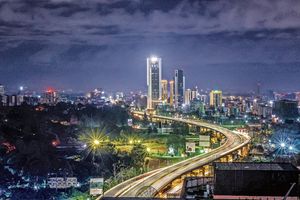
December is to many Kenyans a festive season when family, friends and loved ones gather together for the annual ritual of Christmas and the New Year Celebrations.
This, however, is not true for many Kenyans in the diaspora because of a range of immigration, personal, financial and familial complications. Too many are forced to remain in a geographic, physical and emotional prison that becomes the USA.
Cost is one of the more prohibitive elements to visiting Kenya. Especially during the festive season, when a majority of the diasporans have time off for Christmas and the New Year. A round-trip direct from New York to Nairobi on Kenya Airways around the New Year period costs over $2500 (Sh323,000).
Most carriers with multiple layovers from the US to Nairobi, like Ethiopian or Rwandair, run over $2000 (Sh258,000) for tickets. For a family of four, even a $2,000 ticket runs over $10,000 on tickets alone.
A car rental for a two-week stay at $50 a day runs over $700. Accommodations for a family of four is not staying with relatives for 14 days, can cost over $100 a night in many Airbnb’s in Kenya if you are able to find the accommodation at peak travel season.
A round-trip direct from New York to Nairobi on Kenya Airways around the New Year period costs over $2500 (Sh323,000).
Photo credit: Shutterstock
Food and drink for a family of four at a modest $50 a day or $200 for four adds more of a burden to the cost of travel at $2800. In total - excluding the expected “Black Tax ” (dollar handouts to family and relatives), a family of four can expect to spend close to $15,000 (about Sh2 million) just for two weeks of travel.
Los Angeles-based Kenyan communication consultant Mukurima Muriuki feels there are a range of reasons Kenyans stay for years without visiting the motherland.
“People have different approaches to living abroad. Once in the US, some Kenyans feel America is their new home and are ready to integrate completely. Forgetting the motherland totally. Other Kenyans ran to the US as refugees fleeing political prosecution,” Mr Muriuki says.
The late Kenyan literary icon Ngugi wa Thiong’o was one such example. Complicated political conflicts with successive Kenyan governments forced him to die in exile after decades abroad, not returning to Kenya.
Fear plays a big part in Kenyans remaining “Majuu ” (abroad). Leaving the US when a returnee is out of status can lead to blacklisting by the US government. Blacklisting has severe administrative consequences, as the individual blacklisted is banned from re-entering the US permanently.
Many Kenyans have wives, husbands, children and lovers in the US.
Facing the horrible dilemma of leaving the US to visit Kenya and never being able to return to see loved ones in America, is a major challenge.
“Many Kenyans stuck in the US lack the necessary immigration papers that would enable them to exit and return to the US. Added to this is the challenge that it is usually more expensive to travel to Kenya during the holiday season because of limited seat availability on airplanes - hence higher ticket prices,” Professor Kefa Otiso of Bowling Green State University in Ohio, USA says.
Not all Kenyans in the US can visit Kenya because of immigration issues. Many also have to deal with toxic family cultures and narcissistic family members, friends and relatives. Coming to visit Kenya for this demographic is tantamount to reopening torturous family wounds that have never healed.
According to Professor Otiso, who has over 30 years of lived experience in the US, some Kenyans have married Americans and become disconnected from Kenya.
“There are also some Kenyan individuals and families that now self-identify as Americans and have no reason to visit Kenya. Some of these individuals and families have bad relationships with family and friends in Kenya and, therefore, have little reason to visit Kenya,” says Prof Otiso.
He adds that, “There is now a growing population of elderly Kenyans who have few relatives in Kenya. Such Kenyans are either physically unable to visit Kenya or have few or no close relatives to visit in Kenya”.
Lastly, Northern Arizona University International Relations professor Eric Otenyo states that Trump’s arbitrary and capricious immigration policies have forced many Kenyans attempting to change their immigration status to avoid the risk of leaving the country.
Travel bans, blacklisting of select countries, removal of Temporary Protected Status (TPS) for refugees from certain countries and the general xenophobic fear and hysteria in the US from the Trump Administration have complicated the travel plans for many Kenyans.
Therefore, during this festive season, before passing judgment on why many US-based diaspora Kenyans stay for years without visiting the motherland, think first about their dilemmas and unique individual vicissitudes. Life never hands Kenyans in diaspora a flush of ace cards. Some hands are harder than others to reconcile in life.