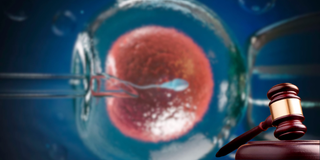
What happens when a fertility clinic uses the wrong donated sperm to a baby-seeking woman? Or when DNA tests cast doubt on the parentage of a child born through surrogacy?
Kenyan courts are increasingly being asked to answer such questions in the booming InVitro Fertilisation (IVF) and health reproductive sector operating without a comprehensive legal framework.
Recent disputes involving donor selection, embryo handling and contested parentage are exposing the hidden risks of assisted reproduction and revealing major regulatory gaps in Kenya's fertility industry.
They have also thrust judges into the unfamiliar role of resolving disputes that lawmakers have yet to adequately regulate. The result is a growing body of litigation exposing the regulatory gaps in one of healthcare's most sensitive fields.
A DNA test conducted nearly three years after a fertility procedure has opened a rare window into one of the least regulated areas of healthcare.
The test became the foundation of a lawsuit by Ms JW, a Nairobi woman who claims a fertility clinic used donor sperm that did not match the racial characteristics she had specified before undergoing treatment.
Her case has since evolved into something much bigger. It has drawn judicial scrutiny to how fertility clinics select donors, screen genetic material, communicate with patients and keep records.
It has also exposed the absence of a dedicated legal framework governing assisted reproductive technology in Kenya.
Last week, the High Court revived Ms JW’s case against NMC Fertility (K) Limited after a lower court dismissed it as time-barred.
The woman had sought intrauterine insemination services in November 2018. She told the court she provided specific donor requirements before undergoing the medical procedure.
She later alleged that the clinic acted contrary to those specifications and failed to adequately scrutinise donor samples for pre-existing illnesses.
According to court records, she gave birth to a child in August 2019 and later became concerned that the child's race did not match the donor profile she had selected. The child also had a medical condition.
A DNA test conducted on June 16, 2021, allegedly confirmed that the child was of mixed race. She claims that this caused her distress and psychological suffering.
She subsequently sued the clinic, seeking damages for distress, psychological suffering and breach of contract and punitive and exemplary damages.
Assisted reproduction arrangement
The clinic denied liability and argued that the case had been filed outside the statutory limitation period.
The High Court disagreed and found that the dispute could not be viewed solely as a negligence claim because it arose from a contractual relationship between a patient and a fertility provider.
"The Appellant expressly pleaded breach of contract," the judge said.
The court found that allegations concerning donor specifications and screening obligations formed part of the agreement between the parties.
"The claim is properly characterized as a hybrid claim, with both contractual and tortious elements," the judge said.
The court used the dispute to spotlight what it described as a legal framework that is poorly equipped to handle modern fertility treatment disputes.
"The current legal framework in Kenya is ill-suited to address the unique challenges presented by assisted reproductive technology disputes," the court said.
Those challenges are no longer theoretical. A separate dispute involving a Nairobi fertility centre has raised equally troubling questions about embryo handling, surrogacy arrangements and genetic parentage.
In another high-profile dispute , IVF specialist Dr Sarita Sukhija and her Nairobi-based Myra IVF Centre became embroiled in a legal battle after a surrogate mother gave birth to a child following an assisted reproduction arrangement.
Recent disputes involving donor selection, embryo handling and contested parentage are exposing the hidden risks of assisted reproduction.
Photo credit: Shutterstock
The dispute arose after DNA tests allegedly showed that the baby was not genetically related to the intended parents, prompting questions about the handling of embryos, donor material and the fertility procedures undertaken by the clinic.
Soon after the birth, the intended mother, Ms CMM, raised concerns about the baby’s complexion, saying it appeared darker than expected given the genetic father and the selected egg donor.
Ms CMM and her partner Mr RM approached the fertility clinic in March 2024 seeking help to have a child through surrogacy. Mr RM provided a sperm sample while the clinic sourced an anonymous egg donor of Indian descent after the couple expressed that preference.
But shortly after the delivery, the couple began expressing doubts about the child’s parentage due to the skin tone.
They later commissioned independent DNA tests which they said showed the child had no genetic relationship to them.
The matter escalated into criminal investigations, with allegations of conspiracy, obtaining registration by false pretences and making false documents.
However, the High Court questioned the decision to pursue criminal charges, finding that the dispute appeared to stem from alleged negligence or incompetence in the fertility process rather than criminal conduct.
The court warned against using the criminal justice system to resolve what was essentially a complex reproductive medicine dispute involving parentage, medical accountability and the handling of assisted reproduction procedures.
Dr Sarita told the court she had acted in accordance with accepted medical standards throughout the process and denied any wrongdoing.
She stated that Mr RM and MS CMM were actively involved at all stages of the surrogacy process, including sperm and egg collection, fertilization, embryo creation, and implantation, with one embryo remaining at her clinic while another was successfully implanted into the surrogate mother.
In both cases the most critical questions emerged only years after the fertility procedures had been completed. The legal disputes have fuelled concerns that fertility treatment errors could leave parents raising children conceived through the wrong donor or embryo.
A patient may not immediately know whether donor material was correctly selected. Intended parents may not discover problems involving embryos or genetic parentage until a child is born.
"The DNA test was conducted on June 16, 2021, and it is on that date that the Appellant discovered, as a matter of certainty, that the child was of mixed race," the court said in the case of Ms JW.
The court noted that the full extent of an alleged breach in fertility treatment may only become apparent years after a procedure has taken place.
That observation lies at the centre of an ongoing debate over regulation. Kenya currently lacks a comprehensive law governing assisted reproductive technology.
Instead, disputes involving fertility treatment are often litigated through a patchwork of contract law, negligence claims, constitutional petitions and family law principles.
As a result, judges frequently find themselves resolving issues that extend far beyond traditional medical negligence.
Questions about donor selection, donor anonymity, embryo ownership, informed consent, surrogacy agreements, disclosure obligations and genetic parentage continue to emerge without a dedicated statutory framework.
The High Court pointed to the proposed Artificial Reproductive Technology Bill as a possible solution.
Fertility-related disputes
According to the judgment, the proposed law would establish standards of care for fertility clinics, donor screening requirements and disclosure obligations.
It would also create rules specifically designed for disputes arising from assisted reproductive technology.
"The enactment of such legislation is long overdue," the court said. The growing number of fertility-related disputes reflects the increasing use of assisted reproduction services by Kenyan families.
As demand rises, so do expectations regarding transparency, accountability and patient protection.
The fertility disputes are not isolated. The courts have increasingly become the arena for resolving reproductive-rights and medical-accountability battles.
In one case, the High Court awarded a woman Sh157 million after finding that medical negligence left her infertile following an unauthorised procedure.
In another, the courts grappled with claims involving reproductive injury and alleged negligent medical care. The case focused on informed consent, patient autonomy and the responsibility of hospitals and doctors when treatment causes irreversible reproductive harm.
Together, the cases show how disputes touching on fertility, parenthood and reproductive autonomy are increasingly ending up before judiciary amid the absence of a specialised legal framework.
Some of the key questions arising include what happens when donor material does not match a patient's specifications and who bears responsibility if embryos are mishandled?
How should courts determine parentage when DNA evidence conflicts with expectations created through fertility arrangements?
The answers remain uncertain but for now, the legal system continues to address those questions one dispute at a time.
In reinstating Ms JW's lawsuit against the fertility clinic, the High Court made clear that her allegations deserve a full hearing.
"The appellant deserves her day in court," the judge said. That hearing scheduiled to start next month may ultimately determine whether the clinic is liable.
But regardless of the outcome, the case has already exposed deeper questions about trust, accountability and regulation within one of Kenya's fastest-evolving fields of medicine.
As DNA technology increasingly reveals what once remained hidden, Kenya's fertility clinics are finding themselves under unprecedented legal scrutiny.