Kenya’s Ebola preparedness has come under scrutiny after screening protocols failed to detect a case at the Jomo Kenyatta International Airport, with the patient testing positive for the virus in Nairobi barely 24 hours before dying.
Health Services Director-General Patrick Amoth on Tuesday said the symptoms usually detected during screening before travel may have been masked by medication that the patient was on.
“It is potentially possible that some of the medication he was taking could be able to mask some of the symptoms and therefore give a false positive screening, meaning you could pass through the screening,” he said.
Ebola alert: Kenya registers first fatality in Nairobi
On Tuesday, the World Health Organisation (WHO) said the patient, a Kenyan citizen, fell ill in the Democratic Republic of the Congo, where he had been living and was treated at several health facilities there.
“The patient then travelled by road to Kampala, Uganda through Beni on 2 October 2026, and flew to Nairobi, arriving on 3 October 2026. On arrival, the patient was transported to a hospital in Nairobi and was quickly isolated, “ said Dr Mohamed Janabi, WHO Regional Director for Africa.
He added: “Samples tested positive for Bundibugyo virus disease (BVD) at both the National Virology Reference Laboratory and the Kenya Medical Research Institute. Despite supportive care, the patient died on the night of 5 October 2026 and was buried on 6 October 2026 in line with the country’s Ebola safe and dignified burial protocol.”
The government notified WHO of the case in line with the International Health Regulations (2005) on 6 October 2026.
A senior Kenya Airways official, however, said the airline could not comment on the Ebola preparedness and ability of the country’s airports to screen every passenger. The officials said responsibility for such measures lay with the Ministry of Health and Port Health Services as the issue was bigger than the airline.
“This issue is bigger than the airline. Our customers continue with their flights and they are following guidelines issued by the Ministry of Health, which began a campaign on Ebola prevention in May,” the official said.
Travelers at Jomo Kenyatta International Airport in Nairobi.
Photo credit: Wilfred Nyangaresi | Nation Media Group
Jambojet, a Kenya Airways subsidiary whose flight carried the patient from Entebbe to Nairobi last Saturday night, said it was working with health authorities to trace and manage passengers and crew who may have been exposed.
Port Health Services, in a statement, said its mandate includes traveller health screening, quarantine and referral of suspected cases, as well as coordinating rapid responses to public health emergencies at airports, land crossings and maritime ports.
“We are working closely with the Ministry of Health, Port Health Services and other relevant authorities to support the ongoing public health response, including the identification and management of the other guests and crew who may have been in contact with the individual,” it said. “The health and safety of our guests, crew and staff remains our highest priority. We’ll continue to provide updates as and when it becomes available.”
Virologist Omu Anzala said authorities must urgently review how screening is conducted at airports and other borders.
Prof Anzala said Kenya had invested in preparedness, including training, screening and measures at border points, but the arrival of an infected traveller in Nairobi showed there were weaknesses that need to be addressed.
Prof Anzala said Kenya had prepared for an Ebola outbreak, with screening taking place at airports and other points of entry, but “somewhere in between” the infected traveller managed to get through.
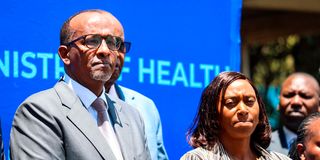
Health Cabinet Secretary Aden Duale said the Ministry had identified 28 contacts and was tracing 23 passengers and four crew members who were on the same flight.
Cabinet Secretary for Health Aden Duale addresses journalists at Afya House in Nairobi on October 6, 2026, following Kenya’s first Ebola death.
Photo credit: Bonface Bogita | Nation
Prof Anzala questioned whether the airport screening process was sufficiently effective to detect the case.
“This fever should have been picked up at the airport. These guys should not have travelled in a public vehicle,” he said, adding that the patient had already sought treatment at several facilities in the DRC before travelling.
The Ministry of Health has confirmed that the patient underwent routine public health screening at the Port Health and Immigration desks at JKIA, after which they were collected by a relative and a friend.
This case follows months of preparation by Kenya in response to the Ebola outbreak in the DRC and its subsequent spread across the region, particularly to Uganda.
In an update yesterday, Mr Duale said that the Ministry had screened 652,584 travellers and tested 267 samples in five laboratories, with only one testing positive. He also said that 4,971 health workers had been trained at national and county levels in the prevention and management of Ebola.
Prof Anzala said the latest case should prompt the authorities to test not only whether protocols exist, but also whether they can detect and contain a real case.
“We should run simulations again to see how we would identify this case at the airport, quarantine the patient quickly and transport them to an isolation and treatment facility,” he said.
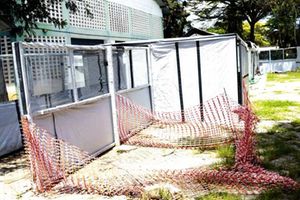
This exercise should establish where the system broke down, and how quickly a suspected patient can be detected, isolated, and transported without exposing others.
Another immediate challenge is contact tracing, with Prof Anzala saying that everyone who had direct contact with the patient must be identified and removed from circulation for monitoring.
This includes passengers and crew on the Jambojet flight, airport workers who handled the traveller or his luggage, people who transported him from the airport, and relatives and healthcare workers who interacted with him before his diagnosis.
He also expressed concern about the patient’s journey from the DRC through Uganda, stating that contact tracing should not end at Kenya’s borders.
As the patient travelled by bus from the DRC to Kampala, Uganda must trace anyone who travelled with him. Kenya, meanwhile, is responsible for tracing anyone he encountered after arriving in Nairobi, including those on the Jambojet flight.
“All the people in that flight should be mopped up and quarantined as quickly as possible. All of them for at least 21 days,” Prof Anzala said.
His call is consistent with World Health Organisation guidance, which recommends stronger cross-border surveillance, screening at airports and land crossings, international contact tracing and preventing confirmed, suspected or probable cases and their contacts from travelling internationally.
The WHO, however, has not recommended blanket border closures or flight suspensions, instead calling for targeted measures that allow countries to detect and manage infected or exposed travellers while keeping essential travel moving.