A family seeking compensation over the death of a woman in a medical negligence case has been given another chance to have its claim heard, despite the case remaining unresolved for more than 14 years.
The High Court in Nairobi dismissed an appeal by the medical doctor who wanted the suit brought by Agnes Wakuraya Ngatia and Peter Ngatia, administrators of the estate of Catherine Mumbi Ngatia, thrown out over delays in prosecuting it.
But while allowing the case to proceed, Justice Linus Kassan warned the family that it must now move with urgency, cautioning that any further unexplained inactivity could count against it if the doctor renews his application to have the case dismissed.
The judge, in a ruling delivered on October 28, also directed that the case be given priority hearing dates, with the trial court required to hear an application pending since April 2022 within 30 days of the parties appearing for case-management directions.
The dispute arose from a suit filed in 2012 by the deceased’s family against the doctor and The Nairobi Hospital, accusing them of medical negligence in connection with Catherine’s death.
The family is seeking to have its claim determined in court, but the doctor argued that the prolonged delay had made it unfair to continue with the proceedings.
He told the court that the case had remained inactive for more than two years and that the family had failed to take meaningful steps to move it forward. He also raised concerns that witnesses’ memories could fade and that assembling evidence to defend the claim would become increasingly difficult with time.
The doctor further argued that the suit had automatically abated under the Civil Procedure Rules because no step had been taken for two years.
The family, however, blamed the delay partly on difficulties accessing the court file, saying its lawyers had repeatedly written to the registry seeking a hearing date.
Justice Kassan found that the case had not automatically abated because the record showed that steps had been taken within the two years.
The judge traced the proceedings to an application filed by the family on April 13, 2022, seeking permission to amend its claim. That application was scheduled for hearing on July 26, 2022, but did not proceed. It was listed again on September 19, 2022, when the court file was reportedly unavailable.
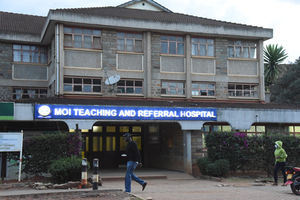
The Nairobi Hospital. A family sued a doctor and The Nairobi Hospital, accusing them of medical negligence in connection with their kin’s death.
Photo credit: File | Nation Media Group
The family’s lawyers subsequently wrote to the registry on February 16, 2023, and May 15, 2023, seeking a hearing date.
The judge accepted the two letters as genuine attempts to move the case forward, although he declined to rely on a third letter dated August 8, 2024, because the family had not demonstrated that it had reached the registry.
Even without that third letter, the court found that the period between the May 2023 correspondence and a court mention on December 9, 2024, was about 19 months — short of the two years required for automatic dismissal.
“The mere passing of time is not inactivity if steps were taken, and a pretended step is not a step at all,” Justice Kassan said.
He explained that a party seeking to have a case dismissed automatically must first show when the last step was taken and that two years had elapsed. The party opposing dismissal must then identify and prove any steps taken during that period.
The judge rejected the argument that the family should have sought to reconstruct the court file, saying that this was unnecessary where the file was believed to be at the registry and was later found.
“A litigant should not lose his claim because the court’s own registry could not produce the file,” he said.
However, Justice Kassan was critical of the family’s efforts to move the case, observing that writing to the registry every few months amounted to only modest diligence.
“A party who wants a pending application heard is expected to pursue the court actively, including by attending registry or mention dates,” he said.
The judge acknowledged that the case was old, having been filed on December 6, 2012, and amended on May 15, 2018, but said the court had no material to establish who was responsible for the delay between 2012 and 2018.
He also accepted that the doctor faced some prejudice from the passage of time, particularly the risk of witnesses forgetting details and difficulties in preparing a defence.
“In a claim arising from events more than a decade ago, the Court accepts that long delay carries some inherent prejudice even without specific proof,” he said.
However, the doctor had not identified any particular witness who had died or become unavailable, any missing record, or any part of his defence that had been irretrievably damaged.
Justice Kassan noted that medical negligence cases often depend heavily on medical records and other documents, which are less vulnerable to fading memories than oral testimony.
He concluded that the trial magistrate had properly considered the explanation for the delay, the seriousness of the claim and the parties’ right to a fair hearing.
The judge said the decision not to dismiss the case was within the range of decisions available to the magistrate and that he would have reached the same conclusion.
But he made it clear that the ruling was not an endorsement of the pace at which the case had moved.
“The Respondents remain under a duty to prosecute their suit diligently. The subordinate court, for its part, has a duty to manage the case actively and to see that the file is accessible,” he said.
The Deputy Registrar was directed to return the lower court file to the trial court within seven days and ensure it is kept somewhere it can be produced whenever required.
The parties must appear before the trial court within 14 days for directions, while the family’s April 13, 2022, application to amend the suit must be heard within 30 days of that appearance.
The judge further directed that the main case be given priority hearing dates and warned that any further unexplained inactivity by the family would be considered if the doctor makes another application to have it dismissed.