Kenya’s education sector is grappling with a largely hidden crisis of scale that threatens the efficiency and financial sustainability of public secondary schools.
New data shows that at least 2,700 public secondary schools — nearly 28 per cent of the country’s 9,605 institutions — are operating with critically low student enrolment, each having fewer than 150 learners.
The situation is pushing the Ministry of Education to consider drastic measures to optimise resource deployment, particularly as the country rolls out the resource-intensive Competency-Based Education (CBE) system at the Senior School level.
The Head of the Directorate of Secondary Education at the Education ministry Dr William Sugut revealed the alarming statistics and the challenges they pose.
“We have a total of 9,605 public secondary schools, and 2,700 of them have an enrollment of less than 150 learners. The Ministry of Education will hold discussions, in consultation with stakeholders, to assess the viability of these schools,” Dr Sugut said during a stakeholders’ interview on Citizen TV.
The discussions will centre on whether the low-enrolment schools are serving government objectives effectively and whether teachers deployed to them are being fully utilised.
Dr Sugut said that while access to education remains a core principle, the sustainability of certain institutions must be reviewed to ensure public funds are used efficiently.
Education experts argue that the proliferation of small, often unplanned schools is directly contributing to Kenya’s teacher shortage crisis.
“Part of the teacher shortage we are experiencing stems from the unplanned proliferation of schools. In some small areas, you find many public schools, each with only a few learners but all requiring the same number of teachers,” said Dr Emmanuel Manyasa of Usawa Agenda.
A major challenge affecting Kenya’s education system — particularly in the Arid and Semi-Arid Lands (ASALs) — is the extreme distance between homes and public schools.
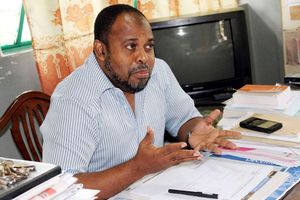
Usawa Agenda Executive Director Emmanuel Manyasa.
Photo credit: File | Nation Media Group
According to Dr Manyasa, the proximity challenge is so severe that children as young as seven years old are being forced into boarding facilities.
“In some areas, the nearest school is 50 kilometres away. Children as young as seven have to board because it is impossible to commute daily,” he said.
Zizi Afrique Foundation Chief Executive Officer Dr John Mugo recommended a targeted approach to address chronic staffing shortages in the North Eastern region by training and incentivizing residents to join the teaching profession.
Such interventions, he noted, are critical to the successful implementation of the resource-intensive CBE system across the country.
Zizi Afrique Foundation Executive Director Dr John Mugo.
Photo credit: Francis Nderitu | Nation Media Group
This approach, Dr Mugo added, tackles the root cause of the staffing crisis — the difficulty of retaining teachers from outside the region — by creating a sustainable local supply.
“Teachers are not meeting the minimum number of lessons required per week. This forces a difficult choice: either collapse such small schools to enable teacher sharing, or implement strategies for nearby schools to share teachers, especially for practical subjects that require fewer lessons,” Dr Mugo said.
He further stressed the non-viability of small secondary schools, arguing that any institution with fewer than 300 learners is economically unsustainable.
Beyond enrollment, the crisis also highlights deep resource gaps. Dr Manyasa pointed to widespread inadequacies in science and computer laboratories across the public school network.
Stakeholders also urged the government to address inequitable teacher distribution, particularly in marginalised regions.