About 3,100 public secondary schools with low student enrolment may soon be merged, as the government explores ways to optimise resource use amid growing financial constraints, the Sunday Nation understands
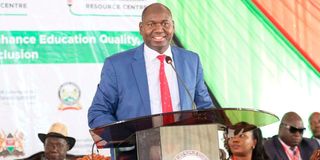
Basic Education Principal Secretary Julius Bitok, at an event said the move is informed by insights from the recently concluded placement exercise for over 1.2 million Grade 9 learners transitioning to senior secondary school under the Competency-Based Education (CBE). It had emerged that more than half of the 9,750 secondary schools across the country were not selected by learners joining Grade 10 under the new curriculum.
Further analysis shows 3,000 of the senior secondary schools have populations of less than 150 students, highlighting inadequate resource to run them.
“We are going to call all stakeholders so we can have a national conversation on the sustainability of some of our schools, so that we are able to optimize the utility of resources,” said Dr Bitok.
The PS noted that while the exact reasons behind the low selection rates were not exhaustively outlined, factors such as infrastructure gaps, academic performance, location, and perceived prestige of schools likely influenced the choices made by learners and parents. By failing to attract learners, then it means the affected schools are set for a tough road ahead since no capitation will come their way.
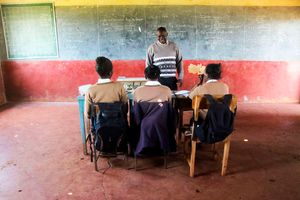
Michael Thimba, Principal of Kanjora Secondary School in Nyeri, engages the Form Three students on February 25, 2025.
Photo credit: Joseph Kanyi | Nation Media Group
Every learner in secondary school is entitled to Sh22,244 per year in tuition fees with the Ministry required to disburse that money in three tranches at a ratio of 50:30: 20 percent.
However, this disbursement ration has not been adhered to this calendar year leading to a capitation deficit of Sh18 billion, causing financial distress to the institutions with the principals now saying it is affecting learning.
Of this bill, Sh7.5 billion is for Term I and Sh10.5 billion for Term II, which has led to stalled operations and mounting debts in many institutions.
The Kenya Secondary Schools Heads Association (Kessha) last week warned that public secondary schools, particularly day schools, are teetering on the brink of collapse due to delayed capitation funds from the National Treasury.
Bitok’s remarks come in the wake of a proposal by Kessha officials urging the government to implement a minimum essential package for schools with low enrolment, as recommended by the Presidential Working Party on Education Reforms.
The package is intended to cushion such schools and ensure their day-to-day operations remain sustainable.
The PS highlighted that interactive meetings with secondary school principals in Elgeyo Marakwet it was clear that there were issues that needed to be discussed as a country.
“When we asked the Principals what is the reason for the non-selection of some schools, we realised that more than 3,000 of these 9,750 schools have less than 150 students, meaning they are very small,” he said.
This revelation raises critical questions about the sustainability and efficiency of running thousands of small schools amid a struggling economy and delayed disbursement of government funding.
A new report by Zizi Afrique Foundation and Usawa Agenda identifies capitation and teacher shortage for public schools as a major drawback to delivering effective education outcomes.
The report titled State of Education in Kenya identified lack of adequate staffing, ICT, Science facilities and related Physical infrastructure including ablution and sanitation blocks as some of the major challenges hampering education development in Kenya.
For instance, nationally, only 33.9 percent of secondary and senior schools offer computer lessons, with 92.1 per cent of these being national schools (now cluster 1) compared to only 17.3 per cent of sub-county schools (now cluster 4).