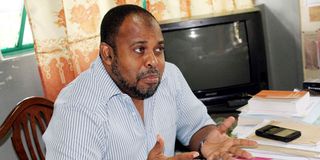
The Kenya Primary Schools Heads Association (Kepsha) has sounded the alarm over delays in releasing funds for schools, warning that thousands of institutions are “running on empty” as the crucial third term enters its sixth week.
Kepsha chairperson Fuad Ali said head teachers across the country are struggling to keep schools afloat, with many forced to operate on credit to pay suppliers and maintain basic services.
“Many schools are surviving on debts. Unfortunately, since schools opened, we have not received any capitation. As of last week, Ministry of Education officials assured us that 8,000 junior schools had already been cleared, but 11,000 primary schools are still waiting for funds,” Mr Ali said on Wednesday.
He warned that boarding schools cannot purchase enough food supplies, while day schools are unable to meet salaries and utility bills.
“We are currently requesting the ministry to release these funds as quickly as possible. Six weeks into the term, many schools, especially those with high operating costs, are struggling to stay afloat. Some are running entirely on credit. We urge the Cabinet Secretary (Julius Ogamba) to intervene so that the funds can be disbursed promptly, to allow schools to prepare for the upcoming national assessments in a few weeks,” he said.
Kenya has about 23,000 public primary schools, meaning the majority remain stranded despite partial clearance. Mr Ali urged the government to disburse full allocations to schools already verified, and at least 50 percent of funds to those still under data verification.
“This is an urgent appeal. For compliant schools, let the money flow now. For those still under audit, release half of the allocation so that schools can breathe,” he said.
His remarks came a day after Education Cabinet Secretary Julius Ogamba said that out of 32,000 schools, 30,000 had already been verified and received their capitation.
While addressing the Senate on Wednesday, Mr Ogamba further revealed that the Ministry of Education is considering merging schools with low enrolment once the ongoing audit is complete.
“We are dealing with the problem of ghost schools. Some institutions have fewer than 10 learners. We will interrogate whether such schools should be merged or separated,” he said.
On concerns that some schools had submitted erroneous enrolment data, Mr Ali confirmed that head teachers have been asked to correct their figures but maintained that this should not delay funds for compliant schools.
“The data errors are being addressed, but our plea is simple: do not punish the schools that have already been cleared. They need the money now,” he said.