Thousands of students have, in the recent past, lost valuable learning time as their schools shut down and parents kept them home to avoid risk of violence from political protests.
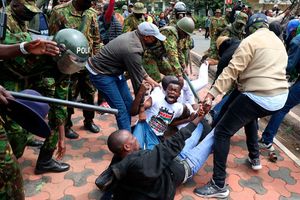
Learners in certain schools, especially in urban areas, have borne the brunt of this disruption when demonstrators clash with security officers, with some ending up injured.
Moi Avenue Comprehensive School, in the Nairobi city centre, is one such school. Others in the capital include Jamhuri High School in Ngara and St Brigid's Public Primary School in Eastleigh, whose proximity to protest hotspots has left learners vulnerable to disruption.
A section of Jamhuri High School in Nairobi.
Photo credit: File | Nation Media Group
Similar precautionary closures have also been reported in parts of Kiambu, Mombasa, Kisumu and Nakuru whenever demonstrations are called, suggesting that schools located near commercial centres and key transport routes continue to face high risk during periods of unrest.
"Although the government says there's no public holiday and children should go to school as usual, mine did not go. The risk is too high," said Nelly Koki, a parent from Nairobi.
When calls were made for demonstrations to mark Saba Saba Day, a number of schools suspended physical learning, once again exposing how political unrest has increasingly become an interruption to education for school-going children.
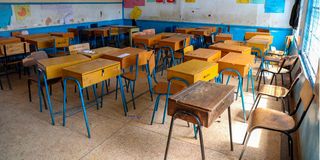
The closures, announced by individual schools, were concentrated largely in Nairobi and its outskirts, with some institutions directing parents to keep learners at home while others moved learning online or issued take-home assignments.
An empty ECDE classroom at St. Brigid’s Primary School in Eastleigh.
Photo credit: Francis Nderitu | Nation Media Group
Although there was no nationwide directive from the Ministry of Education ordering schools to close, many administrators said they acted out of caution amid uncertainty over security and transport.
Amid calls for police restraint and heightened safety concerns, some schools announced their gates would remain closed as the protests unfolded.
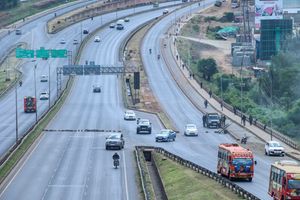
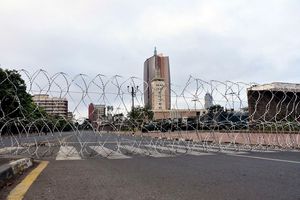
"As a security measure, there will be enhanced police checkpoints on various roads within Nairobi city on July 7, 2026, to control both human and vehicular movement. Members of the public are urged to obey and cooperate with the National Police Service to ensure that peace and order prevail," the National Police Service said in a statement.
The Daily Nation has seen several communiqués from schools notifying parents of the closures on Tuesday.
"To ensure that learning continues uninterrupted, our teachers will prepare adequate academic work for your child, aligned to their regular timetable. This work is aimed at reinforcing key concepts and helping students prepare for the upcoming end-of-term examinations," read one notice from a Nairobi school.
"This closure is due to the prevailing uncertainties surrounding the day, particularly with respect to safety concerns. It is purely a precautionary measure to ensure the safety and well-being of everyone," read another.
A review of school notices and media reports shows that schools in Nairobi, Kisumu and Mombasa counties were also temporarily closed during the opposition-led protests of July 2023.
Less than a year later, youth-led protests against the Finance Bill 2024 again disrupted learning. Several schools postponed reopening after the mid-term break, while others released learners early or advised parents to keep children home as demonstrations spread across Nairobi, Kiambu, Nakuru, Kisumu and Mombasa. Education authorities at the time appealed for additional security to protect schools and allow learning to continue.
University student Eric Kayoni during the anti-tax protests.
Photo credit: Pool | Nation
The late Denzel Omondi.
Photo credit: Family album
Emmanuel Tata, who died after inhaling tear gas at Mwembe Tayari in Mombasa County during protests against the Finance Bill 2024.
Photo credit: Pool
The deaths continued during the anniversary protests a year later. Victor Otieno Odhiambo, a student at Thika Technical Training Institute, was killed during clashes between protesters and police. Allan Alando, a primary school pupil, also lost his life after being caught up in the unrest, while a Form Three student in Molo was among those reported killed during the demonstrations — underscoring the risks children and students have faced during periods of political unrest.
The pattern persisted in 2025 during the Saba Saba anniversary protests, when a number of schools advised learners to stay home due to anticipated demonstrations and transport disruptions. Media reports indicated that many institutions opted for precautionary closures, with learning resuming the following day.
Abdi Noor, national secretary of the Kenya Secondary School Heads Association (Kessha), said violent protests always affect the education sector because students and teachers get caught up in the chaos while commuting.
"Learners would not be able to go to school, and teachers would be unable to get to their workstations. All this has a negative impact on our learning institutions," said Mr Noor.
Kessha National Deputy Chair Elias Cheruiyot, who is also the Dagoretti High School principal, said protests directly affect the education sector by restricting movement.
"At the end of the day, school programmes are interrupted. Students don't get to their schools, especially day scholars who are supposed to go in the morning and return home in the evening. Many times, day schools are affected greatly because there is no school on protest days," he said.