It is now official that the government does not know the exact number of learners in primary, junior and secondary schools, and the National Education Management Information System (Nemis) has not been giving accurate information.
It is this inefficient system that some crooked officials within the Ministry of Education and some heads of schools have exploited to inflate numbers and, in some cases, register non-existent institutions to steal cash in the form of capitation.
A new system to replace Nemis was scheduled to be launched in last month, but the ministry has been mum about the delay.
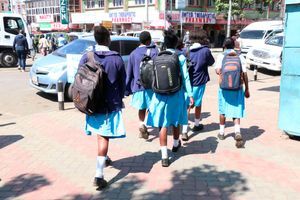
This inaccurate data is the reason the ministry has instructed schools to give fresh information using the Unique Personal Identifier (UPI) numbers assigned to every learner. According to the ministry, there are 23,659 registered primary schools, out of which about 18,000 have junior school wings, and 9,606 secondary schools.
During a previous clean-up of data in 2020, then Cabinet Secretary for Education George Magoha disclosed that enrolment in primary schools had been inflated by 529,997 non-existent learners who were being “funded” at Sh752,594,740.
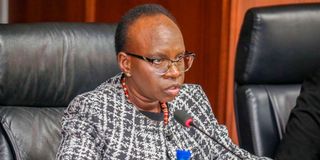
A recent audit report by Auditor-General Nancy Gathungu released in June, identified variances between the actual number of learners enrolled in schools and those entered in Nemis. The variances resulted in 354 secondary schools, 99 junior schools and 270 primary schools being overfunded by over Sh3.7 billion between 2020 and 2024.
The special audit also revealed that the amount of money disbursed to the Kenya Institute of Curriculum Development (KICD) for the purchase of textbooks was not tied to the number of learners in schools. Strangely, the KICD confirmed it had received Sh328 million more than the ministry said it had disbursed for the purpose.
Further, schools were supplied with excess textbooks valued at Sh90.8 million. Ironically, some schools had a shortfall of books worth Sh295.6 million.
In the learner verification template issued by the Ministry of Education, school heads in both private and public primary and secondary schools have been instructed to list the names of their institutions, UPI number of each learner and type of school (public or private). They are to also indicate the number of learners in their schools according to gender.
“This form is designed to systematically collect and consolidate essential enrolment data from schools. Its primary purpose is to gather a precise demographic overview of the learner population by capturing the total number of students enrolled in each specific grade level,” the instructions read.
“The data collected through the form serves as a critical tool for educational planning, resource allocation, and policy development. By providing a clear snapshot of student distribution across grades, it enables administrators to identify trends, forecast needs and ensure that staffing, funding and educational materials are distributed effectively to support every learner,” the form further states.
Previously, learners who were not captured in Nemis were also left out of the disbursement of capitation.
Some headteachers and principals have faulted the Education ministry for the timing of the verification since it is tied to the release of capitation to schools.
The Kenya Union of Post-Primary Education Teachers (Kuppet) also called for an independent audit, saying the ministry was complicit.
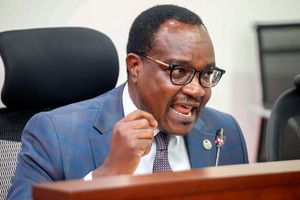
Kenya Secondary Schools Heads Association Chairperson Willy Kuria supported the audit of schools’ data, stating that it will help weed out “ghost schools”. However, he expressed concern over the timing of the audit.
Kenya Secondary Schools Heads Association (KESSHA) chairperson Willy Kuria.
Photo credit: File | Nation
“Auditing should have been done over the holidays, because we urgently need the capitation funds. Schools have no money at all; we are hurting our learners. Why couldn’t the audit be done before the release of the capitation?” he wondered.
Mr Kuria urged the Ministry of Education to release the funds and continue with the audit simultaneously.
“We are supporting the auditing of schools to weed out ghost schools, but the timing is wrong. Auditing cannot be done when money has already been released by the National Treasury, yet schools are bankrupt,” he said.
He noted that boarding schools are currently relying on parents for funds, while others have been forced to send students home to fetch school fees.
“But for the day schools, the situation is chaotic. I think very little is going on in day schools; they have been forced to avoid opener exams and payment of salaries, and they are asking parents to chip in. It is hurting the parents more,” he said.
Kuppet Deputy Secretary-General Moses Nthurima called for an independent audit to flush out cartels in the Education ministry.
Kenya Union of Post-Primary Education Teachers (KUPPET) Deputy Secretary General Moses Nthurima.
Photo credit: Lucy Wanjiru
“Normally, it is the Ministry of Education officials who create the ghost schools to siphon money meant for capitation. So if they are the ones that are carrying out the audit, then their hands are dirty. This is about cartels; if the cartels from the ministry can be eliminated, then they can weed out the ghost schools. But as long as the cartels are the ones behind this, we can’t see any solutions ahead,” he said.
“For instance, the money for infrastructure was being wired to non-existent schools, and they go pick up from the other end or they pay money to a school and then ask half of it to be sent back to them. They cannot bury their heads in the sand claiming they are not aware,” he said.
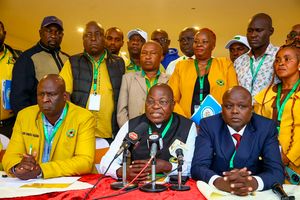
National Parents Association Chairperson Silas Obuhatsa said the audit will exonerate the government from blame by the public and civil society.
“This was long overdue, because the government has always been blamed for funding ghost schools. Through auditing, the ministry will tell Kenyans the truth about the ghost schools, and the right schools will benefit from capitation. We must do away with ghost schools; this will enable funding to be sufficient,” said Mr Obuhatsa.
National Parents Association Chairman David Obuhatsa Silas (centre) and other members of the association.
Photo credit: File | Nation Media Group
“It is like the SHA [Social Health Authority] scandal; anybody who might have been involved in the ghost schools must be brought to book,” he added.
Education CS Julius Ogamba addressing the press during the release of 2024 Kenya Universities and Colleges Central Placement Service placement results at Jogoo House, Nairobi on July 1, 2025.
Photo credit: Lucy Wanjiru | Nation Media Group
On Friday, Education Cabinet Secretary Julius Ogamba said the ministry has delayed the disbursement of funds to schools as it cleans its data to weed out ghost learning institutions that have been illegally receiving money. The funds were released by the Treasury on Tuesday last week. Mr Ogamba said his ministry must verify data before wiring the funds to school accounts. He further warned that individuals who registered non-existent schools will be prosecuted.
The ministry’s move was triggered by the Auditor-General, who raised a red flag over inconsistencies in data at the Education ministry. Ms Gathungu, in a special audit on capitation and infrastructure grants to schools submitted to the Public Accounts Committee of the National Assembly, paints a picture of wanton theft and glaring dysfunction in the funding of free primary and secondary education.