A lobby group’s assessment of the state of education has angered Members of Parliament ahead of a planned two-day conference starting on August 20.
The lawmakers dismissed the criticism on the implementation of the Competency-Based Curriculum (CBC) and alleged corruption in the allocation of school bursary kitties that are controlled by politicians.
In a tense meeting with officials of the Elimu Bora Working Group on Tuesday, members of the National Assembly Committee on Education said that the report was poorly researched and overly negative. They demanded that the document be reworked.
The lobby group, in its report, decried the delayed disbursement of funds to schools and teacher shortages.
The activists noted that the country’s education system is faced with monumental challenges, which threaten the very fabric of the nation.
“Devolved sections of education are in disharmony, ill-equipped, teacher-starved and poorly resourced, while the erratic, hurried, forced and ununiformed manner in which the CBC system of education is being rolled out rekindles the pattern taken by the 8-4-4 system which led to its collapse,” the lobby group’s policy and strategy adviser Boaz Waruku said.
But the legislators appeared agitated by the tone of his presentation, saying that the report lacked a deep analysis of the education sector and failed to appreciate gains made so far.
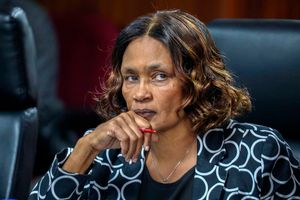
Chairperson of the National Assembly Committee on Education Julius Kibiwot Melly.
Photo credit: Dennis Onsongo | Nation Media Group
“The direction you are taking in calling the stakeholders’ conference will bring a lot of negativity instead of constructive engagement. As a committee, we are standing you down. Go back and come with a proper presentation or a critique, but let it be value-based,” said committee chair and Tinderet MP Julius Melly.
The working group, which is a network of civil society organisations, had appeared before the committee to brief members on issues of its Position Paper ahead of the National Education Reforms Stakeholders Conference.
The lobby stated that the conference will interrogate issues in the education sector. The activists said that the education sector is faced with new realities that are now tolerated as the “new normal” including the “erratic hiring of teachers and multiple-public-bursary-streams controlled by political leaders leading to biased allocations”.
The lobby warned that the “e-citizen fee payment system is poised to become Kenya’s biggest scandal”.
It observed that despite the Kenya Kwanza administration’s claim of hiring 76,000 teachers, the process has been inconsistent and at times secretive, leaving the public unconvinced.
The lobby group has also taken issue with the manner in which school capitation is released, noting that it is neither done on time nor in full as has been revealed in the 2023/2024 report by the Auditor- General.
“For instance, where Parliament allocated Sh628.6 billion to education in 2023-2024 financial year, some 37 per cent was never remitted to schools by close of the financial year,” said Mr Waruku in his presentation.
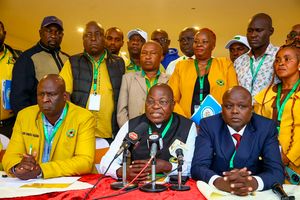
From left: Elimu Bora Working Group members David Karani, Boaz Waruku, Deputy Executive Director of Kenya Human Rights Commission Cornelius Oduor and Maxwell Magawi address journalists in Nairobi on February 11, 2024.
Photo credit: Billy Ogada | Nation Media Group
He noted that despite Kenyans’ demands and President William Ruto’s consent to ensure 100 per cent transition of learners at all levels of education, very little has been done to achieve it.
“This activism language you are adopting will not be helpful for the conference you are proposing,” he said.
When he took office, President Ruto established the Presidential Working Party on Education Reforms as a solution to the challenges bedevilling the education sector.
The lobby observed that concerns raised by the public and legislators suggest a lack of clear polices and frameworks to implement the presidential working group’s recommendations.
“We support the civil society, but all negativity that does not look at the gains is not helpful, as such we shall listen to you when you present to us data, facts and figures,” said Mr Melly as he concluded the meeting, denying the lobby group a chance to respond.
According to the document presented by the lobby group, the stakeholder conference will discuss and explore solutions to systemic weaknesses in policy formulation, implementation and oversight in education sector reforms.
It will also explore and strengthen mechanisms for public participation in monitoring education reforms as well as develop a multi-stakeholder action plan for inclusive, transparent and accountable education reforms.