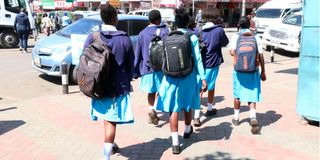
Cash-strapped schools across the country have started sending students home over unpaid fees, as union leaders, led by the Kenya Union of Post-Primary Education Teachers (Kuppet), urge the government to release capitation funds to the struggling basic learning institutions.
The Kenya Secondary Schools Heads Association (Kessha) says day schools are bearing the brunt of the financial strain, as they rely entirely on capitation funds for operational costs.
However, boarding schools are not spared, with some principals sending students home while others have set a deadline for parents to clear fees by Wednesday or risk having their children sent away.
Boarding schools are grappling with rising arrears, with some institutions reporting outstanding school fees of more than Sh10 million. Several school heads, speaking on condition of anonymity, told Nation that the Ministry of Education has instructed them to submit the Unique Personal Identifier (UPI) forms of all learners for data cleanup before capitation funds are disbursed.
“We’ve been asked to verify details and submit the UPIs of each student, but this process is time-consuming,” said one principal from a boarding school in the Coast region.
Education Cabinet Secretary Julius Ogamba.
Photo credit: Kevin Odit| Nation Media Group
The principal said the school has over 1,000 students, many of whom do not have birth certificates, a requirement for obtaining a UPI.
“When will I complete this assignment with such a tight deadline? And who will cater for the capitation of these learners with no birth certificates?” asked the principal.
A chief principal of a national school expressed confusion over why the Ministry of Education is cleaning data now, given that schools have already reopened.
“Why wait until now? This could have been done during the holidays. We’re in the middle of preparing for revisions and examinations, and now we’re being asked to gather the UPIs for every student,” complained the chief principal.
The principal noted that the Ministry previously used the National Education Management Information System (Nemis) data to disburse capitation funds. However, learners not captured in Nemis were also excluded from funding due to lack of birth certificates.
Heads of institutions say many learners still lack the crucial document, meaning they miss out on capitation despite being physically in school.
“Many of our students don’t have birth certificates, so they weren’t captured in the UPI system. The timing of this is suspicious. The government has access to all the data it needs; why couldn’t they clean the data while the students were on holiday?” asked the principal of a girls’ school.
Schools are preparing candidates for national examinations, including the Kenya Primary School Education Assessment (KPSEA), the Kenya Junior School Education Assessment (KJSEA) , and the Kenya Certificate of Secondary Education (KCSE), all scheduled between October and November.
“We’ve been asked to verify documents before the capitation funds can be released,” explained a principal from the Rift Valley region. “But in the meantime, we have bills to pay—water, electricity, food, among others. Are we expected to let these students go hungry? It’s disheartening that these issues are cropping up just as we approach examination time. Being a principal is not easy,” added the principal.
“Parents begged us to allow them a week until they received their salaries. That time has passed, and unfortunately, we had no other option but to send the students home,” said a principal from the Eastern region.
The National Parents Association chairperson, Silas Obuhatsa, called on parents to fulfil their role by paying school fees to ensure their children’s continued education.
“Education is a shared responsibility between the government and parents. The government has been clear on its position. Many parents in boarding schools can afford to pay fees but hide behind the idea of free education,” Mr Obuhatsa stated.
While it is illegal to send students home, Mr Obuhatsa said principals can summon parents and urge them to settle balances to keep schools running. Meanwhile, Kuppet warned of possible school closures if funds are not released by mid-term.
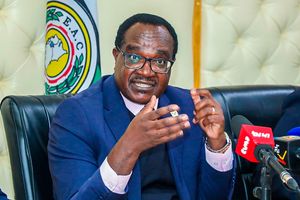
Kenya Union of Post-Primary Education Teachers (KUPPET) Deputy Secretary General Moses Nthurima.
Photo credit: Lucy Wanjiru
“Last term, schools closed early due to financial constraints. If this continues, principals may have no choice but to shut down again. Delaying capitation is like stealing from our children,” he said.
Kuppet national chair Omboko Milemba, who is also the Emuhaya MP, demanded the restoration of full capitation to Sh22,200 per learner annually, dismissing the current Sh16,000 as inadequate.
Kenya Union of Post Primary Education Teachers (Kuppet) National Chairman Omboko Milemba.
Photo credit: File | Nation
“This slash in capitation has crippled schools. We are simply asking the government to implement what was recommended by the Dr Kilemi Mwiria commission,” he said.
On Friday, Education CS Ogamba told Nation that the Ministry of Education had received funds from the Treasury but is still verifying data to weed out ‘ghost’ learners and schools before releasing money to institutions.
“We are really suffering, especially in buying books and paying salaries for teachers under the board of management and support staff,” said a principal in Elburgon, Molo Sub-county. “I’ve been forced to use boarding fees, but parents haven’t paid in full, so it’s not enough.”
“We were supposed to receive 30 per cent capitation in second term, but we only got 10 per cent. For Third term, we expect 20 per cent, but nothing has come. We are simply running schools on debt, and it’s hurting learning,” he said.
Another principal in Molo said the situation is dire, with unpaid salaries and stalled school programs. She revealed that, unlike before, when suppliers scrambled for school tenders, many of them now avoid them altogether.
“Even when we advertise, they don’t respond,” she said.
In Nakuru City, a school principal said many parents were offering to do manual work on the school farm in exchange for their children’s upkeep.
“This is a good idea for poor parents. Unfortunately, we can only accept limited cases for extremely needy families,” said the principal.
“Our only school bus is grounded because we don’t want the embarrassment if it is auctioned,” said the principal.
Additional reporting by John Njoroge, Vitalis Kimutai and Francis Mureithi