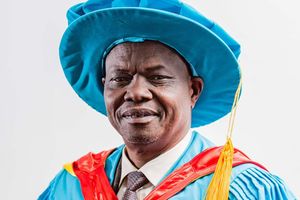
The appointment of Prof Ayub Gitau as the substantive Vice Chancellor of the University of Nairobi ends nearly two years of acting leadership and hands the new administrator a daunting list of tasks, including restoring stability, addressing financial challenges and rebuilding confidence in the country’s premier university.
Prof Gitau, an agricultural engineer and longtime academic at the University of Nairobi, has served the institution for more than two decades.
Before his appointment, he was the Acting Deputy Vice-Chancellor in charge of Academic Affairs and previously served as Dean of the Faculty of Engineering. He becomes only the second engineer to lead the university after Francis Gichaga.
The appointment comes at a critical time for the University of Nairobi, which has faced prolonged leadership uncertainty, governance wrangles and financial pressures that have raised concerns among staff, students and alumni.
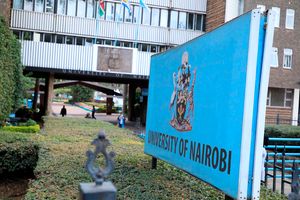
The entrance to the University of Nairobi.
Photo credit: File | Nation Media Group
Among the immediate challenges awaiting Prof Ayub Njoroge Gitau is restoring stability after nearly two years under acting leadership following the departure of former Vice Chancellor Stephen Kiama.
He will also be expected to address persistent financial difficulties that have affected operations at the university.
Kenya's public universities are under significant economic pressure. Reduced government funding, delayed capitation, rising wage bills, infrastructural demands and operational costs have stretched institutions to their limits. The University of Nairobi has repeatedly faced concerns related to debt, delayed payments, staffing constraints and financial management difficulties.
While appearing before the National Assembly Education Committee, Higher Education Principal Secretary Beatrice Inyangala said the University of Nairobi has pending bills amounting to Sh17 billion.
He must also restore confidence in the institution’s governance after years of disputes that exposed tensions over university autonomy and decision-making.
Among the immediate challenges facing Prof Gitau is resolving a long-running dispute between the University of Nairobi management and academic staff over the delayed implementation of the 2021–2025 Collective Bargaining Agreement.
The Universities Academic Staff Union, through its University of Nairobi Chapter of UASU, has repeatedly accused the institution of failing to pay salary arrears and other dues arising from the agreement, warning that the delays have undermined staff morale and disrupted learning.
Addressing the outstanding CBA obligations and rebuilding trust with lecturers and other unions will be one of the most urgent tasks on the new vice chancellor’s in-tray as he takes over after nearly two years of acting leadership and prolonged governance uncertainty.
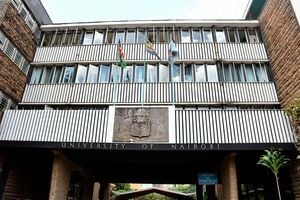
The Fountain of Knowledge at the University of Nairobi. Photo/FILE
Rebuilding staff morale will be another urgent priority, with lecturers and other employees seeking clarity on pensions, delayed payments and the future direction of the university.
In a statement, the Universities Academic Staff Union chapter at the University of Nairobi welcomed the appointment, expressing confidence that the new leadership will usher in stability, consultation and improved relations between management and academic staff.
The union said it was looking forward to a fresh phase of constructive engagement at Kenya's oldest and largest public university following a prolonged period of leadership wrangles and administrative uncertainty.
“We look forward to a new era of leadership founded on consultation, integrity, inclusivity and respect for the indispensable role played by academic staff in advancing the university's teaching, research, innovation and community service mandate,” the union stated.
The union also pledged to work closely with the new Vice-Chancellor in promoting staff welfare and strengthening academic excellence at the university.
“We express our commitment to working collaboratively with the new Vice-Chancellor in promoting staff welfare and academic excellence. We believe that through open communication, mutual respect and genuine dialogue, we can collectively build a vibrant and supportive environment for learning, teaching, research and professional growth,” UASU added.
Another contentious issue awaiting Prof Gitau is the management of the University of Nairobi’s vast land and property portfolio, which has been at the centre of fierce opposition from lecturers and anti-corruption investigations. Academic staff have strongly resisted proposals to lease, sell or commercially develop some of the university’s prime parcels of land under a two-year transformation plan, arguing that the institution’s assets risk being disposed of without adequate consultation.
At the same time, the Ethics and Anti-Corruption Commission is investigating alleged irregular leasing of university properties in Nairobi and other counties following concerns raised in audit reports over how tenants were identified and whether rental income was properly accounted for.
Navigating the politically sensitive debate over asset optimisation while safeguarding public property and assuring staff that the university’s land will not be mismanaged will be among the most delicate tasks facing the new vice chancellor.
Academically, the new Vice-Chancellor is expected to strengthen teaching, research and innovation while preserving the university’s standing as Kenya’s oldest and most influential public university.
Relations with staff unions are likely to feature prominently in his early agenda. Academic and non-teaching staff have repeatedly raised concerns over delayed promotions, implementation of collective bargaining agreements and working conditions.
Prof Gitau will also oversee the implementation of the government’s new university funding model, which has sparked debate over the affordability and accessibility of higher education.
Another key priority will be strengthening research and innovation and improving the university’s standing in regional and global rankings. As a researcher and former dean, he is expected to leverage his experience to expand international collaborations and attract research funding.
Student welfare, infrastructure and the digital transformation of teaching and learning are also expected to be high on his agenda, building on initiatives he led while serving as Acting Deputy Vice-Chancellor for Academic Affairs.