Hello

Your subscription is almost coming to an end. Don’t miss out on the great content on Nation.Africa

Ready to continue your informative journey with us?

Hello

Your premium access has ended, but the best of Nation.Africa is still within reach. Renew now to unlock exclusive stories and in-depth features.

Reclaim your full access. Click below to renew.

Moses Nthurima
Caption for the landscape image:

Graduate teachers barred from Junior School jobs

Scroll down to read the article

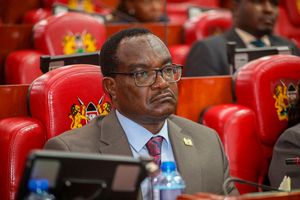
Kenya Union of Post Primary Education Teachers (Kuppet) Deputy Secretary-General Moses Nthurima on February 6, 2025 in Nairobi.

Photo credit: Lucy Wanjiru | Nation

Hundreds of primary school teachers seeking deployment to Junior School (JS) have been locked out following new rules announced by their employer.  

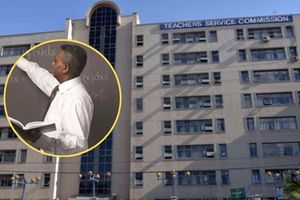
According to the Teachers Service Commission, tutors with a Bachelor of Education (Primary Option) degree do not qualify to teach JS.

Kenya has more than 220,000 primary school teachers. TSC Acting Chief Executive, Everleen Mitei, said the commission has received 3,718 applications from primary school teachers seeking deployment to JS. Of these, only 1,436 applicants meet the requirements.

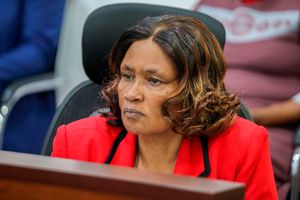
 Eveleen Mitei

Teachers Service Commission Acting CEO Eveleen Mitei before the National Assembly Committee on Implementation at Bunge Tower Nairobi on July 29, 2025. 

Photo credit: Dennis Onsongo | Nation Media Group

“Enclosed with this circular is the lists of the 1,436 teachers. Upon receipt, you are required to further vet and deploy qualified teachers to Junior School in accordance with the guidelines provided,” she said.

In the circular to regional and sub-county directors of education, TSC said teachers with a B. Ed (Primary Option) do not meet the threshold to teach in Junior School.

Qualified teachers must have at least a Diploma in Education with a minimum grade of C+ at the Kenya Certificate of Secondary Education (KCSE) examination or its equivalent, plus a mean grade of C+ (plus) in two teaching subjects offered in the curriculum, or two principles and one subsidiary pass at “A” level.

Teachers with a C (plain) in KCSE tests but who later pursued a Diploma in Education and B.Ed also qualify.

Additionally, those who attained a mean grade C (plain) at KCSE, undertook a university bridging course before December 31, 2015, and scored C+ or above in two teaching subjects can teach in Junior School, Ms Mitei said in the circular.

The documents to be verified by the education officials include original and certified copies of academic certificates, transcripts, KCSE examination certificates, pay slips and, where applicable, Special Needs Education (SNE) qualifications.

Deployment letters will be signed by sub-county directors for teachers in their jurisdiction, while county or regional directors will handle deployments outside the sub-county.

Ms Mitei advised officials to consider proximity to teaching stations, gender balance and subject combinations to avoid duplication.

Teachers with SNE qualifications will be deployed to Special Junior Schools.

The circular also outlines promotion guidelines, with teachers in Grades B5 and C1 with a Bachelor’s degree being pushed to Grade C2 and those in Grade B5 with a diploma to move to Grade C1.

Teachers at Grade C2 with a Bachelor’s degree and who were promoted before August 31, 2022, will move to Grade C3.

The decision has, however, sparked debate among education stakeholders.

Kenya Union of Post-Primary Education Teachers (Kuppet) Deputy Secretary-General Moses Nthurima said teachers trained for primary school should not be sent to Junior School.

“JS is essentially a high school. Thousands of jobless graduate teachers are available for these positions. Camouflaging primary school teachers as qualified for JS is unacceptable,” Mr Nthurima said.

He added that teaching methods between primary and secondary schools differ and insisted that specialisation is important.

He said teaching in primary school is different from secondary. The union official said primary school teachers are specialised in teaching children below 12 years.

According to Kuppet, there are 500,000 unemployed graduate secondary teachers countrywide.

However, Kenya National Union of Teachers (Knut) Secretary-General Collins Oyuu said the decision is rushed and unfair.

“They have the competency required to teach in JS. Even untrained teachers have at times performed better than trained ones. The decision will exacerbate the dire staff shortage in JS. The union will engage TSC on this issue,” Mr Oyuu said.

Collins Oyuu

The Kenya National Union of Teachers (Knut) Secretary General Collins Oyuu.

Photo credit: File | Nation Media Group

He added that there are about 300,000 jobless trained teachers in Kenya.

“We all went to school, including the TSC officials who issued the circular. We will sit at one table with the employer to discuss the matter,” Mr Oyuu told the Daily Nation.

Many teachers who have been working in Junior Schools for nearly a year expressed disappointment.

“There is prestige in teaching JS learners. We had hoped for promotion after handling secondary school-level students. It is shocking that the commission does not want to see us teach in Junior School. It is like we have been used and dumped,” a teacher in Mombasa said yesterday.

Ms Mitei defended the decision, saying it is aimed at encouraging specialisation, prioritising experience and addressing staff shortages.