A total of 163,488 eligible students in public universities and technical and vocational education training (Tvet) colleges missed government funding after the Higher Education Loans Board (Helb) ran out of cash.
The students face an uncertain future ahead of the academic year, which begins in August. Inadequate financing sets them up for challenges as they seek alternative funds for tuition, accommodation and upkeep.
The students applied and qualified for funding. Of the number, some 103,214 are in university while the remaining 60,274 others are enrolled in public Tvet institutions.
Helb Chief Executive, Geoffrey Monari, tabled the figures before the National Assembly Committee on Education yesterday.
The agency had a shortfall of Sh11.5 billion to fund university students in the last fiscal year. Tvet applicants who qualified for funding required Sh2.2 billion.
“This threatens the national transition rate to tertiary education, weakening the efforts by the government to build a skilled and competitive workforce,” Mr Monari told the team chaired by Tinderet MP Julius Melly.
He added that during the financial year under review, Helb received 713,173 applications but could only fund 322,338 university students and 225,048 Tvet trainees.
The total loan demand for the 2024/25 financial year is Sh48.18 billion, with the agency reporting a Sh13.7 billion deficit due to increased enrolment and loan demand under the contested student-centred funding model.
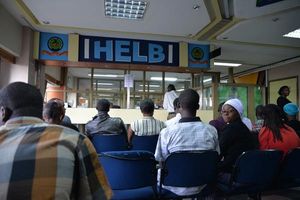
The Higher Education Loans Board offices in Nairobi.
Photo credit: File | Nation Media Group
“With the deficit, a significant number of students may defer or abandon studies,” said Mr Monari, adding that should that happen, it would reverse the efforts the country has adopted to expand access to education.
Increased enrolment in institutions of higher education has piled pressure on funding by Helb, which has not kept pace with the growing number of candidates making the minimum university entry grade. Most of those who apply for loans are from low-income households.
A university loan applicant receives Sh35,000 to Sh60,000 per academic year.
Of the total disbursed, some Sh8,000 is sent directly to the institution as tuition fee and the balance to the beneficiary in two equal tranches covering the two semesters.
Helb is a revolving fund in which beneficiaries – upon completing studies – repay the money to support the fresh group of students.
This, however, has not been seamless, with the growing number of defaulters weakening the agency’s ability to support university and college students.
Students apply for Helb loans in Nairobi.
Photo credit: File | Nation Media Group
Helb recovered Sh5.21 billion in the 2024/25 financial year – an 11 per cent improvement compared to the Sh4.71 billion it got in the previous year.
“Field inspections and employer audits led to the tracing of 17,647 defaulters, with Sh285.2 million recovered from payroll reductions,” Mr Monari said.
The high defaulter rate, coupled with state funding that has not kept pace with enrolment, has called for a rethink of strategy.
Helb projects a deficit of Sh36.1 billion in the current fiscal year, which will affect 468, 238 students.
In February, Higher Education Principal Secretary Beatrice Inyangala told the National Assembly that the plan is to gradually move away from relying on Exchequer funding and instead structure Helb to adopt a social bond financing model.