Recommendations by a team formed by President William Ruto to review and suggest education reforms, which included the adjustment of entry requirements for pre-service teacher education, have led to a three-fold increase in enrolment in Teacher Training Colleges (TTCs), it has emerged.
The 42-member Presidential Working Party on Education Reforms (PWPER), chaired by Prof Raphael Munavu, lowered the minimum entry requirements into TTCs, reviving institutions previously on the brink of collapse due to low enrolment.
By adjusting entry requirements for pre-service teacher education, the government breathed life into TTCs.
Today, TTCs have recorded significant growth in enrolment from 10,000 students in 2021 to over 27,000 currently, following government reforms that lowered entry requirements.
Currently, the minimum grade for Diploma programs in Early Childhood, Primary, and Special Needs Education is a Kenya Certificate of Secondary Education (KCSE) C (plain) or its equivalent, with no subject cluster requirements.
For the Diploma in Technical Teacher Education, applicants must have a KCSE C (plain) and a C+ in relevant Science, Technology, Engineering and Mathematics (STEM) subjects.
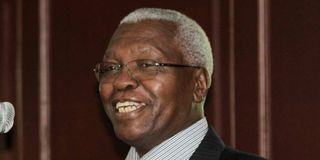
Kuppet Secretary-General Akelo Misori addresses journalists on June 4, 2025, at the union’s headquarters in Nairobi.
Photo credit: Billy Ogada| Nation Media Group
According to KUPPET Secretary General Akelo Misori, the policy shift came after a strong advocacy campaign aimed at saving TTCs from collapse due to low enrolment.
“Many TTCs had grounded to a halt. Experienced tutors were being deployed to secondary schools as student numbers dwindled,” said Mr Misori.
He praised the reforms but noted that TTCs still face key challenges, including delays in capitation disbursement, inadequate infrastructure, staffing gaps, and the silent conversion of TTCs into universities.
Despite these hurdles, stakeholders say the sector has made meaningful progress and remains vital to sustaining the CBE.
Kuppet chairman, who is also the Emuhaya MP, Mr Omboko Milemba, said the government should allow TTCs to admit day scholars.
“Let the students live within the community so that the people around the college will feel the importance of the institution. Then we would reduce the cost of education and boost enrolment,” said Mr Milemba.
The presidential task force also highlighted key systemic challenges in Kenya’s teacher training landscape.
“The profession is not attracting students. There is inequitable teacher distribution—some counties face acute shortages, while others are overstaffed. TTCs are underutilised, with many having more tutors than students. Critical issues include inadequate facilities and lack of access to Higher Education Loans Board (Helb) loans,” read the report.
The reforms aim to revive TTCs, boost enrolment, and ensure a more equitable distribution of qualified teachers across the country.
The chair of the Kenya Teachers Colleges Principals Association (KTCPA), Mr Wycliffe Nyongesa, said some TTCs, especially in North Eastern Kenya, continue to struggle with enrolment as they don’t attract students from other regions.
“Without allowing walk-in admissions, these colleges risk having no students. The taskforce reforms, especially lowering the KCSE entry requirement to a general C plain (without subject clusters), have significantly boosted enrolment across TTCs,” said Mr Nyongesa.
“We’re expecting to graduate 10,000 students soon. The first batch, trained on Competency-Based Teacher Education (CBTE), had about 2,000,” said Mr Nyongesa.
He said initial TSC qualification requirements, like mandatory C grades in Mathematics and Sciences, were too restrictive, affecting enrolment negatively.
“Only eight TTCs had full classes in the first cohort. But with implementation of President Ruto’s education reforms, current TTC enrolment stands at 27,000—a major recovery after the collapse following the phasing out of the P1 certificate,” said Mr Nyongesa.
Mr Nyongesa, KTCPA chairman and Kamwenje TTC principal, said TTCs in North Eastern struggle with enrolment since students from other regions are reluctant to join.
“Without walk-in admissions, some may end up with no learners. The Munavu-led taskforce helped revive TTCs by lowering the entry grade to C (plain) in Kcse without subject clusters, reversing the earlier TSC rule that required specific subject grades like in Math and Sciences,” he added.
He praised the progress since the P1 certificate phase-out, noting that TTCs have achieved a major milestone under the new Curriculum-Based Teacher Education (CBTE) framework.
Kenya National Union of Teachers First National Vice Chairman Malel Langat (left) with Bomet Knut branch secretary Desmond Langat at Reberwet Primary School in Chepalungu Constituency on April 19, 2024.
Photo credit: Vitalis Kimutai | Ntion Media Group
The Kenya National Union of Teachers (Knut) Deputy National Chairman, Dr Malel Langat, said the reduction of qualifications gave many deserving students, particularly from ASAL, the chance to access TTCs.
“Some TTCs like Kericho had more tutors than students, but the taskforce recommendation has breathed fire into these institutions. We support principals who want admission of day scholars to TTCs to boost their numbers,” said Dr Langat.
The National Assembly Departmental Committee on Education chairperson, Mr Julius Melly, said commissions led by Prof Simeon Ominde to Prof Munavu revolutionised teacher colleges.
“Kenya has a well-developed teacher education program that has been running across the country for years courtesy of several educational commissions all the way from Professors Ominde to Munavu,” said Mr Melly.