Teachers across the country are set to receive salary increments of between 5 and 29.6 per cent at the end of this month following the signing of new agreements between the Teachers Service Commission (TSC) and three major unions — the Kenya Union of Post Primary Education Teachers (Kuppet), the Kenya National Union of Teachers (Knut) and the Kenya Union of Special Needs Education Teachers (Kusnet).
Over the four years, the deal will cost the government Sh33.8 billion which will be split equally, meaning that teachers will receive an increment every year. The move, union leaders say, restores dignity to the profession and addresses long-standing disparities in pay.
The agreements, signed separately on Friday after negotiations that went late into the night at the Kenya Institute of Special Education (KISE) in Kasarani, Nairobi, include a mix of monetary and policy gains: enhanced baggage allowance, job evaluation, faster pension processing, and protections for lactating mothers. The revised salary structure will take effect on July 1, 2025, with the first paychecks reflecting the new rates expected at the end of that month.
For Knut, which represents the bulk of primary school teachers, the agreement grants a salary increment of between 12 and 29.5 percent, with lower-cadre teachers receiving the highest rise.
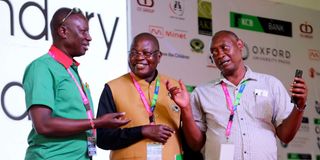
Kenya National Union of Teachers Secretary General Collins Oyuu speaks to the media in Nairobi on July 1, 2025.
Photo credit: Bonface Bogita | Nation Media Group
Knut Secretary General Collins Oyuu said the deal, signed on Friday, offers the most meaningful pay rise in recent years, especially for teachers in lower job groups who will receive a 29.5 percent increment, while those in upper cadres will get 12 percent. Teachers will also receive a medical cover to include the group life for last expense.
“Teachers in the lower cadre have a lot to smile about,” said Oyuu. “They have been prioritised. And the elephant in the room, the Career Progression Guidelines, shall now be reviewed.”
He added that the agreement also ensures no change to gazetted hardship zones, fast-tracked pension processing for teachers exiting service, and a renewed push for a legal framework via the Teachers Service Commission (Amendment) Bill to improve future negotiations.
Mr Oyuu emphasised that this deal lays the groundwork for a long-overdue review of the Code of Regulations for Teachers, which union officials argue has long stifled reforms in promotions and allowances.
Knut’s demands included a 30 per cent rise in allowances, including hardship, commuter, and house allowances, which they say have remained stagnant despite the rising cost of living and regional disparities in working conditions.
The union also wanted the introduction of new benefits, such as risk allowances for science teachers, overtime compensation, and incentives for postgraduate qualifications to reward academic advancement and support specialization.
Another major issue is the enhancement of medical cover, with calls for better health insurance and greater involvement of teachers in managing the medical scheme to ensure efficiency and accountability.
“It is not exactly what we wanted but it is better than nothing. It is not cashless like the previous one,” he told the Daily Nation in regard to the demands.
Mr Oyuu told the Daily Nation that the entry job grade for teachers will now be grade C1 as B5 has been done away with. Kuppet and Kusnet were the first to sign their deal earlier in the day, which awarded teachers a tiered salary increase ranging from 5 per cent for the highest-paid teachers to 29.6 per cent for the lowest-paid.
This means that the lowest-paid teacher, currently earning around Sh23,000, will see their pay rise to about Sh29,000.
Kenya Union of Post-Primary Education Teachers Secretary General Akelo Misori speaks to the media in Nairobi on July 18, 2025.
Photo credit: Wilfred Nyangaresi | Nation Media Group
Kuppet Secretary General Akelo Misori said the structure was designed to favour classroom teachers and correct historical imbalances entrenched in the 2016–2021 CBA.
“This award in basic pay has favoured, to a large extent, the ordinary teacher—the one who bears the brunt of the work in schools,” Misori said. “In the last CBA, school administrators walked away with the biggest slices. We’ve now reversed that imbalance.”
Mr Misori acknowledged that the current national budget did not factor in expanded allowances for teachers, but hinted at renewed talks next year to revisit commuter, hardship, and housing allowances, which have remained static despite inflation and growing regional disparities.
Although Kusnet union leaders appended their signatures to the deal, Secretary General James Torome declined to address the press, offering no details on the union’s position.
The new CBA covering the period July 1, 2025 to June 30, 2029, will be implemented immediately, with the first revised paychecks expected at the end of July 2025. The overall cost is projected at Sh33.8 billion, spread across five years with an annual allocation of Sh8.4 billion.
Beyond the pay rise, the CBA introduces a revised baggage allowance to ease the burden of relocation for teachers.
Teachers in lower job groups (B–C) will now receive a baggage allowance of approximately Sh28,000, while those in mid-level cadres (D1–D4) will receive between Sh35,000 and Sh45,000.
At the top tier, senior administrators and principals in job groups D5 and above are entitled to Sh60,000, up from the previous average of Sh40,000. This upward review is meant to cushion teachers who are transferred to hardship or distant regions and cover the cost of relocating.
TSC also committed to fast-track pension clearance for retirees and reduce the long-standing delays that have plagued the profession. The commission has also announced plans to undertake a comprehensive job evaluation exercise to align roles and pay structures with evolving responsibilities across the education sector.
In a nod to work-life balance, the CBA introduces enhanced protections for lactating mothers, including the establishment of designated lactation spaces in schools and TSC offices, as well as flexible working arrangements where possible. This, according to the commission, is part of a broader effort to embed gender-sensitive workplace policies.
Speaking during the ceremony, TSC Chairperson Dr Jamleck Muturi emphasized the government’s financial commitment to education.
He said the government has invested Sh33.7 billion in this CBA alone over the next four years. In the 2025/2026 financial year, TSC plans to recruit more teachers at a cost of Sh2.4 billion, promote teachers for Sh1 billion, and re-tool senior school teachers at a cost of Sh950 million.
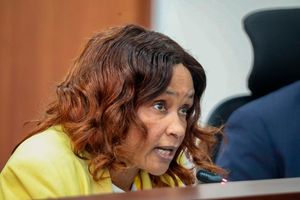
Teachers Service Commission Commission Chairman Dr Jamleck Muturi.
Photo credit: Francis Nderitu | Nation Media Group
He credited President William Ruto’s administration for prioritising the welfare of teachers, adding that over 76,000 teachers have been recruited in just two and a half years.
The new deal follows a meeting earlier in the week between TSC and the Salaries and Remuneration Commission (SRC), where the employer received a counter-offer to unions’ demands.
That breakthrough allowed the Commission to invite the unions back to the negotiating table, ending weeks of tension, stalled talks, and rising agitation within the teaching fraternity.