Kakamega and Bungoma counties will get the highest number of the 24,000 junior school internship vacancies announced by the Teachers Service Commission (TSC) recently.
On August 25, the commission announced the one-year internship vacancies, with applications closing on September 9.
According to the distribution list seen by the Sunday Nation , counties in Western and Eastern regions will be the biggest beneficiaries.
Kakamega has 1,187 vacancies, Bungoma (1,182), Homa Bay (1,058) and Kitui (925).
Nairobi was allocated 685 slots, while Nakuru got 782 and Siaya 741. At the low end of the scale, Lamu has 95 vacancies, Samburu 124, Mandera 240, while Garissa received 139.
Turkana County was allocated 289 vacancies, and Wajir 239. Isiolo sits at the bottom with just 87 slots.
Acting TSC Chief Executive Officer, Eveleen Mitei, told the Sunday Nation that the distribution of the vacancies was guided by the number of junior school classes in June, as well as the teachers currently serving in every county and sub-county.
She said the commission applied uniform criteria to ensure fairness and equity in the teacher deployment.
Counties with the worst staff shortages, particularly marginalised and arid and semi-arid regions, were given priority, the aim being to give as many children as possible equitable access to education and qualified teachers, she said.
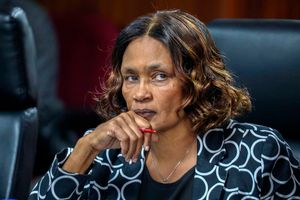
Teachers Service Commission Acting CEO Eveleen Mitei before the National Assembly Committee on Implementation at Bunge Tower Nairobi on July 29, 2025.
Photo credit: Dennis Onsongo | Nation Media Group
“The commission ... ensured that areas with higher demand for teachers received proportionately more vacancies,” the TSC boss said.
“The commission ensured fairness by applying uniform criteria across all counties and sub-counties. Priority was given to counties with higher staffing gaps, including marginalised regions.”
Ms Mitei added that during the 2025/26 financial year recruitment, priority would be given to science, technical subjects, languages and humanities teachers in that order.
The reason is to address the shortage of teachers in Science, Technology, Engineering and Mathematics (STEM) while also balancing other learning areas, she said.
In Mt Kenya, Murang’a County has 527 slots, Kiambu 664, Kirinyaga 242, Nyeri 332 and Nyandarua 345. Laikipia was allocated 271 slots.
In the Rift Valley region, Uasin Gishu County has 504 slots, Nandi 603, Kericho 424, Bomet 422, Baringo 499, Narok 691, Elgeyo Marakwet 411 while West Pokot will get 491 intern teachers, the commission said.
Machakos will be allocated 807 intern teachers, Makueni 799, Meru 784, Embu 352 and Tharaka Nithi 495.
Even so, the distribution within counties is still uneven, with Chiakariga sub-county in Tharaka Nithi alone, for instance, being given 210 teachers, a number larger than the entire allocation for Isiolo, Samburu and a few other counties.
In Kitui, which will receive 925 teachers, allocations are spread across sub-counties like Mwingi Central with 80, Mutomo (86), while Kyuso will get 68 teachers.
For Coast region, Kilifi County will get 797 teachers, Kwale 492, Mombasa 192, Taita Taveta 156 and Tana River 169.
Apart from Kisumu and Homabay, other counties in Nyanza region recorded high allocations, with Kisii getting 682 teachers, Nyamira will receive 429 while Migori will have 698.
With Chiakariga in Tharaka Nithi receiving 210 teachers, Kibish in Turkana County will get just five.
Teachers Service Commission (TSC) Headquarters in Upper Hill, Nairobi on June 21, 2025.
Photo credit: Wilfred Nyangaresi | Nation Media Group
“We call for affirmative action to ensure Arid and Semi-Arid Lands (Asal) are given priority during the recruitment of teachers,” said Mr Ndung’u Wangenye, the National Secretary of the Kenya Teachers in Hardship and Arid Areas Welfare Association.
“The distribution of teachers appears skewed in favour of some regions, leaving Asals – where the shortage is most acute – further disadvantaged.”
Mr Wangenye added that addressing the imbalance would be critical in ensuring equity in education across the country.
While appearing before the National Assembly Constitutional Implementation Oversight Committee in April, then-TSC Chief Executive Officer Nancy Macharia said the commission was facing a growing human resource crisis that could undermine education.
According to Mrs Macharia, the situation could become worse with the start of Senior School under the Competency-Based Curriculum (CBC), which would require additional teachers.
The commission at the time said it was facing a teacher shortage of 98,261, a figure that is expected to rise next year.
“While we are grateful for the Sh1 billion allocated towards teacher promotions, the amount is only sufficient to promote 6,000 teachers out of a force of more than 500,000,” Mrs Macharia told lawmakers.