Hundreds of students and parents have been thrown into a state of uncertainty following the government's decision to discontinue the standalone Diploma in Early Childhood Teacher Education (DECTE).
The move, which merges pre-primary and primary teacher training into a single three-year course, has effectively raised the entry bar for the profession, locking out thousands of aspiring teachers who scored below a C (plain) in their KCSE.
Under the new reforms aligned with the Competency-Based Education (CBE) model, the Ministry of Education has consolidated early childhood and primary training into the Diploma in Teacher Education Pre-Primary and Primary (DTE PP and P).
The repercussion is immediate; the window for students with D+ and below to enter the teaching profession through the ECDE route has been slammed shut. According to sector sources, the minimum qualification for any teacher education, including early years, is now strictly a C (plain).
This is part of the proposals made by professionals in the education sector, led by vice chancellors and principals of teacher training colleges.
The government has begun reforming the Teacher Education sector under Competency Based Education after announcing the discontinuation of the Diploma in Early Childhood Teacher Education (DECTE) following the merger of the programme with the Diploma in Primary Teacher Education (DPTE).
In a circular issued to County and Sub County Directors of Education, the Ministry of Education said the two courses have been consolidated into a new programme known as the Diploma in Teacher Education Pre-Primary and Primary (DTE PP and P).
As a result, the upgrade Diploma in Early Childhood Teacher Education (UDECTE) has also been scrapped.
These were some of the proposals issued by educationists, including Vice Chancellors and other stakeholders in the education sector, during their meeting in Mombasa three months ago.
“The Diploma in Early Childhood Teacher Education (DECTE) course has been merged with the Diploma in Primary Teacher Education (DPTE) and re-designated as the Diploma in Teacher Education Pre-Primary and Primary (DTE PP & F). Consequently, the Upgrade Diploma in Early Childhood Teacher Education (UDECTE) has been discontinued,” said Education Principal Secretary Prof Julius Bitok.
Education PS Julius Bitok during the 2025 Kenya Primary School Heads Association Annual Delegates Conference in Mombasa on November 12, 2025.
Photo credit: Kevin Odit| Nation Media Group
The PS further directed the Kenya National Examinations Council (KNEC) not to register any candidates for assessment under the DECTE or UDECTE programmes.
“Further, all Teacher Training Colleges shall offer the DTE PP and P programme strictly on a full-time basis. The school-based mode of training remains suspended until further notice,” said PS.
In the circular, the PS directed the stoppage of admissions for the DECTE programme.
“No registration or approval of colleges shall be processed to offer DECTE or UDECTE programmes. These directives take effect immediately, and all concerned offices are required to ensure strict compliance,” said the PS.
While the government views the merger as a way to create versatile teachers, the move has sparked a heated debate among educationists.
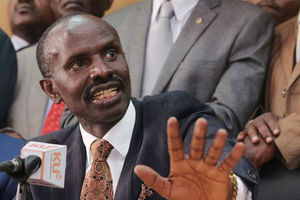
Kenya National Union of Teachers (Knut) Deputy Secretary General Hesbon Otieno welcomed the move, stating it would formalise employment for early-year learners and open up TSC-led hiring opportunities similar to secondary schools.
Hesbon Otieno, deputy secretary-general of the Kenya National Union Teachers.
Photo credit: Jared Nyataya | Nation Media Group
Former Principal Secretary Dr Julius Jwan, who is an education expert, added that the merger makes teachers more programmatic and flexible.
“Because you know before, we used to admit the students with C- and they were confined to ECD. But with new curriculum, and now with the conception of early years education you find that they are now admitted with a C. The training covers a broad based curriculum, the teachers can teach in primary and ECDs so they are more flexible, equipped and versatile or programmatic,” said Dr Jwan.
The educationist said it is impractical to continue admitting people who will be specifically confined in ECD. The former PS said these are changes that are being undertaken as Kenya aligns the new teacher training under CBE.
Dr Jwan said universities and private colleges will have to adjust their programs and align according to the circular.
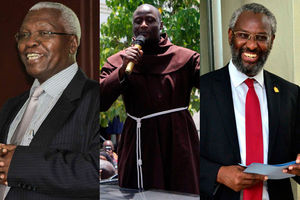
Prof Winston Akala is the new Principal Koitalel Samoei University College.
Photo credit: Tom Matoke | Nation Media Group
However, Koitaleel Samoei University College, Principal Prof Winston Akala, warned that the merger dilutes quality.
Prof Akala argued that early childhood education requires deep specialisation in child psychology, which is vastly different from primary school pedagogy.
Prof Akala further pointed out a legal contradiction: under Kenyan law, pre-primary education is managed and funded by Counties, while primary education falls under the National Government.
“Merging the training of teachers who will be employed by two different levels of government creates a managerial challenge that is yet to be addressed,” said Prof Akala.
“You know Early Childhood Education has a lot of psychology touching on childcare and when you merge the two you not only dilute the quality of pre-primary education but you also tamper with primary education content," said Prof Akala.
Prof Akala said the assumption that the curriculum for preprimary and primary is suitable for both levels is erroneous.
“It’s a good thought but in most jurisdiction ECD's training is considered separately because it contains a lot of child psychology learning. The child at that level has a high erratic behavior, they cannot be comparable with those in primary school level," said Prof Akala.
“Because from 2024 September’s admission the Ministry of Education merged Diploma in Early Childhood and Diploma in Primary Teacher so from that time the service was three years to be admitted as Diploma in Teacher Education, who will be teaching form PP1 to Grade 56,” said Ms Machuka.
Ms Machuka said that the earlier ECD teachers, those with certificates, can no longer upgrade.
“But you see this was just a window, that was opened for them, and most of them who were interested have utilized the opportunity because they never qualified, some of them had D- others even Es but they had gotten ECD certificates. But now it is closed,” explained Ms Machuka.
The Kinango TTC principal said that currently, there are no ECD teachers upgrading in their TTCs because the last group is currently on practicum.
“This has been a healthy debate since it started because for a long time pre-primary education has bene overlooked in terms of training and employability for people taking pre-primary education,” said Mr Otieno.
Mr Otieno said the proper qualifications for those who should undertake pre-primary have not been rationalsied and coming up with a general policy in CBE is the best thing that has ever happened in the education sector.
He said this would now mean TTCs will have added duty apart from training Primary Teacher Educators will have an extra duty to train early year learners.
This, he said, will also open opportunities for those teachers who are trained to be able to be considered for employment through a formularised process, like for those in primary and secondary schools.
“This will also streamline employment of graduate teachers who are handling pre-primary education such that they’re will be a common way of employment through counties. A policy should now be devolved on how these teachers will be able to be employed under counties and engagement with TSC which is the registering body. This is a good thing,” said the union official.
However, he said it is unfortunate for current students pursuing a pre-primary teaching course in institutions of higher learning with D grades.
“There will always be a loss because of change of policy but let us look at the benefits of the policy,” he said.
During a stakeholders meeting last year in Mombasa, there was hitted debate on the minimum entry grades for the teaching profession in pre-primary.
However, the Kenya Teachers Colleges Principals Association (KTCPA) chairperson, Mr Wycliffe Nyongesa, decried the lack of employment for their graduates.
"We are the only institutions that have graduated CBE trained teachers but they have not been deployed. We have around 8,000 who have not been absorbed by the state," Mr Nyongesa stated.
He urged the state to employ the college graduates, noting that private schools are currently benefiting from their skills.
Recently, the chair of the Teachers Colleges Principals Association, Mr Wycliffe Nyongesa, decried the lack of employment of TTC graduates.
He said 8,000 CBE-trained teachers already graduated but not yet absorbed by the state.