Teachers involved in sexual misconduct with learners will face disciplinary measures, including de-registration, if a draft amendment Bill that is before Parliament becomes law.
The draft Bill also seeks empower the Teachers Service Commission (TSC) to take administrative action against teachers undertaking or facilitating holiday tuition, charging unauthorised fees and levies as well as those who withhold learners’ certificates for national examinations.
The draft Teachers Service Commission (Amendment Bill), 2025 introduces new offences including sexual exploitation of learners, and expands the definition of serious offences to cover acts that “grossly offend public policy and interest”. The draft categorises offences under: immoral behaviour with a learner, professional misconduct, and infamous conduct.
The transgressions listed under immoral behaviour include: sexual harassment or flirtation, love relationships, exposure to pornography, buying gifts intended to influence learners into immoral conduct as well as aiding immoral conduct.
Professional misconduct will involve negligence of duty, chronic lateness to duty, chronic absenteeism, desertion, incitement, insubordination and poor performance of duty.
The ‘infamous conduct’ category has the longest list of breaches. Some of them include: drunkenness, fighting, use of vulgar and abusive language, cyberbullying.
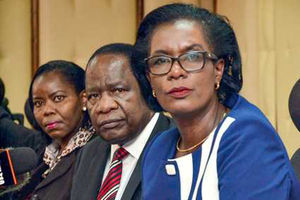
Teachers Service Commission (TSC) Commission Chairman Jamleck Muturi.
Photo credit: File | Nation Media Group
Others include: falsification and alteration of official documents or data, mismanagement, misappropriation and embezzlement of public funds. Exposing learners to or supplying them with drugs and psychotropic substances engaging in other gainful employment while an employee of the TSC will also be punishable.
Under the proposed amendments, the TSC will have powers to suspend or deregister teachers found guilty of misconduct, with an internal review committee established to handle appeals before cases proceed to court.
The draft Bill was not among the seven others approved by the Cabinet on February 10 2026. The previous week, TSC commissioners met with the Education Committee of the National Assembly to deliberate on the Bill. The committee is chaired by the MP for Tinderet Julius Melly.
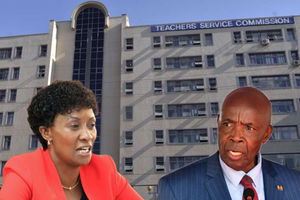
TSC Acting CEO Evaleen Mitei.
Photo credit: Pool
“‘Sexual exploitation’ includes sexual abuse of a learner through exchange of sex or sexual acts for academic grades, pocket money, school fees, learning materials, protection from school punishment, illicit drugs, gifts, food, shelter other basics of life; involving learners in creating, accessing, distributing pornographic and sexually explicit materials,” the Bill reads.
“‘Serious offence’ includes offences that attract capital punishment under the law; or other acts or omissions which grossly offend public and interest thereby making the concerned teacher unsuitable to continue serving in the teaching service,” it further states.
Some changes have been made to the Bill since it was first presented to the public for consideration in 2024. The commission has engaged various stakeholders on the content of the Bill. Specifically, TSC has been in negotiations with the Ministry of Education to iron out overlaps in the Bills the two entities had drafted.
The negotiations were mediated by Deputy President Prof Kithure Kindiki. Top officials from the MoE led by the Cabinet Secretary Julius Ogamba and the TSC team led by the chair Dr Jamleck Muturi signed a framework for engagement at the DP’s official residence in Karen in May last year.
Teachers Service Commission (TSC) headquarters in Upper Hill, Nairobi.
Photo credit: File | Nation Media Group
The framework allowed the TSC to process its amendment Bill separately from those prepared by the MoE since it is a constitutional independent commission.
“It is a government Bill and will be sponsored by the Education Committee of the National Assembly. The other alternative would have been the Leader of Majority in the National Assembly,” explained a source at TSC.
The main points of conflict between MoE and the TSC were in regard to quality assurance and measurement of teachers’ performance. After alignment, the TSC will be in charge of the performance standards of teachers since they are its employees. The quality assurance function will remain at the MoE since the schools (including funding) fall under its mandate.
“However, school heads will perform a duo-mandate. They will be a shared resource between the TSC and the ministry,” explained the source.
The draft Bill also proposes redefine the term institutional administrator to include heads of schools, deputy principals, registrars, deans and senior teachers.
If the proposed law is enacted, the TSC will be empowered to decentralise its functions through zonal offices, establish new directorates, and create an Institute of Teacher Support and Professional Development to oversee continuous training.