The government has officially deferred the absorption of Junior School (JS) intern teachers into permanent and pensionable (PNP) terms to January 1, 2027, a move that pushes their job security into the next general election year.
Basic Education Principal Secretary Prof Julius Bitok sought to calm rising tensions in staffrooms, confirming that while the 20,000 interns must serve an additional year on contract, the State is committed to their full integration into the Teachers Service Commission (TSC) payroll by 2027.
The timeline follows a policy directive from President William Ruto, which mandates that intern teachers serve at least two years before qualifying for permanent employment.
All serving JS teacher interns have had their contracts renewed from January 1, 2026, to December 31, 2026.
The extension is in line with the Teacher Internship Policy and Guidelines (2019) and aims to ensure a seamless transition and avoid interruption of learning as the current contracts lapse.
“President Ruto has already pronounced himself on this issue. First, he said he had listened to the Junior School intern teachers. He gave us a directive that because they have been given a one-year contract, we extend it by another year and, in the next financial year, provide resources so that they can be confirmed on January 1, 2027,” said the PS.
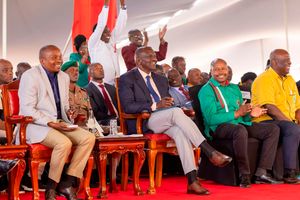
President William Ruto addresses Mau Summit residents when he launched the dualing of the Rironi-Mau Summit Highway on November 28, 2025.
Photo credit: Boniface Mwangi | Nation Media Group
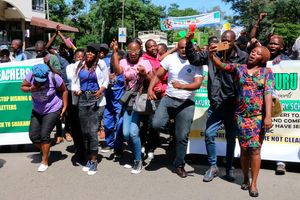
However, the assurance has done little to soothe the frustrations of teachers on the ground. The Kenya Junior School Teachers Association (KJSTA) has termed the extension a profound blow to morale.
Starting July 2026, the National Treasury is expected to allocate resources in the budget to facilitate the recruitment. Currently, interns earn a monthly stipend of Sh20, 000 before deductions, a figure that the Kenya Junior School Teachers Association (Kejusta) says has dealt a significant blow to their spirit.
Many interns had hoped their Christmas gift would be PNP appointment letters after spending the year navigating challenges in the staffroom.
“I want to assure every intern that after two years, they will be automatically absorbed. That is the plan,” President Ruto said some months ago, clarifying that the programme helps the government meet staffing targets while providing a pathway for unemployed teachers.
Beyond pay, a fierce battle is raging over the management of Junior Schools. While JS teachers want their section to be an independent entity, the government is pushing a Comprehensive School model.
In a proposed administrative structure by the Ministry of Education, a principal will be the overall head of the Comprehensive School (primary and JS), assisted by two deputies: a Deputy Principal (Primary) managing Grades 1–6 and a Deputy Principal (JS) managing Grades 7–9.
Prof Bitok noted that full autonomy for JS is “unfeasible” due to the massive resources required. However, this middle-ground proposal has already been met with resistance from both sides after it was earlier tabled by the TSC.
Mid last year, TSC Director of Staffing Ms Antonina Lentoijoni proposed a new administrative solution to end the ongoing squabbles between JS teachers and primary school heads.
Ms Lentoijoni said the structure may feature a principal with two deputies, one in charge of primary and the other in charge of junior school, once the necessary laws are passed in the National Assembly. This, she said, would end the ongoing disputes between JS teachers and head teachers.
“According to the Presidential Working Party on Education Reforms, there should be a comprehensive school model, which is an international model consisting of both primary and junior school under one principal with two deputies, one in charge of the primary section and the other in charge of junior school,” said Prof Bitok.
Education PS Julius Bitok during the 2025 Kenya Primary School Heads Association Annual Delegates Conference in Mombasa on November 12, 2025.
Photo credit: Kevin Odit| Nation Media Group
The PS said the proposal is a middle ground in the autonomy debate, which has since escalated to the courts.
“Because of the amount of resources required,” said the PS.
However, more than 23,000 primary school heads and the Kenya National Union of Teachers rejected the proposal, saying JS teachers must respect the current leadership structure where comprehensive schools are headed by them or move to senior school.
The Kenya Junior School Teachers Association (Kejusta), which serves JS teachers, argued that primary school heads often lack the secondary-level qualifications necessary to oversee them.
The dispute has since moved to the corridors of justice. Some 39 JS educators, represented by Kejusta, filed a petition at the High Court in Nairobi against Education CS Julius Ogamba, the TSC and Attorney General Dorcas Oduor.
The petitioners argue that placing JS under primary school heads undermines their professional autonomy, that the government is acting ultra vires (beyond its legal powers) by altering education governance without legislative changes, and that there has been a lack of meaningful public participation regarding the Comprehensive School policy.
President Ruto also waded into the debate, assuring JS teachers that his administration would provide a policy direction to resolve the stalemate.
“I will work with TSC. I know it is an independent organisation, but we are going to give them a policy direction on what they need to do,” the President said during a recent engagement with teachers.
For now, all serving JS interns have had their contracts renewed from January 1, 2026, to December 31, 2026. This ensures learning continues uninterrupted as the government prepares for the massive fiscal leap in 2027.