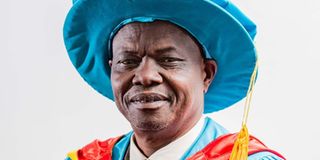
Newly installed University of Nairobi (UoN) Vice-Chancellor Prof Ayub Gitau has unveiled an ambitious five-point reform agenda that he hopes will steer the country’s flagship university through a storm of financial woes, governance battles and reputational pressures.
He takes office as the university’s ninth vice-chancellor, pledging to focus on student success, digital transformation, staff welfare, infrastructure development and strategic partnerships.
He assumes office at a time when the UoN is weighed down by financial pressures, with debts exceeding Sh12 billion, leaving it struggling to meet its core obligations.
Inadequate funding, coupled with unpaid liabilities such as pensions and taxes, has strained operations and forced the institution to seek external support simply to meet monthly payroll obligations.
Beyond the financial crisis, the institution has in recent years faced governance disputes between management and the university council, frequent staff strikes over delayed implementation of Collective Bargaining Agreements (CBAs) and unpaid arrears, as well as a decline in global rankings.
Against this backdrop, Prof Gitau acknowledged the weight of the responsibility entrusted to him, committing to provide leadership and direction without fear or favour.
“While we experience constraints in staffing, infrastructure and financing, my leadership will prioritise quality student services, including better academic support, accommodation and catering services,” he said in his inaugural speech during his installation ceremony at the university’s Taifa Hall on Friday.
Prof Gitau also announced plans to introduce a self-paced entrepreneurship course at the beginning of the next academic year to equip students with practical business skills, innovation and problem-solving abilities beyond their academic disciplines.
He told the gathering that the university will continue aligning its academic programmes with Competency-Based Education and Training (CBET) to ensure graduates possess skills demanded by an increasingly technology-driven labour market.
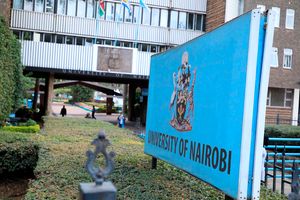
The entrance to the University of Nairobi.
Photo credit: File | Nation Media Group
“I will ensure that our programmes are continuously reviewed to meet the evolving needs of society and the global academic landscape,” he said at the event, which was graced by Higher Education Principal Secretary Beatrice Inyangala.
His management, he explained, will place greater emphasis on producing graduates equipped with critical thinking, ethical leadership, entrepreneurial capability and digital competencies.
Digital transformation forms the second pillar of his leadership agenda, with technology expected to play a central role in improving efficiency, strengthening accountability and enhancing service delivery across the university.
Ongoing reforms include the digitisation of student records, improvements to lecture portals, graduate tracking systems and the development of a modern student management information system.
The university also plans to use digital platforms to monitor research output and strengthen evidence-based decision-making.
“We shall rely on data-driven decision-making to position ourselves as a forward-looking institution,” he said.
Infrastructure expansion is another priority, with Prof Gitau promising to modernise classrooms, expand library facilities and strengthen ICT infrastructure.
Among the flagship projects is the Engineering and Science Complex, recently launched by President William Ruto in partnership with the French government. The facility will house modern laboratories, lecture theatres, innovation hubs and collaborative learning spaces aimed at boosting scientific research and engineering innovation.
“It will be a crucible of discoveries where ideas ignite, solutions are born, and Kenya’s future is engineered,” Prof Gitau said.
Recognising that staff morale has suffered following years of delayed promotions, industrial unrest and salary disputes, the new VC pledged to prioritise staff empowerment and motivation.
The Fountain of Knowledge at the University of Nairobi. .
Photo credit: File
Following the recent signing of CBAs with the Universities Academic Staff Union (UASU), Kenya Universities Staff Union (KUSU) and the Kenya Union of Domestic, Hotels, Educational Institutions, Hospitals and Allied Workers (KUDHEIHA), he committed to improving the working environment, addressing workload concerns, expanding training opportunities and supporting career progression.
“I am committed to ensuring that all monies due to staff under the CBAs are processed and disbursed transparently, fairly and in accordance with the agreed provisions,” he said.
He also pledged to invest in leadership development, governance training and exposure to emerging technologies to prepare staff for the changing higher education landscape.
To address the university’s long-term financial sustainability, Prof Gitau said he would work closely with the university council to strengthen institutional planning, develop realistic budgets and diversify revenue sources.
A key pillar of that strategy will be leveraging the university’s global alumni network of more than 300,000 graduates through the University of Nairobi Alumni Association and the UoN Foundation to mobilise partnerships, attract investment and grow the university’s endowment fund.
“I believe that through creativity and innovation we can unlock opportunities for the sustainability of our university,” he said.
Prof Gitau takes over an institution that is deeply divided and has endured a decade of turbulence, pledging to unite staff and restore its standing.
“I know within one year, we shall have brought all the staff together. And when the staff are motivated, they give their best,” he said in an earlier interview.
Meanwhile, the university’s global reputation has taken a hit, with UoN dropping out of the top 1,000 in the QS World University Rankings, reflecting challenges in research quality, academic competitiveness and international visibility.
Prof Gitau beat five seasoned scholars to emerge as the top candidate for the vice-chancellor position, which fell vacant following the exit of his predecessor, Prof Stephen Kiama, who was suspended after months of leadership wrangles at the institution.
His appointment ended a turbulent attempt in 2025 to fill the position after the successful candidate, Bitange Ndemo, declined the role, citing procedural irregularities.
In addition, the University Council’s attempt to appoint Prof Francis Jackim Mulaa as acting vice-chancellor was nullified by the Ministry of Education, which ruled the process unlawful. The council was then chaired by Prof Amukowa Anangwe.
The UoN Council subsequently appointed Prof Hutchinson as acting vice-chancellor following Prof Kiama’s exit.