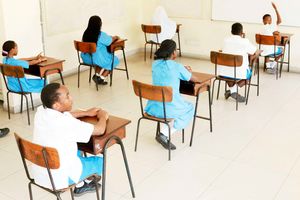
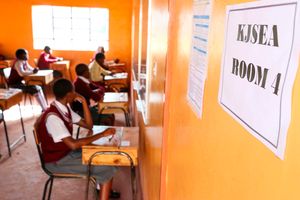
The second cohort of Grade Nine learners concludes the Kenya Junior School Education Assessment (KJSEA) on Friday October 30, bringing to an end a relatively quiet examination period that has contrasted sharply with the fierce competition, anxiety and heightened security traditionally associated with the former Kenya Certificate of Primary Education (KCPE).
The assessment, which marks another major step in the transition to Competency-Based Education (CBE), has unfolded without the intense scramble for top positions and school rankings that once dominated national examinations. Attention now shifts to the placement of learners in senior schools in January 2027.
For years, KCPE was more than an examination.
It was a national event, with candidates competing for coveted places in prestigious secondary schools, parents anxiously awaiting results and schools hoping to produce the country's top performers.
The release of results was equally competitive, with attention turning to top candidates, leading schools and counties that had outperformed others.
Under CBE, however, the emphasis has shifted from a single examination determining a learner's academic future to a broader assessment of competencies acquired throughout junior school.
The change has not eliminated the need for examination security, but it has altered the atmosphere surrounding the exercise, with KJSEA proceeding under coordinated supervision by education officials, national government administrators and security agencies.
As the second cohort completes the assessment, attention turns to placement in senior schools, where performance, interests and preferred career pathways will play a role in determining learners' next stage of education.
Speaking in Sotik, Bomet County, on Friday after opening a Kenya National Examinations Council (KNEC) examination container, Education Cabinet Secretary Julius Ogamba said the conclusion of KJSEA marked a significant milestone for learners preparing to enter senior school.
“Under Competency-Based Education, KJSEA provides an important measure of the competencies acquired by learners during Junior School. Together with the prescribed school-based assessment components, the results will inform the next stage of their educational journey,” Mr Ogamba said.
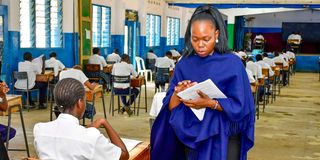
Grade-Nine candidates from St Mary's Girls Comprehensive School in Nakuru City take their Kenya Junior School Education Assessment (KJSEA) examination on October 26, 2026.
Photo credit: Boniface Mwangi | Nation Media Group
The assessment comes against the backdrop of a major transition in Kenya's education system, with the pioneer CBE cohort preparing to enter Grade 10, where learners will pursue different pathways based on their abilities, interests and career aspirations.
Unlike the previous system, in which KCPE marks were central to determining secondary school placement, the new framework incorporates school-based assessments alongside the national assessment.
Mr Ogamba sought to reassure parents concerned about the placement process, saying the government would ensure that learners were placed fairly and transparently.
"I wish to assure parents and learners that the Ministry remains committed to an orderly, transparent and equitable transition to Senior School," he said.
"The placement process will be undertaken in accordance with the established criteria, taking into account learners' performance, interests, pathway choices and other applicable considerations,” he added.
He said the ministry would communicate placement timelines and procedures through official channels and urged parents and learners to remain patient.
The conclusion of KJSEA also brings to an end a week of national assessments involving more than 2.5 million learners across the country.
The Kenya Primary School Education Assessment (KPSEA), which began on Monday, ended on Wednesday, October 28, while the Kenya Intermediate Level Education Assessment (KILEA) and Kenya Pre-Vocational Level Education Assessment (KPLEA) concluded on Thursday.
According to the Education CS, the assessments generally proceeded successfully despite isolated disruptions caused by adverse weather, administrative discrepancies and cases requiring special arrangements, including medical attention.
He said the challenges were resolved through coordination between the Ministry of Education, KNEC, the Ministry of Interior, security agencies and other stakeholders.
“According to reports received from KNEC, all learners who presented themselves at their designated assessment centres were accorded the opportunity to undertake their scheduled papers,” Mr Ogamba said.
While the junior school assessment period comes to a close, the examination spotlight now shifts to Form Four candidates, who will begin their main written Kenya Certificate of Secondary Education (KCSE) examinations on Monday, November 2.
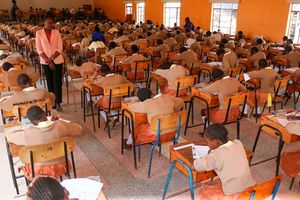
Candidates at Aga Khan Comprehensive School in Kisumu sit for their Kenya Primary School Education Assessment (KJSEA) examinations on October 26, 2026, the first day of the national assessment.
Photo credit: Alex Odhiambo | Nation Media Group
A total of 1,048,355 candidates are registered for the examination, which will run until November 20.
The oral, practical and low-candidature papers, which began on October 19, are scheduled to conclude today.
Unlike the relatively quiet KJSEA period, KCSE remains a high-stakes national examination, with candidates competing for university placement and other post-secondary opportunities.
Its administration will require sustained security surveillance, secure transportation of examination materials and coordination among education and national government officials.
Mr Ogamba directed KNEC, county and sub-county education directors and National Government Administration Officers to ensure all examination centres are ready ahead of Monday.
“The administration of the main KCSE written examinations will require sustained vigilance and effective coordination by all agencies involved,” he said.
He also directed officials to pay particular attention to candidates with disabilities, those requiring medical attention and learners in areas experiencing adverse weather.
“Every candidate must be accorded a fair opportunity to undertake the examination under appropriate conditions," he said.
The CS further warned examination officials against complacency as the country transitions from junior school assessments to KCSE, calling for professionalism, accountability and strict adherence to examination procedures.