Learners preparing to move from Grade 9 to Grade 10 are facing fresh anxiety after the Ministry of Education delayed the selection of senior schools, with education stakeholders warning that the compressed timeline could have an impact on the choices.
The delay comes as about 1.2 million Grade 9 learners prepare to join senior school, where they will select career pathways, subject combinations and preferred schools through the ministry’s automated placement system.
The learners will choose from three pathways—Science, Technology, Engineering and Mathematics (STEM), Social Sciences, and Arts and Sports Science—decisions that will shape their senior school education and future career choices.
The selection process, which should ordinarily be conducted earlier in the year to allow time for career guidance and consultation with parents.
This year selection is expected to run from August 24 to September 11 as learners return from holidays, during a term when schools will also be preparing candidates for the Kenya Junior School Education Assessment (KJSEA).
Last year, the first cohort selected pathways and senior schools between June 9 and June 30.
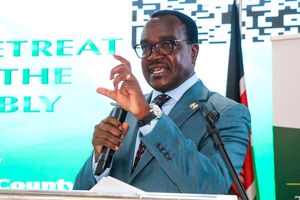
Basic Education Principal Secretary John Ololtuaa.
Photo credit: File | Nation Media Group
“To ensure a smooth process, the ministry will implement this important exercise following strict timelines,” Basic Education Principal Secretary John Ololtuaa said in a circular to regional and county directors of education.
Kenya National Union of Teachers (Knut) Deputy Secretary-General Hesbon Otieno warned that the delay could heighten anxiety and confusion among learners as schools race to prepare for the transition.
“I think this delay is more retrogressive than progressive because schools will now have very little time to place students according to the assessment reports they have received and determine their strengths,” he said.
Mr Otieno said the uncertainty could also undermine confidence in the Competency-Based Education (CBE) system.
“We are trying to build confidence in Competency-Based Education. But with these kinds of hiccups, parents will still feel that we were not ready for the system,” he said.
Education Stakeholders Association of Kenya National Secretary Ndung’u Wangenye said the current timeline gives learners and parents less time to prepare.
National Secretary of the Kenya Teachers in Hardship and Arid Areas Welfare Association Ndung’u Wangenye.
Mr Wangenye said the short window could become problematic if learners make pathway choices that later turn out to be unsuitable.
“The disadvantage for students is that if they select the wrong pathway, there will be no time for revision by the learners, parents or teachers, and that is a disaster,” he said.
Mr Wangenye said teachers will have limited time to offer career guidance because they would be occupied with KJSEA plans.
“September is also the examination period. There will be no career guidance teachers available to guide them. Right now, teachers are preparing students for the KJSEA,” he said.
“Last year was the initial stage of implementation, so we expected improvements. Instead, it has gone from bad to worse,” he said.
He warned that poor pathway choices could have long-term consequences because senior school marks the beginning of learners' specialisation.
“Senior school is the beginning of specialisation. If a student chooses the wrong pathway and ends up in the wrong senior school, we will have failed this generation,” he said, cautioning that learners could struggle to change direction once they had committed to a pathway.
“Whatever a child specialises in during senior school—Grades 10, 11 and 12—is what they will most likely continue with at university. There is little room to change. It is unfortunate that we are here, and we hope this will never be repeated,” he said.
However, despite concerns from some parents and teachers over the timing, the National Parents Association (NPA) backed the ministry’s schedule, saying the authorities should be given the benefit of the doubt.
National Parents Association Chairman David Obuhatsa Silas (centre) and other members of the association.
Photo credit: File | Nation Media Group
NPA chairperson Silas Obuhatsa said the ministry had reasons for setting the pathway selection timetable, and asked parents, teachers and learners to follow the guidelines.
The association said the short period allocated for pathway selection would not interfere with preparations for the Kenya Junior School Education Assessment.
“The issue of pathway selection requires only a specific period. Taking one week to complete it will have no negative effect on learners preparing for the KJSEA,” he said.
NPA said parents already work with teachers to guide learners on pathway choices and offered to support the ministry in reaching parents with information through school dialogues together with other stakeholders.