A new report has exposed inequalities in Kenya’s education system showing that a majority of learners in public schools lag behind those in private institutions despite the free education programmes.
According to the report by Oxfam, children from poor households receive fewer years of schooling than those from rich backgrounds, thereby reducing their chances of a better livelihood. For example, children in Nairobi County receive on average 11.2 years of schooling, compared to just 5.4 years for those in Turkana County.
The report titled “Kenya’s Inequality Crisis: The Great Economic Divide” shows that over one million children of school-going age do not attend school, blocked by poverty, child labour, early marriages, teenage pregnancy, and lack of meals.
“Approximately 1.13 million children of primary school age are out of school, and nearly half of secondary school-going students are not accessing secondary education at the appropriate age. A secondary school-age child from the poorest quintile has a seven-in-ten chance of not being in school, while this is only three-in-ten for a child from the richest quantile,” reads the report.
The report faults the government for failing to increase education funding to match inflation, over the years.
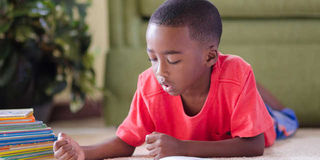
About one million girls miss school each month due to lack of sanitary towels
Photo credit: Shutterstock
“The children of the richest families receive expensive and high-quality education from private providers, while children from the poorest 20 per cent of households receive almost five fewer years of schooling than those from the richest 20 per cent. When adjusted for inflation, the amount of money per pupil that the government spends on primary schools is equivalent to just 18 per cent of what it was worth in 2003 [when it was set]”, the report reads.
Poor teacher to student ratio
The Free Primary Education funding per learner has stagnated at Sh1,420 since 2003. When adjusted for inflation, this is equivalent to about Sh250 in 2024.
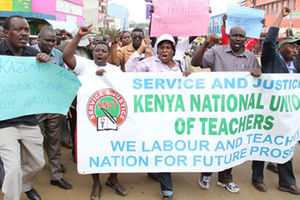
The report also highlights a poor teacher to student ratio which affects the quality of education. Kenya has a shortage of about 100,000 teachers. It would require an estimated Sh72.8 billion annually to fill the gap.
The report indicates that the poor are grossly under-represented in higher education. It notes that only one per cent of people from the poorest quantile have some form of tertiary education compared to 45 per cent of their richest counterparts.
“Public spending on tertiary education increases inequality, which is unsurprising, as only a fraction of the poorest students make it to higher education,” it notes.
The Oxfam report is also critical of distribution of wealth in the country. It shows that the wealthiest 125 Kenyans hold more wealth than 77 percent of the population — an estimated 42.6 million people. The findings also highlight how this economic divide extends to not only the basic education, but into higher education, affecting access, opportunities, and outcomes for the majority of students.
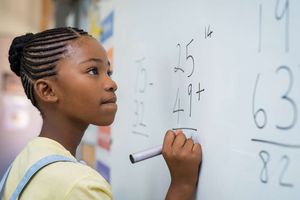
A girl does her homework. Children of the richest families receive expensive and high-quality education from private providers.
Photo credit: Shutterstock
According to the report, gender gaps also persist among the poor. A boy from the poorest quintile is 30 per cent more likely to attend secondary school than a girl in the same category. Additionally, about one million girls miss school each month due to lack of sanitary towels, losing roughly two weeks of learning per year.
“While there are deeply-rooted gender challenges to school attendance among children in poorer families, there is no gender gap in attendance in the richest quintile. About one million girls miss out on school each month due to a lack of sanitary towels, adding up to an average of two weeks of lost learning each year,” reads the report.
Due to congestion in public schools and lack of enough institutions, private schools that charge low fees have grown to meet the demand. However, these were found to provide sub-standard education and poorly pay their teachers, while elite private schools remain accessible only to wealthy families, offering modern facilities, qualified teachers, smaller classes, and international curricula, further deepening the socio-economic divide.
The report observes that parents are often forced to pay illegal fees to cover things like admission, tuition, lockers, toilets and examinations in public schools.