Heads of institutions across the country are under growing pressure to strengthen accountability and improve management in schools as the government intensifies oversight in the education sector.
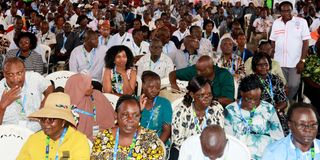
While speaking during a virtual meeting that brought together more than 11,000 school leaders across the country, including principals, deputy principals, heads of finance and procurement, and members of boards of management, Head of Public Service Felix Koskei warned school administrators against inflating student enrolment figures to attract higher government funding.
“Capitation funds exist to support every learner and guarantee quality education in a conducive learning environment. That is why the systems used to plan, allocate and manage these resources must be handled with the highest level of integrity,” said Mr Koskei.
He cautioned that the practice undermines accountability in the education sector and amounts to misuse of public resources, stressing that institutions must provide accurate data when reporting student numbers for capitation purposes.
Mr Koskei said recent audit findings had raised concerns over discrepancies between the number of learners reported in government systems and the actual numbers present in schools.
“To be very clear, any manipulation of learner data or violation of the law in order to secure additional public funds will not be tolerated by the government,” he said.
The school data verification report released on February 12 by the Ministry of Education exposed the scale of what it described as carefully choreographed fraud in some public schools, resulting in the loss of billions of shillings through false capitation claims.
The report established that 973,634 learners could not be accounted for, yet the government had been disbursing funds to support their education, based on data entered in the National Education Management Information System (Nemis).
The audit flagged 885,904 ghost learners in public primary schools and 87,730 in secondary schools. It also revealed that 10 secondary schools and 17 primary schools were non-operational but continued to appear in NEMIS, receiving capitation.
The irregularities cost the government more than Sh3.2 billion annually, excluding capitation that may have been disbursed to 14 institutions that did not submit learner enrolment data.
The ministry said it had initiated action to hold responsible officials accountable, including cases of criminal negligence involving school heads and sub-county directors of education in whose jurisdictions the fraud occurred.
Speaking during the launch of the 2026 examination registration exercise on February 13, Education Cabinet Secretary Julius Ogamba warned that disciplinary action will be taken against school heads who make registration-related errors.
He said last year some learners suffered greatly after their heads of institution uploaded erroneous data, for example, indicating the wrong gender or, in some cases, failing to register learners entirely.
"These errors unduly and unfair disenfranchise learners, and also expose the government to serious legal risks. We have to avert them at all costs," he said.
Mr Koskei also raised the alarm over procurement irregularities in schools, revealing that compliance with procurement laws in some institutions remains below 23 percent.
“We are still seeing serious gaps in the management of public resources in secondary schools, particularly in procurement processes and record keeping. This must change if schools are to uphold accountability and proper use of public funds,”he said.
He emphasised that the credibility of Kenya’s education system depends on accurate reporting and responsible management of public funds.
This comes even as the Head of Public Service, Felix Koskei, plans to convene a meeting with secondary school principals to address the same accountability concerns. The meeting is expected to focus on strengthening financial oversight in schools, improving procurement processes and tightening systems used to report enrolment data, amid growing concerns about misuse of public funds and manipulation of student numbers to inflate capitation.
The consultative engagements come at a time when schools across the country are registering candidates for the second-last Kenya Certificate of Secondary Education (KCSE) examination as well as Grade 6 Kenya Primary School Education Assessment (KPSEA) and Grade 9 Kenya Junior School Education Assessment (KJSEA) candidates.
In a notice issued by the Teachers Service Commission (TSC), the meetings will be held virtually on Wednesday, March 11, and Thursday, March 12.
"These engagements will focus on the role of teachers as members of the public service and as custodians of the constitutional values and principles that guide public service delivery," the notice reads in part.