Students are increasingly relying on loans to finance higher education as government bursary support declines under the new funding model, according to the Economic Survey 2026 released yesterday.
The report shows that total loans disbursed by the Higher Education Loans Board (HELB) rose by 32.1 per cent to Sh62.0 billion in the 2025/26 financial year.
A significant share of this increase came from the New Funding Model, under which loan disbursements surged by 69.7 per cent to Sh53.1 billion.
In contrast, bursary allocations fell by 37.4 per cent to Sh148.5 million during the period under review, indicating a shift away from non-repayable student support.
The decline in bursaries has been attributed to the exclusion of students who qualified for scholarships under the new funding framework, the report indicates.
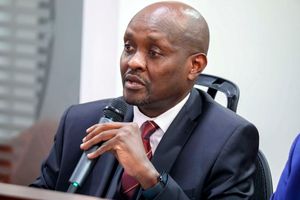
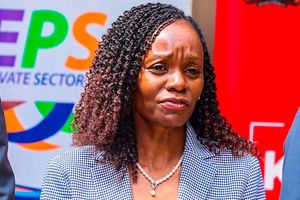
Higher Education Principal Secretary Beatrice Inyangala and Higher Education Loans Board CEO Geoffrey Monari before the Senate Education Committee on March 20, 2025.
Photo credit: Dennis Onsongo | Nation Media Group
The contrasting trends point to a gradual shift in higher education financing, where loans are becoming the dominant form of state support.
“The amount of loans granted under the New Funding Model (NFM) increased by 69.7 per cent to Sh53.1 billion in 2025/26, while the amount of bursaries awarded to beneficiaries reduced by 37.4 per cent to Sh148.5 million in 2025/26. This was attributed to exclusion of students who were awarded scholarships under the NFM,” Read the survey.
The increase in loan disbursements comes at a time when demand for higher education is rising. The Economic Survey shows that enrolment in Technical and Vocational Education and Training (TVET) institutions grew by 17.3 per cent to 825,484 learners, reflecting a growing shift towards skills-based training.
“Overall, the total amount of loans granted to students by Higher Education Loans Board (HELB) increased by 32.1 per cent to KSh62.0 billion in 2025/26, the amount of loans granted under the New Funding Model (NFM) increased by 69.7 per cent to Sh53.1 billion in 2025/26,” read the economic survey.
Government data also shows that enrolment pressures have been increasing across universities and colleges in recent years, prompting reforms aimed at improving financing sustainability. In earlier allocations, the government has supported the model with billions of shillings in both scholarships and loans to cushion students from rising education costs.
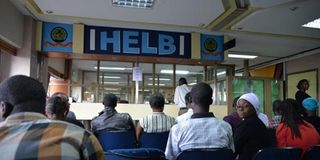
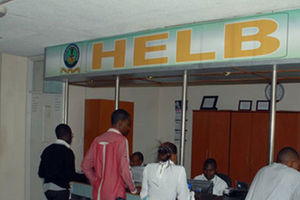
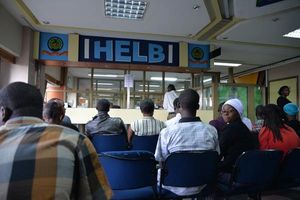
The Higher Education Loans Board's customer service desk at their Anniversary Towers offices.
Photo credit: File | Nation Media Group
However, the shift comes at a time when university enrolment has risen dramatically. Government data shows student numbers have increased from about 70,000 in 2017 to approximately 258,000 in 2025—representing a rise of more than 300 per cent in under a decade.
Currently, 437,648 students are funded under the system, drawn from three cohorts: 122,634 admitted in 2023, 134,889 in 2024, and 180,125 in 2025.
“In terms of student numbers, the growth is very significant. Over the last 10 years, enrolment has grown by more than 300 per cent,” University Fund acting CEO Dr Edwin Wanyonyi told Daily Nation.
“If you look at it statistically, you find that in the last about 10 years, the growth in the number of students joining universities has grown by close to 300 per cent and the economy has over an average growth of 5 to 6 per cent,” he said.
As a result, the government says it is only able to fund about 70 per cent of the resource requirements for universities.
“Currently, in terms of requirements, we are funding close to 70 per cent of the resource requirement for universities in terms of scholarships,” said Dr Wanyonyi.
In January 2026, National Assembly Speaker Moses Wetang’ula directed Members of Parliament to develop legislation aimed at merging all education bursaries and scholarships into a single funding basket.
Mr Wetang’ula said the consolidation would eliminate duplication in the award of bursaries and ensure equitable distribution of resources across the education sector.
He noted that multiple funding streams including the National Government Constituencies Development Fund (NG-CDF), county government bursaries, and other education “kitties” — had created inefficiencies and inequalities in education financing.
“I challenge the Ministry of Education to establish guidelines for consolidating duplicated education bursaries into a single central basket for efficient distribution to the intended beneficiaries. All the resources come from one source.,” said Mr Wetang’ula.