Lecturers in public universities have protested a plan by the Public Service Commission (PSC) introduced new mandatory retirement ages for lecturers, researchers and university staff.
The commission has outlined different retirement ages depending on academic rank, a move that has triggered anxiety among university lecturers who say the policy could disrupt their financial and family plans.
Under the new guidelines, professors and research professors will retire at 70 years, while those living with disabilities will retire at 75.
Associate professors and associate research professors will retire at 65 years, and 70 years for those living with disabilities.
Senior lecturers, senior research fellows, lecturers and research fellows will retire at 65 years, and 70 years for persons living with disabilities.
Assistant lecturers, tutorial fellows, junior research fellows on contractual terms and research scientists will retire at 60 years, and 65 years for persons living with disabilities.
Research scientists serving in research institutions who hold PhDs will retire at 65 years and 70 years for those living with disabilities. Research scientists holding master’s degrees with relevant publications will also retire at 65 years, and 70 years for persons living with disabilities.
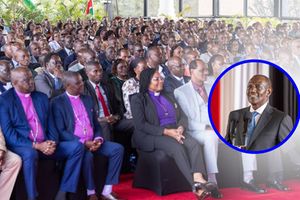
Public Universities Vice-Chancellors Committee Chairperson Prof Daniel Mugendi.
Photo credit: File | Nation
In a letter dated March 2, 2026, addressed to Cabinet secretaries, principal secretaries, chairpersons of public university councils, vice-chancellors of public universities, principals of constituent colleges and heads of state corporations, PSC Chief Executive Officer Paul Famba said the circular supersedes the earlier directive Ref. OP.CAB.2/7A dated March 20, 2009 and any other policy guidelines on the matter.
Mr Famba said the Constitution places the responsibility of human resource management in the public service on the commission.
This includes ensuring the public service remains efficient and effective, reviewing and making recommendations to the national government on conditions of service, and determining qualifications for public officers.
“Further, Section 70(1)(c) of the Public Service Commission Regulations, 2020 provides that, subject to the Constitution and any other relevant written law or government policy, the mandatory retirement age in the public service shall be such age as may be determined by the Commission for lecturers and research scientists serving in public universities and research institutions,” Mr Famba said.
He added that the new retirement age takes effect from the date of the circular. The commission also stated that non-teaching staff in universities will continue to retire at the mandatory age of 60 years, while those registered as persons living with disabilities will retire at 65.
However, the new structure has not gone down well with university dons, who argue that academic careers typically begin much later than those in other professions. Lecturers say most academics spend many years pursuing postgraduate studies, often up to PhD level, before securing full-time employment.
“By the time many of us get permanent jobs, we are already in our mid-30s or even early 40s. Typically, lecturers have young families because they tend to marry late due to the long years of schooling up to PhD level when most of them are finally hired,” said one lecturer who requested anonymity because the matter is sensitive.
Another lecturer said the directive could dampen morale because many academics had planned to work longer to compensate for the years spent studying.
“Most lecturers have loans for building homes that match their professional status. What happens when you have to exit sooner than you had planned based on your appointment letter?” the lecturer posed.
A professor from one of the country’s oldest universities said the move could undermine the already strained quality of university education.
“We will take it in our stride, but it leaves one wondering why you have to study for so long only to exit when you have developed the capacity and knowledge to train students,” the professor said.
Education Cabinet Secretary Julius Migos Ogamba during the opening ceremony of the National Retreat for Chairpersons of Public Universities Councils in Mombasa on June 13, 2025.
Photo credit: Kevin Odit | Nation Media Group
The academic added that some faculties could be left understaffed, leading to a loss of institutional memory.
“Most staff will leave bitter. It will also affect the career pathways of younger scholars who would have wanted to pursue a career in academia. The impact of this policy decision will be felt later,” the don said.
Lecturers argue that the policy fails to consider the unique nature of academic career progression, which involves long years of study and research before stable employment.
They also note that many academics start families later in life, meaning they still have children in school when they approach retirement age.
The dons warn that the new directive could dampen morale in universities, especially among academics who had planned to work longer to compensate for the years spent in postgraduate studies.
“Most of us delayed building families and investing while pursuing PhDs. We had hoped to work longer to recover that lost time,” another lecturer said.
The retirement limits have also raised concerns over financial commitments, with many lecturers saying they have taken large loans to build homes or invest in property.
“With bank loans that match our professional status, exiting earlier than anticipated could create serious financial strain,” said a senior lecturer at a public university.
The Universities Academic Staff Union (UASU) has rejected the directive, saying it was not aware of any official communication from the state.
“We are not aware of that letter from PSC because a circular cannot be superior to a legal document,” said UASU National Organising Secretary Onesmus Mutio.
“UASU negotiated a collective bargaining agreement which was registered in court setting the retirement age for senior lecturers up to professors at 74 years because these are people with PhDs, very learned individuals. You want to retire them and send them home to do what again?” he asked.
Speaking to the Nation on phone, Mr Mutio asked the PSC to explain why it would want to retire professors who have spent many years studying at the age of 60 or 65.
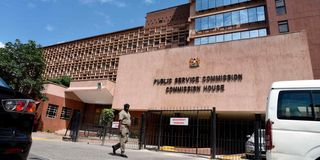
The Public Service Commission offices at Commission House in Nairobi.
Photo credit: Evans Habil | Nation Media Group
“For us, we negotiated the 2021–2025 CBA which was registered in court and the government raised no objection to its registration. Therefore, we can tell our members not to panic. No lecturer is going home at 60 or 65 because we have a negotiated CBA,” he said.
Mr Mutio said that under the agreement, senior lecturers and those in higher academic ranks will retire at 74 years unless another CBA is negotiated.
He added that a PSC circular cannot override a document that was mutually negotiated between the employer and the union and later registered at the Employment and Labour Relations Court.
“We are going to be in universities until 74. PSC should understand that professors have spent years in school chewing [sic] books. What they know is books. What will they do at home?” he asked.
He noted that before the current CBA, different universities had different retirement ages, with some retiring lecturers at 60, others at 65, and others at 75.
“So when we negotiated the 2021–2025 CBA, we wanted to remove those discrepancies. We agreed that the retirement age should be the same across universities because these are the same people working for the same government and the same sector. Therefore they should not retire at different times. That is why we negotiated for harmonisation,” he said.