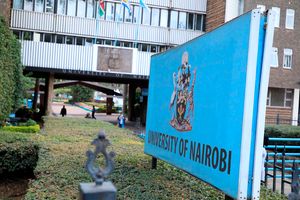
Kenya’s higher education sector faces a Sh260 billion deficit in the 2026/2027 budget proposals, a shortfall that threatens funding for 656,927 students and exposes the shortcomings of the higher education funding model introduced in 2023.
Besides the huge budget deficit, public universities also owe various creditors a total of Sh85.28 billion in pending bills, a figure that has risen from Sh60 billion in 2022 when the Kenya Kwanza administration took over.
Documents tabled before the Departmental Committee on Education of the National Assembly on Thursday show that the State Department for Higher Education requires Sh311.9 billion for the 2026/27 financial year but has been allocated Sh155.2 billion in the Budget Policy Statement, creating a shortfall that threatens scholarships, student loans, staff salaries and critical infrastructure projects.
The department also faces a development budget gap of Sh6.55 billion, having sought Sh11.43 billion but receiving Sh4.88 billion, a 57.3 per cent shortfall.
The funding squeeze comes at a time when student enrolment continues to rise under the student-centred funding model.
“Since the inception of the Student-Centred Funding Model, Helb has been underfunded considering the growth in the number of students and the amount required for student tuition as well as upkeep. In the financial year 2025/26, Helb requires Sh75,062,743,677 to support 1,104,157 university as well as Technical and Vocational Education and Training (TVET) students. The current budget allocation of Sh41,145,870,000 has resulted in a shortfall of Sh33,916,873,677,” said Dr Beatrice Inyangala, the Principal Secretary for Higher Education.
Student-centred funding model
Dr Inyangala noted that delayed or incomplete disbursements of government funds continue to pose a significant challenge for public universities, hampering their ability to function efficiently. According to the Ministry of Education, the current funding gaps have left institutions of higher learning vulnerable, particularly when the money allocated for operations runs out.
“If you look at the current situation, it means that when this money is exhausted, universities are left exposed because some of these funds are not fully disbursed as required. That is why we are saying that if the student-centred funding model is fully implemented and the funds are properly released, universities and their programmes would be stable. Our observation is that the challenge is that the money is not being paid as expected, and if it were paid, we would not be in the current position,” she added.
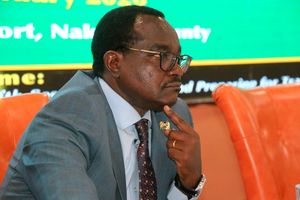
Dr Beatrice Inyangala, the Principal Secretary, State Department for Higher Education and Research.
Photo credit: File | Nation
Dr Inyangala noted that the biggest pressure points in the 2026/2027 budget are student scholarships and loans under the Student-Centred Funding Model. She said the Universities Fund projects a cumulative scholarship funding gap of Sh51.7 billion by 2026/27.
While the resource requirement for scholarships in 2026/27 stands at Sh47.36 billion, the approved allocation is Sh17.92 billion — just 37.8 per cent of the requirement — leaving an annual shortfall of Sh29.44 billion and pushing the cumulative deficit to Sh51.7 billion.
The number of students qualifying for university admission has been rising. New student enrolment is projected to grow from 122,634 last year to 219,279 this year, with cumulative students on scholarship expected to hit 656,927. However, allocations have not kept pace with the expansion.
The Higher Education Loans Board (Helb) is also under strain. In the budget proposals, Helb targets supporting 1,383,728 university and TVET students at a cost of Sh112.11 billion. However, the proposed allocation of Sh45.06 billion leaves the board with a deficit of Sh67.42 billion.
If left unaddressed, this would only worsen the situation, as Helb has also had budget shortfalls in the previous two years that currently stand at Sh112.03 billion. The State Department is seeking the amount to sustain higher education financing reforms.
In the current financial year, Helb required Sh75.06 billion to support 1,104,157 students but received Sh41.15 billion, leaving a funding gap of Sh33.92 billion.
“The reason we still have funding gaps is that, in the last financial year, the Universities Fund (UF) and Helb did not disburse Sh16.9 billion. This year, we have Sh33 billion for Helb and another Sh12 billion for the UF, bringing the total allocation across the three financial years to Sh56 billion. If this money had been fully paid, universities would currently have pending bills of about Sh20 billion,” said Geoffrey Monari, the Chief Executive Officer of Helb.
“At the current pace, once these funds are exhausted, universities will face serious operational challenges because some funds are earmarked for specific uses, limiting flexibility. That is why we are emphasising that full implementation of the student-centred funding model is critical to stabilising universities. Our observation is that the main challenge is that these funds are not being paid. If they were, universities would not be in the difficult position they are today. If this model is not resolved, these financial gaps will continue to grow,” he added.
Students apply for Helb loans in Nairobi.
Photo credit: File | Nation Media Group
Meanwhile, in its proposals, the Commission for University Education requires an additional Sh500 million to retrain 2,500 university staff on curriculum development, pedagogy and assessment to align with Competency-Based Education and Training (CBET).
An additional Sh100 million is required for monitoring and evaluation of programmes and projects across 83 universities, particularly to assess preparedness for the CBE transition.
The State Department also faces pressure to fulfil Collective Bargaining Agreement (CBA) obligations. While Sh3.88 billion was paid to lecturers in December 2025 as the first tranche of the 2017–2021 university CBAs, only Sh2.8 billion has been allocated for the second tranche due in July 2026, leaving a deficit of Sh1.08 billion. Dr Inyangala warned that full funding is necessary to avert potential industrial action.
The State Department has prioritised 65 capital projects in public universities and constituent colleges. Eleven projects that are over 80 per cent complete require Sh712 million for completion in 2026/27. However, 48 projects are below 60 per cent completion, requiring Sh20.29 billion to finish, highlighting the scale of stalled infrastructure development.
A further Sh432.9 million is required as counterpart funding for the African Development Bank-supported Higher Education Science and Technology Project (HEST II), whose financing agreement was signed on February 10, 2026.
The Co-operative University of Kenya is seeking Sh4.55 billion to acquire 70 acres of land to expand its training and research capacity. Moi University requires Sh3.809 billion to implement a Return-To-Work Formula signed after industrial action. The Technical University of Kenya requires Sh2.073 billion to implement its Return-To-Work Formula and clear pending staff obligations.