Principals of the public Teacher Training Colleges (TTCs) have raised concern over the low absorption of their graduates by the Teachers Service Commission (TSC).
The principals are also calling on the Ministry of Education to allow TTCs to admit day scholars to boost enrolment.
Through their association, the Kenya Teachers Colleges Principals Association (KTCPA), chairperson Mr Wycliffe Nyongesa, the stakeholders said the current policy only permits boarding students, limiting access for many potential trainees.
“Our admissions are based on bed capacity. That policy needs to change. Allowing day schooling would increase opportunities and boost our enrolment, which currently stands at about 27,000,” said Mr Nyongesa.
He questioned why TTCs classified under Basic Education are not allowed to enroll day students, yet secondary schools and Technical and Vocational Education and Training (TVET) institutions, which cater to students of similar age, admit day scholars.
“Why should we have secondary school day scholars and deny TTCs the same, yet these are adults? TVETs are not purely boarding institutions either. These are age mates,” he said, adding that they were, however, pleased by the decision to scrap student uniforms in TTCs.
Speaking during their annual conference, the principals have called on their employer, TSC and the Ministry of Education to urgently address key challenges affecting the institutions key among them, the low absorption of graduates and the restriction on admitting day scholars.
The annual event provides a critical platform for the stakeholders to discuss issues affecting TTCs across the country and seeking solutions from TSC and MoE.
Mr Nyongesa said the principals expect TSC eto mploy their graduates, especially since TTCs are now central to delivering the Competency-Based Education (CBE) curriculum.
“Our graduates are trained for CBE, but very few have been absorbed by TSC. Most of those absorbed are those who upgraded from P1,” said Mr Nyongesa.
He, however, noted that while public schools lag in hiring TTC graduates, private institutions are reaping the benefits.
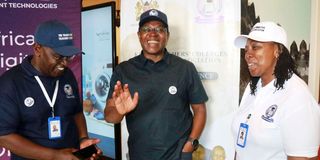
Members of the Kenya Teachers' Colleges Principals Association during the Annual Conference in Mombasa on August 19, 2025.
Photo credit: Kevin Odit | Nation Media Group
“That’s why private schools are implementing CBC more successfully—they absorb our graduates immediately. But public schools need to catch up because that’s where the majority of our learners are,” he said.
He emphasized that their trainees are best placed to implement the new curriculum, having undergone three years of training, including practicum.
Mr Nyongesa also praised the Kenya National Examination Council (KNEC) for reforms, particularly in digitising the examination system.
The association called for the MoE to include teacher trainees in public Teacher Training Colleges (TTCs) in the Higher Education Loans Board (HELB) funding scheme.
“Our TTCs train Diploma in Primary Teacher Education. So far, we’ve produced 2,000 graduates in the first cohort. These trainees are more qualified than their TVET counterparts yet we remain sidelined in funding,” said Mr Nyongesa.
Financial burden on students
He noted that their colleges require a minimum Kenya Certificate Secondary Examination (KCSE) grade of C (plain) for admission, compared to TVET institutions that admit students with D or E grades, yet the latter have access to HELB support.
“We are ignoring the vital role teacher trainees play in shaping the country’s education foundation. If TVET students can get HELB, why not our trainees?” he asked.
Mr Nyongesa, who also serves as the chief principal of Kamwenje TTC, said incorporating HELB support would boost enrolment and reduce the financial burden on students.
The principals from 38 public TTCs across Coast, Nairobi, Rift Valley, Central, Eastern, Western, and Nyanza regions also used the forum to review challenges and celebrate progress since the phasing out of the P1 certificate.
The association further raised concerns over a growing trend of TTCs being quietly converted into universities.
Mr Nyongesa expressed concern about a silent policy direction in which TTCs are being taken over by newly established universities.
“New universities should not take over TTCs. We’ve already seen this happen in Bondo, Narok, and most recently, Moi Baringo. These institutions are losing infrastructure and identity critical to foundational teacher training,” he said.
The association hailed the progress made by the colleges since the phasing out of the P1 certificate and the adoption of the Curriculum-Based Teacher Education (CBTE) model.
“Our current CBTE trainees have made significant strides, particularly in digital literacy, thanks to the Ministry of Education and the K-PEEL Program,” said Mr Nyongesa.
He noted that all 38 public TTCs (35 primary and 3 secondary) are now fully equipped with modern computer labs and functional studios, a major boost to 21st-century teacher training.
The association further called for the strengthening of the Teacher Education Directorate at the Ministry of Education, saying its visibility and engagement at the policy level remain limited.