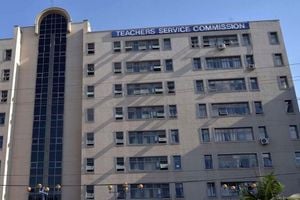
The high unemployment among teachers registered with the Teachers Service Commission (TSC) but who are jobless are the reason behind the plan by the government to limit the number of students admitted to teacher education courses.
There are over 300,000 registered but jobless teachers despite the acute teacher shortage in public schools that currently stands at 98,461 for primary, junior and secondary schools.
The government has instructed universities and teacher training colleges to reduce the number of students admitted to train as teachers, the Nation can reveal. The government wants universities to train for other professions whose details are scanty at the moment.
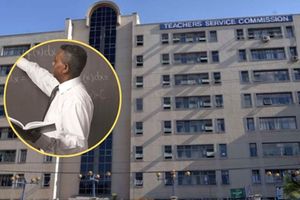
A teacher in class. There are over 300,000 registered but jobless teachers despite the acute teacher shortage in public schools.
Photo credit: File | Nation Media Group
According to various sources within the education sector, the high number of trained but jobless teachers has caused a major challenge for the government, which has now sought advice from university vice chancellors on how to cut down the number of teacher trainees. However, universities are opposed to the plan and have written to the Ministry of Education enumerating reasons why the plan might backfire on staffing levels in schools, in the future.
“Restricting admission into teacher education programmes risks deepening these shortages over the next five decades, undermining key national and regional objectives including the Education 2030 agenda and the African Union’s Agenda 2063,” reads a joint position paper by private and public universities, seen by the Nation.
They have warned the Ministry of Education that if implemented, over 100,000 students qualified for university admission are likely to be denied the opportunity to pursue their preferred programme due to restrictive admission policies.
The plan to reduce the number of trainees admitted to study education poses a challenge to teacher training colleges, especially since students have already been issued with admission letters. The move will lock out a number of students who have selected teaching as their preferred career. The students would be forced to settle for other courses. Efforts by the Nation to get a response for the principal secretary for Basic Education, Prof Julius Bitok, were futile.
“Limiting the number of students pursuing teacher education will have a long-term effect on Kenya’s capacity to meet the demand of teachers in the next 50 years. Limiting the number of students admitted for teacher education programmes will defeat the Constitution 2010 provisions on education as right for every Kenyan child in view of the teacher shortages highlighted. It will also contradict the Universities Act 2012 that gives universities freedom to determine the nature of programmes to offer as well as the number of students to admit based on national, international and each university's quality assurance policies, needs assessment and stakeholder participation,” the vice chancellors told the MoE.
Education stakeholders argue that the restriction on university admissions for trainee teachers will result in wastage of both human and capital resources.
Photo credit: Shutterstock
They further argued that the restriction on university admissions will result in wastage of both human and capital resources since universities have already expanded their academic staff, classrooms, and facilities in line with the Commission for University Education’s declaration that universities have the capacity to accommodate 310,000 students in the 2024 Kenya Certificate of Secondary Education (KCSE) cohort.
“This decision should not limit a singular field of study of teacher education, but if applied should cut across disciplines such as business, medicine, agriculture, engineering, and others which equally face the same challenges of lack of government employment. It is worth noting that TSC is not the only employer that does not have the capacity to absorb all teacher education graduates,” the VCs said.