What many Kenyan recruits were promised as security or construction jobs in Russia has, for some, turned into a daily fight for survival on the battlefields of Ukraine, a war they barely understood before boarding planes out of Nairobi.
Interviews with returnees and relatives of those still at the front reveal a grim reality of poorly trained foreigners pushed into exposed positions where artillery and drone strikes rarely stop.
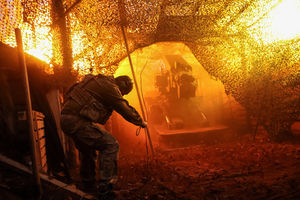
Survivors say the deadliest threat is not always direct gunfire, but the constant buzz of drones hovering above trenches before explosions tear through bunkers.
“Once the drone spots you, you start counting seconds,” said a Kenyan who is currently in Russia. “You hear a whistling sound, then everything goes silent. Many never even get the chance to run.”
During the fight, the recruits work in shifts with some going back to camps while others are sent to the war front.
The journey from the camps to the war front starts by the recruits being driven either on motorbikes or four-wheeled armoured military vehicles.
“Once you board the vehicle, you are driven to the war-front and the vehicles leave us at a distance and we are forced to walk a very long distance as one commander hands us over to another until we arrive at the war-front,” said our Russian-based source.
Asked how he ended up in Russia, the source said that he was linked up to Mikhail Lyapin, a Russian national who led the recruitment exercise from Kenya and straight into the country’s military.
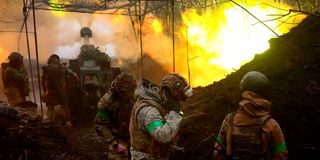
A Ukrainian serviceman fires a Bohdana self-propelled howitzer towards Russian troops near Kostiantynivka town, Ukraine on November 29, 2025.
Photo credit: Reuters
In September 2025, Kenya said that it had deported Lyapin from the country due to his activities but the Russian Federation embassy dismissed the reports.
It said that the Russian citizen was escorted to the Directorate of Criminal Investigations (DCI) offices in Nairobi to record a statement regarding his business activities in the country.
“Upon completing all necessary procedures, in the afternoon of September 26, Mr Lyapin, in accordance with his previous plans, left Kenya. Diplomats of the Russian Embassy in Nairobi provided the necessary consular and legal assistance to the Russian citizen, and also made sure that his legal rights were not violated,” said the Russian Federation.
Our source said that the Russian government has always kept the promise of paying them and he even received his bonus immediately after he cleared a two-week training in one of the military camps there.
“To be honest they do pay the bonus and those saying that they were lured into this are not being straight. They ask which account you want the money to be sent to and they pay,” he said, adding that when he was leaving Kenya he knew he was going to fight in the Ukraine- Russian war.
Another Kenyan who was also taken to Russia by Lyapin said that he was happy there and he knew what exactly he had gone to do.
The ex-military officer said that he left his job in Kenya because of the good pay that comes with working for Russia.
“I am currently doing what I love and if they extend my contract, which is expiring soon, I will be happy. The pay as well is good,” said the Kenyan.
Families of those who left Kenya to join the deadly war have consistently raised concerns that communication at times goes dark for weeks.
One family is that of David Kuloba, who is based in Kibra, Nairobi County. His mother Ms Susan Kuloba says she had warned him not go to Russia but he never informed her when he was leaving Kenya.
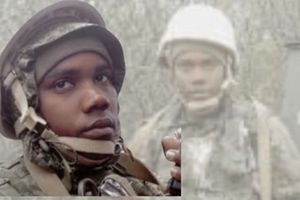
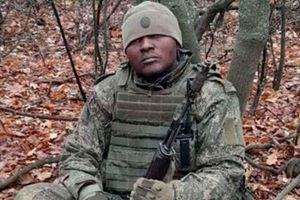
She said that her son only sent her images showing that he was already in Russia. In the images he was dressed in military combat.
“He at some point went silent and when we tried to reach him in vain, a friend who is also in Russia called and told me that my son was no more,” she said.
The mother said that she was linked up to an agent who received her son in Russia, who also confirmed that David had gone missing and they were afraid that he might have died.
Reports indicate casualties among foreign fighters are high because they are frequently deployed in dangerous assault units.
Lacking familiarity with terrain, language and military coordination, they are exposed to artillery barrages and precision drone attacks that have come to define the modern war.
Those who have returned describe psychological trauma: sleepless nights, ringing ears from shelling, and recurring memories of watching colleagues die metres away.
Some Kenyans have been recruited to fight for Russia in Ukraine.
Photo credit: Pool
“War is not what they told us,” another survivor said. “It is hunting — and we were the hunted.”
The situation has left families in Kenya trapped between hope and grief, with many unsure whether their loved ones are alive, wounded, captured or dead — thousands of kilometres away in a conflict they never chose.
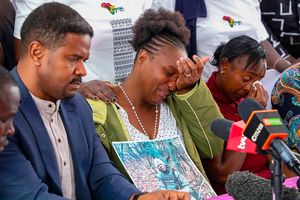
The families last week held a press conference in Nairobi where they explained their worries and fears.
It is to this effect that Prime Cabinet Secretary Musalia Mudavadi said that he was planning to leave Kenya for Russia to go and hold talks with its government, with the aim of saving Kenyans who are there.
“The Ministry has continued to receive inquiries from families regarding relatives allegedly involved in the conflict between Russia and Ukraine,” the Ministry of Foreign Affairs said in an end-of-year report.
During the conference, other families clutched photographs sent from snowy training camps, the last proof their sons were alive before they vanished into a war they did not understand, fighting for a country they had never seen.
Interviews with survivors, relatives and security officials reveal a recruitment pipeline that begins with promises of quick money and ends under artillery fire, where foreign fighters are pushed into exposed positions hunted by drones circling endlessly above the trenches.