When Errustus Nyale left Kenya in October last year, he believed he was heading to Russia for a six-month driving job that would ease his family’s financial strain.
Instead, the 38-year-old father of one found himself recruited into the Russian military and trained to fight in the Ukraine war—a twist that has since plunged his family into fear, uncertainty, and anguish.
According to his wife, Pauline Dume, Nyale handled the entire travel process in secrecy.
“My husband did everything quietly. He processed the paperwork without telling me anything. I did not even know where he was going,” she says.
It was only after he landed in Russia that Nyale informed her of his true location. While still in Kenya, he had told the family that a company was recruiting drivers for a six-month contract. Ms Dume now suspects he may have known more than he admitted.
“I think he knew something was not right but did not want to tell me because he knew I would refuse and try to talk him out of it,” she says.
Nyale departed Kenya on October 11, 2025, as part of what he described as the fifth group of Kenyans heading to Russia.
Earlier groups, each comprising four to five people, had left almost monthly since August. Two other men initially scheduled to travel with him backed out at the last minute.
Upon arrival, Nyale’s expectations collapsed. Instead of vehicles, he and others were handed military uniforms and equipment. “They were told, ‘This is the job you came here for, not driving,’” his wife recalls.
Nyale informed Ms Dume that the recruits were subjected to military training both at night and in the mornings in preparation for deployment to a war zone. During one video call, Ms Dume was shocked to see him dressed in full military uniform.
Pauline Dume holds a photograph of her husband, Errustus Kitti Nyale, who traveled to Russia for what he believed was a driving job but is now fighting in the Ukraine war.
Photo credit: Brian Ocharo | Nation Media Group
“When I asked why he was in uniform when he had gone for a driver’s job, he told me that was the work they were assigned. They were told to sign contracts for either one or two years,” she says.
In that call, Nyale appeared to be in a forest, surrounded by other African recruits. He told his family that more than 1,500 Africans had been recruited alongside him, mainly from Kenya, Tanzania, Uganda, and Nigeria. He said they were generally treated well, except for the food.
“He said the only challenge was the diet. It was not like our Kenyan food,” Ms Dume adds.
Despite the shock, Nyale appeared resigned. When his wife urged him to return home, he declined.
“He told me he had already started training and that coming back would waste all that effort. He said he would persevere for one year and return after the contract expired,” she says.
The family maintained contact via WhatsApp and video calls until November 8, 2025.
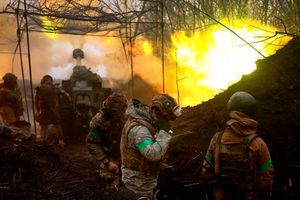
Ukrainian serviceman from mobile air defence unit fires a machine gun towards a Russian drone in Kharkiv region.
Photo credit: Sofiia Gatilova | Reuters
“That night, he texted me. I replied later, but the message did not go through. There was no blue tick, no double tick. Since then, he has never replied,” Pauline says.
Nyale has not sent money home since leaving Kenya—the very reason he had taken the job, hoping to fund his son’s college education. Ms Dume says she has not reported the matter to the police, largely because she does not know which agency facilitated his travel.
“I do not know where to start. I do not even know the name of the agency that took him there,” she says, adding that she suspects covert recruitment networks along the Coast are duping Kenyans with promises of civilian jobs abroad.
Nyale’s disappearance has unsettled his community. Robert Nyenyo, a neighbour, says the case raises serious questions about state oversight.
“I have known this family for a long time. Pauline came to me and explained her husband’s predicament. There are clear procedures when someone goes to another country to join a foreign army. In this case, those procedures were clearly not followed,” he says.
“We do not know where Errustus is, whether he is alive or not. The agent who took him there is unknown. Did the government know about this? Who is recruiting Kenyans and how are they doing it without authority?” he asks.
For Nyale’s 19-year-old son, Rayson Nyale Kiti, the silence has been devastating. Father and son spoke daily until communication abruptly stopped.
“He texted me at night on November 8. I went to sleep. When I woke up and replied, the message did not go through. That was the last time I heard from him,” Rayson says.
The family has now joined a growing list of Kenyans appealing for government intervention to return relatives from Russia.
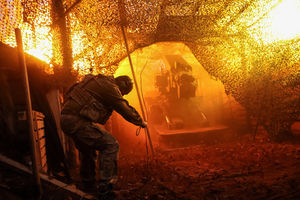
Ukrainian Armed Forces fire a BM-21 Grad multiple rocket launch system towards Russian troops, amid Russia's attack on Ukraine, near the frontline town of Chasiv Yar in Donetsk region, Ukraine January 15, 2026.
Photo credit: Reuters
Even after the Kenyan government deregistered more than 600 recruitment agencies over human trafficking, job scams, and illegal overseas placements, rogue operators continue to exploit enforcement gaps and digital platforms to target vulnerable jobseekers.
Many young, unemployed Kenyans are lured by promises of quick employment, high pay, and fully sponsored travel. In some cases, recruits pay “processing fees” or surrender personal documents before being routed through informal travel arrangements, leaving families unaware of their whereabouts once communication is cut off.
The persistence of these scams is linked to the ease with which deregistered companies rebrand, the rapid creation of online pages, and the use of encrypted messaging platforms that make tracing recruiters difficult.
Investigations reveal that many blacklisted agencies simply rebrand under new names, while others have shifted operations online, using TikTok, WhatsApp, and Facebook to advertise fake opportunities abroad.
“The Kenyan government deregistered about 600 rogue recruitment agencies due to various malpractices, including human trafficking and job scams across the world, including those recruiting Kenyans for the Russia-Ukraine war. Over 400 unlicensed agencies have been shut down in a crackdown by the Ministry of Labour,” Prime Cabinet Secretary Musalia Mudavadi told the Daily Nation.
A document seen by the Daily Nation shows that four Kenyans recruited into Russian military operations were rescued and repatriated last month. The letter, dated December 22, 2025, and addressed to the Ministry of Foreign and Diaspora Affairs, confirms that they were part of a group facilitated to return home after becoming stranded while involved in military activities. An additional Kenyan had been repatriated earlier, bringing the total number of rescued citizens to five.
All returnees travelled to Kenya between December 17 and 19, 2025, mainly aboard Egypt Air, after receiving emergency travel documents from Kenyan authorities.
“This follows revelations that at least 82 Kenyans are currently caught up in Russian military operations, with many injured, some dead, and others stranded far from homeafter being lured into what they believed were legitimate opportunities abroad,” Mr Mudavadi said.
“The government urges Kenyans to exercise caution and avoid job scams. Those seeking employment abroad should use legitimate recruitment agencies and conduct due diligence, especially when dealing with the Diaspora Placement Agency,” he added.
According to a list compiled by the Kenyan Embassy, Kenyans are stationed across multiple locations, including Belgorod, Istra at the Wagner military base, Saint Petersburg, Rostov-On-Don, and other unspecified sites.
In Belgorod, 20 Kenyans were identified, including one deceased and others in camp. Istra hosts 29 Kenyans, three of whom have been rescued. Saint Petersburg has 26, with four repatriated, some injured and others deployed. Two Kenyans are stationed in Rostov-On-Don, while six are at unknown locations.
“So far, the government has rescued and repatriated 23 Kenyans trapped in Russia following the ongoing Russia-Ukraine conflict. The government, through the embassy in Moscow, continues to follow up and rescue any Kenyan in distress or who has sought help,” Mr Mudavadi said.
He added that last year the government formed a multi-agency task force, bringing together the Directorate of Criminal Investigations and the Office of the Director of Public Prosecutions to arrest and prosecute rogue recruiters.
“To ensure Kenyans access legitimate jobs abroad, the Ministry of Foreign and Diaspora Affairs formed a desk, the Diaspora Placement Agency, at the State Department for Diaspora Affairs. It verifies job opportunities at no cost and conducts awareness campaigns nationwide to educate citizens on safe migration and licensed agencies,” he said.