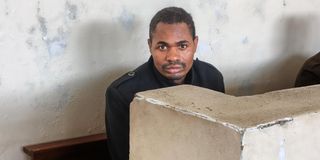
Last Thursday's events saw the hospital turn away Kalombotole despite Kibera Magistrate Daisy Mutai's observation that he required close monitoring for his mental health condition.
"It is clear that the suspect is unwell. What I am gathering is that it is something that requires close monitoring," Justice Mutai had ruled, yet the hospital maintained its position. But what does the law actually say about when hospitals can refuse patients?
Kenya's healthcare laws provide specific circumstances under which hospitals can legally refuse to admit or treat patients. The Health Act, 2017, grants healthcare providers the primary prerogative in determining patient care needs, as Mbagathi Hospital CEO Dr Alex Irungu explained to Nation in an interview on Wednesday.
"It is the healthcare provider who has the prerogative of deciding the next course of action when you come to hospital," he said. "It is the condition of a patient that determines admission, and in Mr Kalombotole's case, before they brought the court order on Sunday, he was an outpatient and did not meet the threshold of being admitted as an inpatient."
The Health Act, 2017, explicitly addresses situations involving difficult patients. "A healthcare provider can refuse treatment to a patient who is physically or verbally abusive or who sexually harasses them," Dr Irungu explained. This protection for healthcare workers is only overridden in dire emergency situations where no other healthcare personnel are available.
Perhaps most significantly, hospitals have a legal duty to protect all patients under their care. "The well-being of the many other patients is a priority, and if one patient poses a danger to the rest, we have a right to refuse to admit him or her," Dr Irungu explained. This principle of collective patient safety can override individual patient rights.
The Kenya Public Health Act empowers authorities to manage infectious diseases through various measures, including refusal of admission. "This means that if a patient has an infectious disease, the law allows us to reject taking them in," Dr Irungu noted.
Kenya's Mental Health Act creates a unique framework for psychiatric patients, recognising both voluntary and involuntary admission pathways.
"Voluntary admission happens when an individual agrees to receive treatment, while involuntary admission involves a process where a person is admitted against their will under specific legal criteria," Dr Irungu explained.
The Act empowers patients to refuse admission, meaning hospitals can legally decline to admit unwilling psychiatric patients. However, Section 14(1) provides for involuntary admission when "a person who is suffering from mental disorder and is likely to benefit by treatment in a mental hospital but is for the time being incapable of expressing himself as willing or unwilling to receive treatment, may, on a written application under this section, be received into a mental hospital as an involuntary patient for treatment."
This complexity explains why Dr Irungu recommended transferring Kalombotole to Mathari National Teaching and Referral Hospital, the country's only facility with a maximum security section for law offenders with mental health conditions.
According to a recent study published in the US Library of Medicine, Mathari Hospital, established in 1978 as a smallpox isolation centre, has a bed capacity of 700, with 332 beds in the civil section and 377 in the Maximum-Security Unit.
However, the facility faces severe overcrowding, with bed occupancy rates of 119 percent in the civil unit and 115 percent in the Maximum Security Unit. The study revealed that "patients had no right to legal capacity as the facility had not put in place procedures and safeguards to prevent detention and treatment without free and informed consent."
Dr Godfrey Mutakha, a health researcher and chair of the department of obstetrics and gynaecology at Masinde Muliro University, provides a broader context. "Hospitals can refuse to admit a patient for several reasons, primarily related to capacity, medical appropriateness, and legal/ethical considerations," he explained. "However, refusal based on protected characteristics such as race, religion, or gender is generally prohibited."
Capacity constraints represent a significant factor. "Similar to bed shortages, insufficient staff to care for a patient can also lead to a refusal of admission," Dr Mutakha noted. This is particularly relevant given Kenya's severe mental health staffing crisis, with current shortfalls of over 1,400 psychiatrists, over 7,000 psychiatric nurses, and approximately 3,000 psychologists. Of the 92 psychiatrists and 427 psychiatric nurses working in Kenya, only 36 and 187 respectively work within the public sector.
"A hospital may not have the specialised equipment or staff to treat a particular condition. For example, a children's hospital might not be the best place to treat a heart condition in an adult," Dr Mutakha explained.
The Emergency Medical Treatment and Labour Act (Emtala) prevents facilities from "dumping" patients based on their ability to pay or lack of insurance. "However, if a hospital cannot provide the necessary care, they must stabilise the patient and arrange for appropriate transfer," he explained.
The Health Act 2017 requires healthcare providers to obtain informed consent by informing patients about their health status, treatment options, risks, and benefits. This principle works both ways – patients can refuse treatment or specific facilities they're uncomfortable with.
"It's important to note that hospitals have a duty to provide care, especially in emergency situations, and refusing admission without proper justification can have legal and ethical consequences," Dr Mutakha concluded.