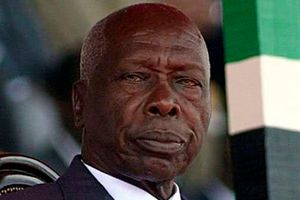
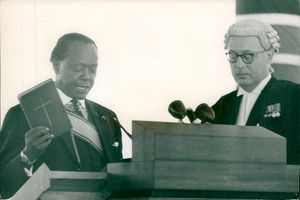
The December 27, 2002, General Election ushered in a new era.
As President Mwai Kibaki entered State House, the ruling party, Kanu, was exiting the stage. Kibaki’s victory, on an anti-corruption ticket, changed the rhythm of public debate, the confidence of civil society, and the tone with which institutions spoke back to authority.
For the Law Society of Kenya (LSK), after weathering the hard years of Kanu’s dominance, the fall of the independence party marked the beginning of a different kind of test. The question was no longer simply how to push back against an entrenched ruling party, but how to hold a reform-minded government to its promises without being absorbed into its orbit.
Most of LSK’s leading lights had aligned themselves with the new ruling regime. This was a challenge to LSK, which sought to remain an independent civic force while still serving members who wanted stability, professional protection, and a predictable legal environment.
In the months after the transition, the country’s mood was thick with expectation. Kenyans spoke openly about a “new dawn,” and the early signals from the new administration encouraged optimism. Kenyans were voted the most optimistic in the world.
But transitions are never clean. The same system that had enforced Kanu’s authority did not disappear; it merely changed hands. The multi-party era, since 1991, had brought some new voices.
Former LSK chairman Paul Wamae.
Photo credit: File | Nation Media Group
Paul Wamae’s leadership (1995–1997) was more focused on strengthening the professional identity of advocates and reinforcing the idea that LSK’s legitimacy came not only from court victories but from standards, discipline, and internal coherence. Wamae did not dominate the headlines. However, his successor, Nzamba Kitonga (1997–1999) was involved in the push for constitutional changes.
Former LSK chairman Nzamba Kitonga
Photo credit: File | Nation Media Group
It was Gibson Kamau Kuria (1999–2001) who came to the top at a time when constitutional reform debates were becoming unavoidable. The Moi era had pressed lawyers into a moral corner: either the law remained a decorative language for state power, or it became a tool of national repair. Kuria reignited human rights advocacy within LSK and was a co-convenor of the National Convention Executive Council (NCEC), which was pushing for constitutional reforms.
During his tenure, LSK emerged not only as a professional association but as a civic institution capable of articulating constitutionalism as a national project. Kuria had set the bar.
Senior Counsel Dr Gibson Kamau Kuria.
Photo credit: File | Nation Media Group
The election of Raychelle Omamo (2001–2003) was historic in that she was the first woman to head LSK. Omamo took office at the tail-end of Kanu’s dominance and the first rush of Kibaki-era optimism. If Omamo’s tenure embodied the momentum of political change, Ahmednasir M. Abdullahi (2003–2005) assumed the helm as that initial euphoria gave way to the harder realities of governing after transition.
Raychelle Omamo.
Photo credit: File | Nation Media Group
Old networks resurfaced in new guises, and public anger sharpened around corruption, patronage, and the slow grind of institutional change.
The Anglo Leasing affair—soon to become shorthand for grand corruption—cast a long shadow, while the state’s halting response signaled that the anti-graft drive was losing momentum.
Inside the government, the NARC coalition was fracturing into Kibaki and Odinga camps, with cartels regrouping and jostling for advantage. Against that backdrop, LSK’s voice hardened.
Senior Counsel Ahmednasir Abdullahi during an interview in his office in Nairobi on on May 27, 2025.
Photo credit: Billy Ogada | Nation Media Group
Ahmednasir—sharp, combative, and unapologetically confrontational—pushed the LSK into a more aggressive posture: pressing for a new constitution, demanding accountability over Anglo Leasing and other corruption scandals, and warning that captured institutions would not reform themselves.
He also trained attention on the judiciary, where attempts at “clean-up” faltered amid internal resistance and political interference—another reminder that changing a presidency did not automatically change the system. In effect, his tenure marked the profession’s refusal to romanticise the transition.
With Kibaki’s popularity waning, the LSK was also divided into two camps. Pro-Kibaki and a pro-Odinga camp. The voting pattern followed the divisions in the country. Tom Ojienda (2005–2007) was elected at a period when the Kibaki-Raila alliance was at its weakest over contested constitution drafts.
Senior Counsel Tom Ojienda.
Photo credit: File | Nation Media Group
The 2005 constitutional referendum, the shifting alliances, and the sharpening rhetoric created a national atmosphere that made neutrality difficult for any public institution.
For LSK, these were years when the Society’s dual identity—regulator of advocates and guardian of the rule of law—had to be managed carefully. For being too political, LSK risked now being treated as another faction in the national scrum.
Too quiet, and it risked losing the moral authority it had built in the struggle years. Ojienda’s period is best understood as one of institutional positioning: keeping the Society relevant in public debates while preserving enough internal cohesion to remain credible.
Then the country exploded into the 2008 post-election violence that was not only a national tragedy but a constitutional and institutional indictment.
Courts, police, political parties, and administrative systems all came under scrutiny, as did the basic question of whether Kenyan institutions could manage conflict without spilling into bloodshed.
Former LSK Chairman, Okong'o Omogeni.
Okong’o Omogeni (2007–2010) presided over LSK during this period of reconstruction, when constitutional change stopped being an elite hobby and became a national survival strategy. In those years, the Society’s emphasis on process—public participation, legitimacy, and procedural fairness—mattered as much as its emphasis on outcomes.
LSK was trying to ensure that constitutional reform would not be reduced to an elite bargain stitched together for political convenience. The long-term impact of that posture was cultural: it strengthened the idea that constitutional change must be owned by wananchi, not merely negotiated by powerbrokers.
When the 2010 Constitution arrived, the country experienced both relief and uncertainty. Relief, because the framework for a new political order had finally been set. Uncertainty, because implementation is where constitutions are tested—and often betrayed.
Former Law Society of Kenya chairman Kenneth Akide.
Kenneth W. Akide (2010–2012) led in that implementation phase: the formation and strengthening of new institutions, the rebuilding of judicial credibility, and the public learning curve about rights, devolution, and institutional checks. These were years when the work was less dramatic but more structural.
A president in that period did not need to dominate the news to leave a mark; the key was whether LSK could remain present where the new constitutional order was being assembled—in appointments, judicial governance debates, and the broad project of making the constitution real in daily life.
Former Law Society of Kenya (LSK) chairman Eric Mutua.
Eric Mutua’s tenure (2012–2016) was strongly associated with naming problems directly. Under his leadership, LSK leaned into litigation, public statements, and high-visibility confrontations, often presenting itself as a constitutional watchdog unwilling to be lulled by polite assurances. It was also a period when the nation’s big issues—public finance scandals, accountability fights, and the tension between political power and constitutional limits—were fought in courtrooms as much as in Parliament.
Mutua’s lasting impact was to normalise the idea that LSK could be an active player in those battles, and not simply a commentator on the sidelines.
Former Law Society of Kenya President Isaac Okero.
The other entrant was Isaac Okero, who held power until 2018. Okero led in a period when attacks on advocates and contempt for court orders had reached a crescendo. However, his presidency reinforced an idea that is now central to LSK’s identity: that defending the legal profession is inseparable from defending the justice system itself.
Former Law Society of Kenya President Allen Gichuhi.
Allen Gichuhi’s reign between 2018–2020 was marked by electoral disputes, constitutional debates, and factional competition. Gichuhi’s period is often remembered for foregrounding the “practice” side of LSK’s mandate: the lived realities of advocates and the economic sustainability of the profession. Gichuhi was replaced by the combative Nelson Havi (2020–2022).
Former Law Society of Kenya president Nelson Havi.
Photo credit: File | Nation Media Group
But his tenure was disrupted, or slowed down, by the Covid pandemic. Havi’s presidency was marked by a fast, confrontational public style, frequent statements, court action, and a readiness to challenge power in dramatic terms.
For supporters, it was a return to a muscular, outspoken Bar. For critics, it risked turning the Society into a permanent political combatant. What defined the era as much as external confrontation, however, was internal turbulence. Leadership wrangles and contested legitimacy became part of the public story. Havi’s impact is therefore remembered in two directions at once—energising the public voice of LSK, while also exposing how internal governance crises can blunt institutional authority.
Eric Theuri stepped in under the shadow of that turbulence, and his period reads like an institutional reset. After public wrangling, the hunger—inside the profession and in the wider public—was for stability, coherence, and measurable delivery. Theuri’s posture emphasised rebuilding: a calmer tone, a focus on member services, institutional strategy, and restoring credibility. This was less a revolution than a repair job. Yet it was not apolitical. Theuri’s legacy sits in that attempt to re-centre LSK as a functioning institution: a regulator, a defender of advocates, and a credible civic actor that does not have to rely on constant conflict to remain relevant.
Former Law Society of Kenya President Eric Theuri.
Photo credit: Bonface Bogita | Nation Media Group
Then came 2024 and a new civic eruption. The Gen Z protest wave—driven by economic pressure, governance frustration, and anger over state policy—placed rights and accountability at the centre of national conversation again. Faith Odhiambo (2024–2026 cycle) took office in this atmosphere, and her presidency has been shaped by the logic of that moment: the demand for evidence, the insistence on accountability, and the urgency of protecting civic space.
Where some presidencies are remembered for rhetoric or confrontation, Odhiambo’s early imprint is associated with documentation and institutional response—gathering accounts, organising them into formal records, and pushing toward legal and constitutional accountability. This was LSK acting not only as an advocate but also as a witness: building a record that can outlast the news cycle and feed into litigation, inquiries, and long-term institutional reform.
Odhiambo’s rise also completes a narrative that began with Omamo. Two women at the top of LSK, separated by more than two decades, is not simply a story of representation. Across all these presidencies, one pattern repeats: LSK is always pulled between two constituencies. The first is its membership—advocates who want protection, fair regulation, and a profession that can sustain livelihoods.
The second is the broader public, which expects LSK to speak when the rule of law is threatened. The tension is structural. A presidency that leans too heavily into public activism may alienate members who want the Society to focus on practice realities, welfare, and discipline.
A presidency that leans too heavily into professional concerns may appear morally timid when the nation faces rights violations or constitutional crises. Every leader navigates this balance differently, and their legacies are often judged by which side of the scale they prioritised.
In the end, the story of these LSK presidencies is the story of Kenya’s unfinished state-building project. The fall of Kanu did not end the struggle over power; it changed its arena. And now, under Faith Odhiambo, the Society confronts another defining question: whether Kenya’s constitutional order can contain the pressure of mass civic mobilisation without sliding into violence, repression, or the slow normalisation of impunity.
Law Society of Kenya President Faith Odhiambo
Photo credit: Wilfred Nyangaresi | Nation Media Group
As the LSK heads to the elections, the central question is not merely who will win, but what kind of institution the Society intends to be in the next political season.
That question will outlast any single presidency. But the path LSK takes—whether it can protect advocates, maintain internal legitimacy, and build credible legal responses to national crisis—will shape how future historians describe this era. Because in Kenya, when politics becomes loud and unstable, it is often the law, and those who practice it, who are asked to hold the line.