"Farming is not for the faint-hearted": Women face the El Niño gamble
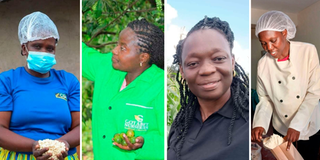
Judith Munyasa, Norah Khamuye, Janet Omollo and Zilpah Khasiro Wamalwa.

What you need to know:
- From Migori to Bungoma and the North Rift, women farmers are changing planting schedules, diversifying crops and investing in technology to protect their livelihoods from El Niño rains.
- Excessive rainfall threatens crop yields, increases production costs and disrupts agricultural supply chains, placing additional pressure on women who carry much of the responsibility for feeding their families.
Janet Omollo knows what too much rain can do to a farm. In 2023, heavy rains kept combine harvesters out of her rice fields in Migori, and she lost 10 per cent of her crop. So, when the weatherman announced this year's El Niño, she did not wait to see what would happen. She has left beans out of her planting plan, and she will plant rice in January, when the heavy rains are expected to have eased.
She is not alone. From Migori to Bungoma and Nairobi, women who grow food, raise seedlings and mill flour are weighing every planting, weeding and delivery against the weather. So far, the rains have come later and lighter than expected, but with the forecast of El Niño through to January, none of them is letting her guard down.
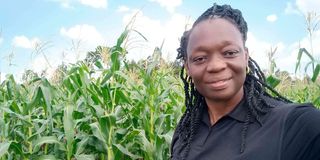
Janet Omollo on her maize farm in Nyatike, Migori County. She also grows rice, groundnuts and other horticulture fruits like watermelon.


Janet has practised farming since she was young, to ensure her household has enough food. In 2000, she farmed on her aunt's land for home consumption. Today, the mother of three has turned that passion into commercial farming that feeds her family and others, including families in neighbouring countries like Uganda, where she sells farm produce such as rice.
"I am also a risk taker, and I like trying. I know which crop pays more because I have been in this field for a long time. For example, in terms of income, horticulture like watermelon, butternuts and local vegetables are the best because they are short-term. So, I time my planting so that by the time I am harvesting, the market is not flooded, and that way I earn more," Janet tells the Nation.
Her passion for farming is driven mostly by the income she gets to support her young and growing family.
"I will sell the beans I harvested from my two acres of land in December to raise money for my son's school fees. When you come to my home, you will always find food such as maize, beans and groundnuts for family consumption. I also have a small kitchen garden where I grow arrowroots."
Janet holds a degree in Project Planning and Management from the University of Nairobi. She says she took up farming seriously as a source of self-employment after failing to secure a job in the agriculture sector. Drawing on the knowledge she acquired during her studies, she is able to identify the crops best suited to different areas and determine where they are likely to yield more, despite the country's unpredictable weather patterns.
“During my first attachment, most people in my village did not believe it was possible to grow horticultural crops here. But I planted tomatoes and kale in a dry area, and when people saw them doing well, many villagers living near the lake started considering vegetable farming as a source of income instead of relying only on fishing,” she says.
What worked in her favour was the land next to the lake. It made it easy to irrigate her crops even in dry seasons. That was in Siaya County, where she was born and raised.
After getting married, Janet relocated to Migori County, where she has lived for more than 15 years. There, she no longer had access to the free land her aunt had allowed her to use for farming. She says she informed her husband of her passion for agriculture, but she was not given land on which to continue farming. Rather than abandon her ambitions, she started leasing farmland near water bodies and carried on with crop production.
“For rice, I normally lease land under the Lower Kuja Irrigation Scheme in Nyatike Sub-county, because growing rice depends on irrigation. The other cereals and horticultural crops I grow, like kales, watermelon, capsicum, maize, beans, groundnuts and finger millet, mostly depend on rain. I also lease land for them, especially in Nyatike along the lakeside,” she says.
She leases land depending on the crop, and most of her crops are grown on two to five acres. This comes with extra costs, largely because of the existing gendered culture.
“I am leasing land because I don’t own land in Migori, where I am married. As a woman, we can inherit land, but some challenges come with that. I mostly lease land for two seasons, and it is working in Migori, where leasing land for a year means farming for two consecutive seasons. An acre mostly costs Sh4,000 per planting season. For two seasons, it means paying Sh8,000.”
Crop failure
The high cost of leasing land also comes with the risk of crop failure during droughts.
"Farming is not for the fainthearted, especially when you are relying on rain-fed agriculture like me, apart from rice, which I do under irrigation. Last year, during the short rains between September and October, I planted beans on two acres of leased land. At the time of flowering, there were no rains, and I ended up with zero harvest," Janet says.
"This year, I planted tomatoes, but they were also affected by the dry spell because I was relying on rains. Growing horticulture also comes with pests and diseases, so I have to do a lot of crop rotation, especially with the watermelon," she adds.
That loss, Janet says, taught her a lesson. The following planting season, she planted maize early on two acres and harvested 31 bags.
“I realised that because of climate change, it is proper for us farmers to plant after preparing land with the first rains that come immediately after harvesting, not like before when we would wait for the long rains.”
Also read: 'We can't wait for El Niño': The farmers turning threat into opportunity as others take cover
She has mastered managing drought and benefiting from the short rains, but Janet says above-average rains, like this year's announced El Niño, remain a big challenge for her, just as they are for other farmers.
"I have witnessed El Niño before. I planted rice at the irrigation scheme in 2023, when we experienced heavy rains, and by the time my rice was ready for harvesting, it was raining from morning to night. I lost about 10 per cent of my rice because the combine harvesters could not get into the farm with so much rain.
"Again, it was muddy, and any time I got a tractor, it would develop mechanical problems, and work would stop until the water in the rice farm drained to a lower level before harvesting could resume. My harvesting was postponed for several days, which also meant chasing birds every day at extra cost. Rice is grown under irrigation, so heavy rains affect it," Janet adds.
The weatherman has released a list of counties that will experience above-average rainfall, and Migori, where Janet farms, is among them. For her, that notice means planning. It also means a possible loss of livelihood, which is why some of her mitigation measures include investing in technology and not planting certain crops during the period.
"The rains came a bit later than the weatherman predicted, and they are not as heavy as we had anticipated the real El Niño to be here in Migori County, although there are weeks when we get non-stop rains for three consecutive days."
Janet says she has avoided planting beans, and plans to plant rice in January, when the heavy rains will have reduced. She has instead planted some butternuts and maize.
"My maize is now three weeks old, and we are in the weeding stage, but the people I hire to weed are disrupted by the rains, which sometimes come early in the day, so they only spend half a day on the farm," she explains.
She is also afraid that, with the rains, she might end up paying double what she spends on weeding.
"I pay Sh3,500 to weed each acre of land. During the rainy season, weeds grow very fast and compete with the maize for nutrients. That means the farm needs to be weeded quickly, but the frequent rains disrupt the work and slow down the people doing the weeding," she says, adding that she fears the delays could lead to a poor harvest.
"We might get a low harvest because weeds grow very fast, which affects the main crop. That also means I will have to hire people to weed a second time, which is not normally the case when the rains are normal," the mother of three tells the Nation.
Also read: Why El Niño preparedness can’t wait
In Bungoma's Tongaren Sub-county, Judith Munyasa says that although the heavy El Niño rains were delayed, she was lucky to harvest and dry her maize before the rains came. She did not get a good harvest, however, because of the previous drought.
"We are currently receiving rain, but it is not as heavy as we expected from the El Niño season. The rains came after a long drought. I am spending more time on the farm because I am using this opportunity to plant and weed my crops. Had the rains not started immediately after I harvested, I would have been focusing on my business rather than farming," she tells the Nation.
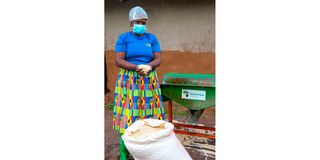
Judith Munyasa displays dried maize harvest in Tongaren, Bungoma County. She also farms Irish potatoes and bananas through conservation agriculture.
She has planted maize, beans and potatoes. By 6am, she is on the farm, where she works until 9am before leaving the people she hires to continue with the work.
"I decided to plant beans, although they are affected by heavy rains, because I am always a risk taker. I feared that if I did not plant beans and the rains continued to be moderate, I would end up buying when my neighbours harvest their maize. This looks like the short rains we normally experience here in Bungoma. Sometimes it rains for three days in a week, then fails to rain the other days."
Challenges of rain-fed agriculture
Judith says that relying on rain for agriculture always comes with challenges. If it is not a loss due to too much rain, it is a loss due to drought.
"Last season, I did everything, including planting certified seeds, but I did not harvest anything. If the weather had been favourable, I would have received at least three bags of beans. I have now planted soya beans and vegetables on that piece of land because, under conservation agriculture, I also practise crop rotation and mulching with residue retention, which I plan to keep doing to continue improving my soil conditions."
When Judith got married, she was a tailor and did only subsistence farming, which could hardly feed her young and growing family. That is no longer the case.
"For a long time, I worked on other people's farms to get money to buy food for my family. Seventy steps, which was similar to one line of maize plantation, earned me Sh10. So, I would put more effort into people's farms, depending on my problems, so that I could earn more. I never ploughed more than ten lines in a day, which was like Sh100, but it was never enough because mostly I could only earn Sh50," she recalls.
Life became even tougher when her husband died in 2018. With five young children and no guaranteed source of income, Judith says she dropped tailoring and joined the Cereal Growers Association, which onboarded her as a Farmer Service Centre to help other farmers at village level, and trained her on conservation agriculture. That knowledge, she says, was her turning point.
"It started with me receiving free training on good farming practices and what farmers need to do to improve production. I would then return home and share what I had learned with other farmers. I often invited them to my farm for field days, where I put the lessons into practice and demonstrated them so they could learn as well."
With her agribusiness knowledge and the four-acre piece of land her husband left her, Judith says she has set aside two and a half acres for agriculture, where she now grows maize, Irish potatoes, bananas, vegetables and groundnuts. The proceeds, she says, have not only ensured food security for her children but also supported their education.
She has also created jobs for young people who assist with work on her farm and currently trains about 700 farmers in Bungoma, Kakamega and Narok counties on conservation agriculture. To ease farm operations, she invested in a tractor for ripping. Although she is a trained tractor driver, she says advancing age no longer allows her to operate it herself. She therefore hires an operator and pays him based on the work done.
"Agribusiness is good because it allows me to earn money at any time. I sell vegetables and Irish potatoes to people who come to buy from my farm. I also make peanut butter as a value-added product. I own a posho mill where I process fortified maize flour for customers who bring their maize, and I also sell maize to those who need it. In addition, I run an agrovet shop where I sell farm inputs," she says.
In the North Rift, where mudslides and hailstones are common during heavy rains, Norah Khamuye, a co-founder of Gotabet Nurseries, a privately-owned community company, does not want to imagine what the El Niño rains could do to her nursery.
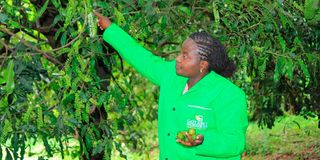
Norah Khamuye, the co-founder of Gotabet Nurseries who also won the Green Business Champion Award in the Kayana Female MSME Awards 2026.
“Two years ago, during the previous heavy rains, we were affected because we did not have proper materials for mitigation, like a shade net for the nursery. Everything in the open nurseries was affected. This time, we hope the shade net will protect the tree seedlings from insects and harsh weather,” Norah says.
Harvesting
She says the current rains are beneficial to the macadamia, which is now in the final period of the year. Her fear is that if the rains increase, the entire yield will be affected.
"We are now past the flowering stage and have entered the grain-filling stage. If all goes well, we expect to start harvesting between now and April next year. We are grateful for the rains. We had expected heavy El Niño rains, but that has not happened so far. We hope it stays that way because excessive rainfall could affect crop yields. The rains we have received have been manageable, and we appreciate them because we are not used to having rainfall in November," she adds.
Norah says they have not experienced the hailstorms and mudslides that often accompany heavy rainfall. However, weather forecasts indicate that the El Niño conditions could continue until January next year, meaning the risk has not completely passed. She says she remains cautious and hopes the weather does not worsen.
"I worry that if the rains become more frequent, our yields will suffer. This will affect not only our macadamia crop but also our coffee, which needs enough sunshine to dry properly. If that happens, we will have to hire a solar dryer to dry the produce, which will increase our costs. Heavy El Niño rains would have a serious impact on us. We could lose a significant portion of the harvest, and even if we manage to harvest something, the yields are unlikely to be good," she says.
To cushion themselves against the effects of climate change, Norah and her co-founder at Gotabet Nurseries have invested in shade nets to protect their seedlings. They have also chosen not to plant tomatoes and capsicums this season because both crops are highly vulnerable to heavy rainfall.
In Nairobi, we meet Zilpah Khasiro, the founder of Joycil Foods, at her posho mill shop in Umoja estate. She depends on cereal farmers to meet the high demand from her Nairobi customers, who buy groundnuts, maize, peanuts, and different cereal flours from her. She knows only too well the impact that heavy El Niño rains may have on her agricultural supply chain.
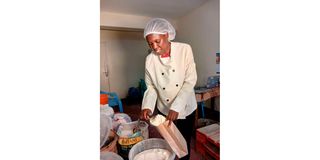
Founder and director of Joycil Foods KE Ltd Zilpah Khasiro Wamalwa at her shop in Umoja, Nairobi.
“We source peanuts, maize and other food products from smallholder farmers in rural parts of the country. Flooding can make roads impassable, delay transportation, increase transport costs and make it difficult to move raw materials to our processing and storage facilities on time. It can also disrupt deliveries to customers and distributors. At the same time, excessive rainfall can lead to crop damage, poor drying conditions, mould and post-harvest losses,” she says.
Previous heavy rain seasons hurt her business. “We have also had challenges with post-harvest handling and quality control. On one occasion, a farmer stored maize in unsuitable conditions. By the time we received and milled it, the flour had a bitter taste and could not meet our quality standards. We had to absorb the loss because we could not compromise on the quality of products reaching our customers,” Zilpah says.
That experience taught them that quality begins at the farm, not in the processing room. They are now deliberate about proper harvesting, drying and storage, and they have strengthened quality checks before raw materials enter production.
“To reduce these risks, we are strengthening coordination with our suppliers and farmers, and encouraging farmers to harvest, dry and store produce properly before transportation. We are also monitoring weather forecasts and adjusting procurement and transportation schedules where necessary. While the rains may create challenges, they also allow us to strengthen our climate-resilient supply chain, improve post-harvest handling and work more closely with farmers to reduce losses.”
The 13th National Climate Outlook Forum was held in Nairobi on August 26, 2026. There, the Kenya Meteorological Department said above-average rainfall is expected from October to December in counties including Migori, Bungoma, Trans Nzoia, Nairobi and West Pokot, as well as Wajir, Samburu and Marsabit.
The department’s deputy director in charge of administration, Charles Muga, said the 2026 El Niño event continues to intensify across the central-eastern equatorial Pacific. “These observations indicate that El Niño is strengthening further and evolving towards a strong event,” he said.
At the same forum, climate stakeholders noted that areas receiving above-normal rainfall will see negative impacts like flooding that displaces communities, water-logging and soil erosion. They also warned that nutrient leaching will affect soil health and degrade arable land, and that burst rivers can lead to crop losses and loss of livelihood.
Also read: El Niño is coming for our food baskets
Planting fertiliser applied after the onset of rains is also likely to be washed away, and weeds will grow fast, which will call for weed management strategies and increase production costs because of scarce labour and the cost of herbicides.
"Women are often responsible for feeding and caring for children. When crops fail, they may struggle to provide enough nutritious food for their families, leading to food and nutrition challenges. For men, crop failure can create pressure because many are expected to provide for their families. If they do not harvest enough to meet their families' needs, some may experience stress and even depression," says Geoffrey Wanjala of the Cereal Growers Association, who coordinates productivity and climate resilience programmes across the country.
Sarah Njoki, who works at the public weather services desk of the Kenya Meteorological Department, agrees with his observations.
"Women in agriculture will tend to overwork on the farm during the El Niño season because they will have added responsibilities and more farm work, and even forget to eat well, and this leads to malnutrition and fatigue. Sometimes, women don't listen to their bodies, and by the time they learn of the ailments, it is too late because they don't have time to assess themselves, given the extra work," she warns.
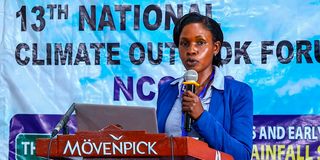
Sarah Njoki, a public weather services representative and member of the Gender, Equality, Diversity and Social Inclusion Committee, during the 13th National Climate Outlook Forum at Mövenpick Hotel in Nairobi on August 26, 2026.
Sarah is also a member of the Gender, Disability and Social Inclusion committee, which advocates weather information to have a positive impact on everyone. She calls on stakeholders to take more interest in the vulnerability of women, children and people with disabilities by giving them priority in the mitigation measures put in place before, during and after this year's El Niño season.
"As much as we see rain as a positive impact, it now becomes negative for these women if we focus mostly on women in agriculture, because with their many responsibilities, and now that the rains mean agriculture is doing well, they will tend to overwork themselves to provide for their families," says Sarah.