‘I saw hell’: A woman’s fight to escape a lifetime of violence
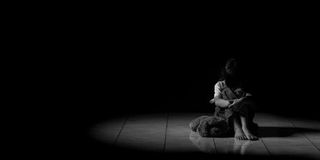
Many child survivors suffer from complex grief and post-traumatic stress.

What you need to know:
- Esther*, a woman whose childhood trauma and adult relationships were marked by sexual violence, deception and domestic abuse, faced emotional, psychological and economic torment but rebuilt her life through counselling, community support and a small business grant.
- Sexual violence left her vulnerable to manipulative and abusive partners in adulthood. This narrative explores the cyclical nature of trauma, the impact on mental health, and the lifesaving role of counselling and survivor-led support.
When Esther* looks back on her childhood, she often wonders what kind of horror film was unfolding in her life.
Born and raised in Mukuru kwa Reuben, one of Nairobi’s lowest-income residential areas, to parents who survived on casual jobs, her earliest memories are stitched together with scenes of fear, silence, and torment. Those scenes shadowed her into adulthood.
Before she turned 18, Esther had been defiled three times. Each perpetrator was a man known to her family. Each attack left her paralysed by shame and fear, unable to tell her mother the truth. She swallowed the pain and carried it alone.


Anger became her companion. She vowed that one day she would seek justice for girls and women whose voices had been stifled by violation, just as hers had been. Fuelled by this determination, she pursued criminology at university, hoping it would one day equip her to fight back.
But life took her in a different direction. Instead of joining the profession, she found work at a non-governmental organisation (NGO), supporting women living with HIV—many of them survivors of the very violence she had endured.
No love here
At 24, she met a man serving in the army who showered her with the affection she had longed for.
“I felt like I had finally met a man who valued me,” she recalls, her expression holding a silent acceptance. “He told me he loved me.”
What she did not understand then, she says, was that she was sick with unhealed wounds—seeking attention, care, love, and protection from the wrong person.
Convinced that they were building a life together, she was not alarmed when she discovered she was pregnant with his child. But the moment she shared the news, his affection turned to dust. He denied the pregnancy and abandoned her without a backward glance.
“I asked myself, ‘My God, how will I raise a child without a father? My mother gave me a great dad—what will I tell my child?’ That really disturbed me,” she says.
“But you cannot force a man to be in a child’s life if he does not want to. It pains to the core. My mother stood by me. She was the strongest for me. She gave me the strength to live. Without her, I had no energy to go on.”
A darker chapter
Four years later, a new chapter began—darker and more deceptive than anything she had lived through before.
A cousin introduced her to a man who charmed her “to the moon and back.” Behind the charm, she would later discover, lay a carefully constructed lie.
“We met in 2022, and before the end of the year, he came home with men who brought the dowry. I thought we were officially married,” she says.
Soon after, he insisted she move to his rural home in Western Kenya to care for his injured father. She stayed for a month until her mother voiced concerns.
“She asked me why a newly married woman was living separately from her husband. That question made me think.”
When she told him she was returning to Nairobi, he instructed her to stay with her brother until he could “come for her,” claiming he was at his mother’s place. She stayed with her brother for two weeks—never once seeing her husband’s supposed home in Nairobi.
Again, her mother raised questions. Her insistence that Esther goes to her husband’s home became the turning point.
“The man had been married for seven years,” Esther says, a strained, annoyed laugh escaping her. “All that time, he was playing tricks on me while living with his wife.”
When she pushed for them to live together, he forcefully removed his wife from their home, claiming it needed renovations, and hurriedly rented a house for her nearby. Then, at 2am, he moved Esther into the same home—under the cover of darkness, while neighbours who knew his wife slept.
“I thought we were finally going to be happy. But woe unto me—I saw hell, felt hell, breathed hell,” she says.
The man who had once overwhelmed her with affection became cold, volatile, and cruel. He disappeared for long stretches, lashed out whenever she questioned him, and unleashed emotional and psychological abuse. He body-shamed her, hurled insults, made demeaning sexual remarks, and brazenly slept with other women in the house.
Hope beyond nightmare
By then, Esther had secured a job as an assistant on an NGO project supporting women living with HIV. But the turmoil at home chipped away at her mental health, and her performance suffered. Her female supervisor—though aware of her situation—relieved her of her duties.
The job loss came as her pregnancy progressed. The torment grew worse.
“I’m here pregnant, and my daughter from the army officer is there too, but he wouldn’t buy us food. He would disappear for weeks. No food, no water, no electricity. He just didn’t care,” she says.
“When my daughter greeted him, he shut her out, saying he was not her father. She cried and asked me where her father was. You can imagine how that made me feel.”
In January 2023, after a year of living in chaos, she finally confided in her mother. Her mother rescued her and rented her a house.
Later, she reached out to a women’s rights organisation that supports survivors of domestic violence. Through them, she received counselling and was connected to another organisation offering grants.
“They gave me a grant of Sh25,000 and I started a second-hand clothing and shoe business. I’m doing well now, and I’ve even employed one person,” she says, relief softening her voice.
The organisation also helped her file for child support. He now sends Sh10,000 per month—just enough to pay her domestic worker and cover a few basics. Combined with her income, she says, she can comfortably pay rent and her older daughter’s school fees, and still save for the future.
But she is clear: counselling saved her life.
“I was in very bad shape. Because of stress, I gained so much weight—I went beyond 100 kilos. One day, I tied my younger daughter on my back, held the older one’s hand, and we just walked. I don’t know where we were going. I only realised how far we had gone when my daughter said, ‘Mama, I’m tired.’”
She pauses, then adds: “Don’t judge women who kill themselves and their children. They are desperate for help, and no one is there for them.”
She has a message for society: “Never ask a woman, ‘Did you not see the red flags? Why didn’t you leave?’ When a woman has childhood trauma and then more trauma in adulthood, she is bound by trauma. She is not okay. What we should offer is counselling—not judgement.”
*Name changed to protect her from further harm.